Albert Bridge repairs within a year: inspection and load management notes for engineers
Reviewed by Tom Sullivan
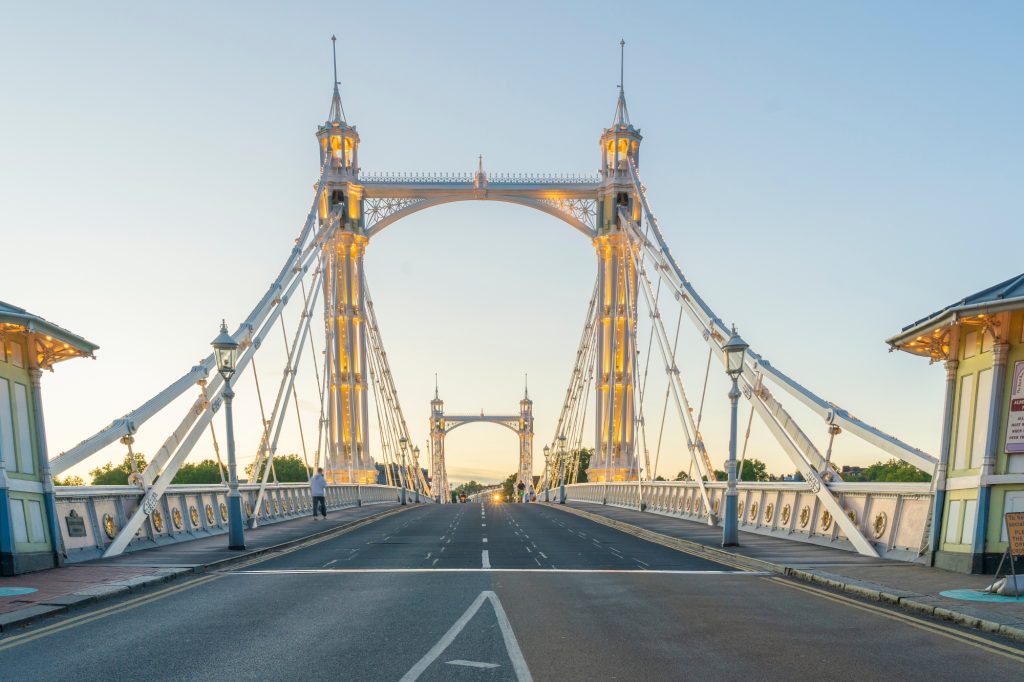
First reported on New Civil Engineer
30 Second Briefing
Albert Bridge in London is expected by the Royal Borough of Kensington and Chelsea to be fully repaired within a year, after early inspections following its closure to motor traffic found no additional visible structural damage. The Grade II* listed hybrid suspension–cable-stayed bridge remains open to pedestrians and cyclists, limiting live loading on its wrought iron and steel elements while detailed investigations continue. Engineers can now plan targeted repairs rather than major strengthening, potentially reducing intervention on historic members and minimising long-term traffic disruption on this Thames crossing.
Technical Brief
- Closure to motor vehicles removes dynamic axle loading, reducing fatigue demand on ageing ironwork connections.
- Hybrid suspension–cable-stayed configuration complicates load-path assessment, requiring separate checks on stays, hangers and main chains.
- Wrought iron elements likely need material testing and microstructural assessment, as standard steel design assumptions are invalid.
- Inspection regime will need close-up access to hanger fixings, saddle zones and deck–tower interfaces for crack detection.
- Safety case will hinge on updated structural assessment models calibrated against measured deflections and vibration under pedestrian loading.
Our Take
Among recent UK Infrastructure items in our database, London bridge and viaduct pieces are over-represented compared with other regions, suggesting asset condition and maintenance backlog remain a particular pressure point for historic structures in the capital.
A planned repair timeframe of around a year for Albert Bridge is relatively short compared with several other UK heritage-bridge failures in our coverage, which often run to multi-year programmes once full strengthening, approvals and traffic management are factored in.
For the Royal Borough of Kensington and Chelsea, a defined sub‑one‑year repair horizon limits prolonged diversion impacts; in other London bridge cases, extended closures have translated into measurable congestion and bus network disruption costs that can exceed direct repair spend.
Prepared by collating external sources, AI-assisted tools, and Geomechanics.io’s proprietary mining database, then reviewed for technical accuracy & edited by our geotechnical team.
Related Articles


Related Industries & Products
Construction
Quality control software for construction companies with material testing, batch tracking, and compliance management.
Mining
Geotechnical software solutions for mining operations including CMRR analysis, hydrogeological testing, and data management.
CMRR-io
Streamline coal mine roof stability assessments with our cloud-based CMRR software featuring automated calculations, multi-scenario analysis, and collaborative workflows.
HYDROGEO-io
Comprehensive hydrogeological testing platform for managing, analysing, and reporting on packer tests, lugeon values, and hydraulic conductivity assessments.
GEODB-io
Centralised geotechnical data management solution for storing, accessing, and analysing all your site investigation and material testing data.