Aclara’s Penco rare earths approval: project economics and design notes for engineers
Reviewed by Joe Ashwell
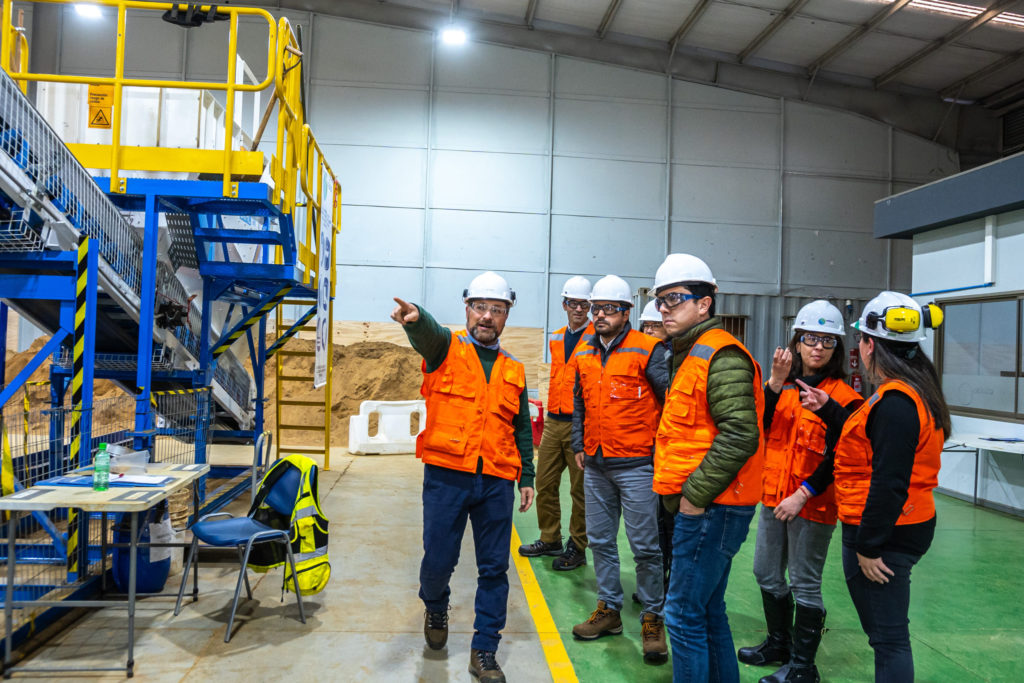
First reported on MINING.com
30 Second Briefing
Aclara Resources has secured its Environmental Qualification Resolution for the Penco Module ionic clay rare earth project near Penco, 430 km south of Santiago, concluding a permitting process that ran for more than four years. The project is scoped to produce about 774 tonnes of rare earth oxides annually over 14 years, with a 2021 PEA outlining initial capital of $119 million, an after-tax NPV of $178 million at a 5% discount rate, a 23% IRR and a 4.7-year payback. Penco ore will ultimately feed Aclara’s planned commercial separation plant in Louisiana, supported by a Virginia Tech pilot facility producing both light and heavy rare earth oxides.
Technical Brief
- Environmental Qualification Resolution (RCA) from the Biobío regional commission formalises full environmental approval status.
- Permitting process duration exceeded four years, indicating long lead times for Chilean critical mineral projects.
- Penco Module is located near Penco, ~430 km south of Santiago in south-central Chile.
- Virginia Tech pilot plant at Blacksburg is scheduled to deliver first separated light and heavy REO this year.
- Pilot output will use ionic clay feed from both Penco (Chile) and Carina Module (Brazil).
- A commercial-scale rare earth separation plant in Louisiana is planned, with completion targeted for next year.
- Aclara targets completion of all remaining permits by early next year to enable construction start.
- Feasibility study for Penco is planned by year-end, with production start tentatively in 2027.
- Ownership is tightly held: Eduardo Hochschild 37%, Hochschild Mining 20%, CAP SA 10%.
- Vertical integration across Chile–Brazil mining and US processing reflects a Western-aligned rare earth supply chain build-out.
Our Take
With Penco in Chile now permitted and a commercial-scale separation plant planned in Louisiana, Aclara Resources is positioning itself across both ore supply and downstream processing, echoing the US policy pivot described in our 2 April 2026 rare earth strategy piece towards controlling separation capacity rather than just mine output.
The relatively modest initial capital of US$119 million for Penco, paired with a 23% after-tax IRR, suggests Aclara could advance its Carina Module in Brazil in a staged fashion, which aligns with US–Brazil rare earth partnership talks noted in our 18 January 2026 coverage and may give the company leverage in future funding or offtake discussions.
Given Aclara’s Virginia Tech pilot in Blacksburg and planned Port of Vinton, Louisiana plant already highlighted in our 19 March 2026 item, the Chilean approval effectively secures a Latin American feed source for a North American processing hub, a configuration that may appeal to US and allied buyers seeking non-Chinese heavy rare earth oxide supply chains.
Prepared by collating external sources, AI-assisted tools, and Geomechanics.io’s proprietary mining database, then reviewed for technical accuracy & edited by our geotechnical team.
Related Articles
Related Industries & Products
Mining
Geotechnical software solutions for mining operations including CMRR analysis, hydrogeological testing, and data management.
Construction
Quality control software for construction companies with material testing, batch tracking, and compliance management.
CMRR-io
Streamline coal mine roof stability assessments with our cloud-based CMRR software featuring automated calculations, multi-scenario analysis, and collaborative workflows.
HYDROGEO-io
Comprehensive hydrogeological testing platform for managing, analysing, and reporting on packer tests, lugeon values, and hydraulic conductivity assessments.
GEODB-io
Centralised geotechnical data management solution for storing, accessing, and analysing all your site investigation and material testing data.