ABP’s £500M Solent Gateway expansion: design and risk notes for port engineers
Reviewed by Joe Ashwell
First reported on New Civil Engineer
30 Second Briefing
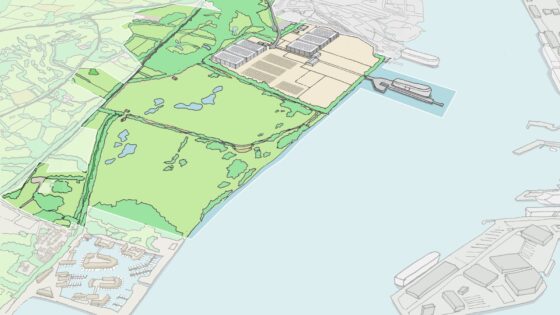
Associated British Ports has issued a planned procurement notice for an Early Contractor Involvement and Works Contractor package worth up to £500M for its Solent Gateway 2 expansion near the Port of Southampton. The contract will cover major marine and landside works to extend port capacity, with bidders expected to support design development, constructability reviews and phasing to maintain operations during construction. Geotechnical and marine civil specialists should anticipate complex quay wall, dredging and ground improvement requirements on a heavily constrained, tide‑influenced site.
Technical Brief
- Procurement notice signals ABP moving from feasibility/consenting towards delivery preparation for Solent Gateway 2.
- Early appointment is intended to lock in buildability and staging before statutory approvals are finalised.
- ABP’s notice indicates a long-lead engagement, allowing contractor input into risk allocation and pricing strategy.
- Contract structure suggests integrated design–build responsibilities rather than traditional separated design and construction.
- Scale of works implies multi‑year construction sequencing, with significant interface management across existing ABP operations.
Our Take
Within the 312 Infrastructure stories in our database, only a small subset involve UK port expansions of this scale, which suggests ABP’s Solent Gateway and Port of Southampton works will likely compete directly with northern European hubs for deep-sea and RoRo traffic.
For UK Projects-tagged items, long-lead marine and ground engineering packages often drive programme risk; a £500M procurement round at Solent Gateway 2 will likely hinge on early contractor involvement for quay wall, dredging and ground improvement design to keep interfaces under control.
Among recent Contract Award-tagged pieces in the United Kingdom, major clients are increasingly bundling civils, buildings and M&E into single frameworks, so ABP’s approach here will signal to Tier 1s whether UK port owners are moving towards integrated EPC-style delivery or retaining more traditional multi-lot models.
Prepared by collating external sources, AI-assisted tools, and Geomechanics.io’s proprietary mining database, then reviewed for technical accuracy & edited by our geotechnical team.
Related Articles


Related Industries & Products
Construction
Quality control software for construction companies with material testing, batch tracking, and compliance management.
Mining
Geotechnical software solutions for mining operations including CMRR analysis, hydrogeological testing, and data management.
QCDB-io
Comprehensive quality control database for manufacturing, tunnelling, and civil construction with UCS testing, PSD analysis, and grout mix design management.