£2bn HS2 trains length concern: platform and capacity risks for engineers
Reviewed by Joe Ashwell
First reported on New Civil Engineer
30 Second Briefing
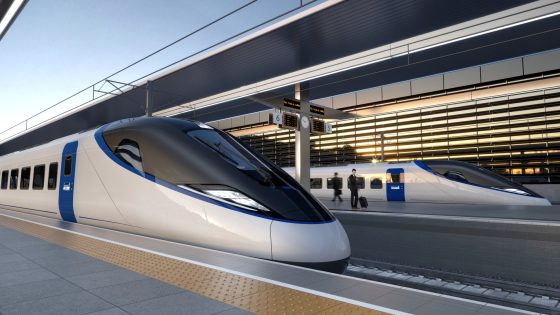
A former Department for Transport Operator non-executive director has raised concerns that the £2bn fleet of HS2 trains ordered by HS2 Ltd may be too long for parts of the planned network and existing classic lines. The warning centres on platform interface risks, potential clearance issues at legacy stations, and the operational impact of running extended-length units through junctions and constrained approaches. Any need to shorten sets or modify platforms would add cost, complicate timetable planning, and affect capacity assumptions built into HS2’s current infrastructure design.
Technical Brief
- Procurement contract for the HS2 rolling stock is valued at approximately £2bn for the new fleet.
- Concern originates from a former non-executive director of the Department for Transport Operator (DfTO).
- Questioning centres on whether rolling stock specification adequately accounted for legacy infrastructure constraints during procurement.
- Any remedial works would likely fall under separate infrastructure budgets, complicating whole-life cost allocation and approvals.
- Safety regulators would need assurance that platform–train interface risk assessments remain valid if train formations change.
- Similar rolling-stock/interface mismatches on UK schemes have previously triggered late-stage platform works and revised operating rules.
- For future high-speed procurements, integrating rolling stock and infrastructure design teams earlier becomes a clear safety governance lesson.
Our Take
Within our 800-item UK-focused Infrastructure set, HS2 Ltd appears frequently in relation to interface risks between rolling stock and new high-speed infrastructure, so concerns over train length are likely to feed into wider re‑reviews of platform geometry, emergency egress and signalling block design.
Safety‑tagged UK rail pieces in our database increasingly highlight operational constraints in dense urban termini, so any move to alter HS2 train length now may also be about ensuring compatibility with existing classic‑network stations and avoiding future platform works or restrictive operating rules.
Prepared by collating external sources, AI-assisted tools, and Geomechanics.io’s proprietary mining database, then reviewed for technical accuracy & edited by our geotechnical team.
Related Articles


Related Industries & Products
Construction
Quality control software for construction companies with material testing, batch tracking, and compliance management.
CMRR-io
Streamline coal mine roof stability assessments with our cloud-based CMRR software featuring automated calculations, multi-scenario analysis, and collaborative workflows.
HYDROGEO-io
Comprehensive hydrogeological testing platform for managing, analysing, and reporting on packer tests, lugeon values, and hydraulic conductivity assessments.
GEODB-io
Centralised geotechnical data management solution for storing, accessing, and analysing all your site investigation and material testing data.