2026 global construction cost rise: delivery risk takeaways for project teams
Reviewed by Joe Ashwell
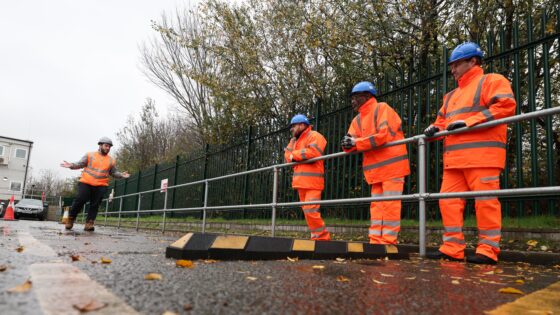
First reported on New Civil Engineer
30 Second Briefing
Global construction costs are forecast to rise about 2.4% in 2026, with analysts pointing to pressure from labour availability, supply chain fragility, energy prices and geopolitical instability. Even a modest cost uplift at this level can erode contingencies on large infrastructure schemes, particularly those with fixed-price EPC contracts or long-lead materials such as structural steel and specialist M&E systems. Contractors and clients may need tighter risk allowances, more flexible procurement, and scenario-based programming to protect delivery on complex civils and geotechnical works.
Technical Brief
- Cost escalation risk is concentrated in labour-intensive activities such as formwork, rebar fixing and tunnelling crews.
- Supply chain fragility particularly threatens long-lead safety‑critical items: fire systems, emergency ventilation, signalling and control equipment.
- Volatile energy pricing directly impacts asphalt production, cement kilns and dewatering or ventilation power demand on deep works.
- Geopolitical disruptions increase lead-time uncertainty for imported structural steel, specialist liners and geosynthetics.
- Safety margins in temporary works may be squeezed if contractors down-spec plant or monitoring to offset cost pressure.
- Risk-based procurement strategies are urged to secure critical safety systems early and lock in specifications.
- Scenario-based risk workshops are recommended to test programme resilience for evacuation routes, access shafts and emergency systems.
Our Take
A projected 2.4% global construction cost increase by 2026 is relatively modest compared with the more volatile cost spikes seen in several of the 634 Infrastructure stories in our database, suggesting clients may focus more on delivery risk and programme certainty than on headline inflation alone.
With this piece tagged to both Projects and Safety, the cost outlook implies that contractors may have less room to absorb overruns from safety-driven delays, making early risk allocation and contingency planning more critical in contract drafting for 2026 starts.
Our infrastructure coverage increasingly references AI and artificial intelligence for planning and cost control; even with a 2.4% rise, adopters of AI-based scheduling and quantity tracking are likely to be better positioned to hold margins on complex projects than firms relying on manual controls.
Prepared by collating external sources, AI-assisted tools, and Geomechanics.io’s proprietary mining database, then reviewed for technical accuracy & edited by our geotechnical team.
Related Articles


Related Industries & Products
Construction
Quality control software for construction companies with material testing, batch tracking, and compliance management.
Tunnelling
Specialised solutions for tunnelling projects including grout mix design, hydrogeological analysis, and quality control.
QCDB-io
Comprehensive quality control database for manufacturing, tunnelling, and civil construction with UCS testing, PSD analysis, and grout mix design management.