Geomechanics, Streamlined.
© 2026 Geomechanics.io. All rights reserved.
Allison Homes has appointed Andrew Sparrow as head of enterprise architecture to align its technology stack with the full housebuilding lifecycle, from land and planning through build, sales and aftercare. With 25 years’ sector experience, including starting as a trainee programmer at David Wilson Homes, Sparrow will focus on integrating systems and data so all departments work from a single information source. The move signals a push to cut IT complexity and cost, reduce operational risk as the business scales, and standardise digital tools across project teams.
Railpen has secured planning consent for 12 Smithfield, a repurposed office scheme delivering 122,000 sq ft of space with floorplates up to 20,000 sq ft across five levels, plus 9,400 sq ft of private terraces, a rooftop garden and 11,400 sq ft of retail, café and amenity space. Designed by Henley Halebrown, the project retains and upgrades the existing structure with a new façade and expanded public realm, targeting BREEAM Outstanding, EPC A, WELL Core Platinum, NABERS UK 5* and net zero carbon in operation. Completion is targeted for Q4 2028, coinciding with the new London Museum opening within the £400m Smithfield regeneration, less than five minutes from Farringdon and the Elizabeth Line.
Laing O’Rourke has appointed Clare Rodgers as head of Expanded Geotechnical, making her the first female business unit leader across any of the contractor’s specialist trading businesses. Rodgers moves from Select, where she was lifting solutions leader responsible for complex crane and heavy lifting strategies, bringing temporary works and lifting logistics expertise directly into the ground engineering unit. She succeeds Ronan O’Rourke, who becomes director of clients and markets for Laing O’Rourke’s Europe Hub, signalling closer alignment between geotechnical delivery and major project clients.
Evans Randall Investors has secured full planning and related consents for the £200m WilkinsonEyre-designed redevelopment of Thavies Inn House at Holborn Circus, London, clearing the way for demolition contractor Erith and main contractor McLaughlin & Harvey to mobilise on site. The scheme replaces the existing office block with a new Grade A commercial building in a prime City fringe location, signalling imminent demand for complex demolition, deep temporary works and constrained urban logistics.
Red South West, part of Red Group, has secured delivery of the £34m Portwall Place office scheme in Bristol, designed by Buckley Gray Yeoman for BlackRock and LS Estates, signalling a major commercial build in the city’s central business district. The contractor will also construct Buro Happold’s new £8m headquarters at Pinesgate West in Bath, designed by AWW Architects for WPV Developments, consolidating the engineering consultancy’s operations into a purpose-built facility.
Tilbury Douglas has topped out Dorset County Hospital’s £100m New Hospital Programme-funded emergency department and critical care building with installation of a £2m aluminium rooftop helipad by Bayards, the county’s only hospital rooftop landing facility. The prefabricated helideck, imported from the Netherlands, has an area of about 284 sq ft and a load capacity of 8,600kg, enabling direct air ambulance access to the new two-storey clinical block. The scheme expands critical care from 11 to 16 beds, adds paediatric and mental health-specific spaces, and links to the main hospital via a new corridor.
Severn Trent Water is preparing early supply-chain engagement for a new capital delivery framework programme worth up to £25bn over the next 8–15 years across the Midlands. The frameworks will cover long-term water and wastewater infrastructure upgrades, signalling sustained demand for civil works, pipelines, treatment assets and associated geotechnical investigations. Contractors, designers and materials suppliers will need to position for multi-AMP procurement, likely involving alliancing models and capacity to deliver large, phased programmes rather than one-off schemes.
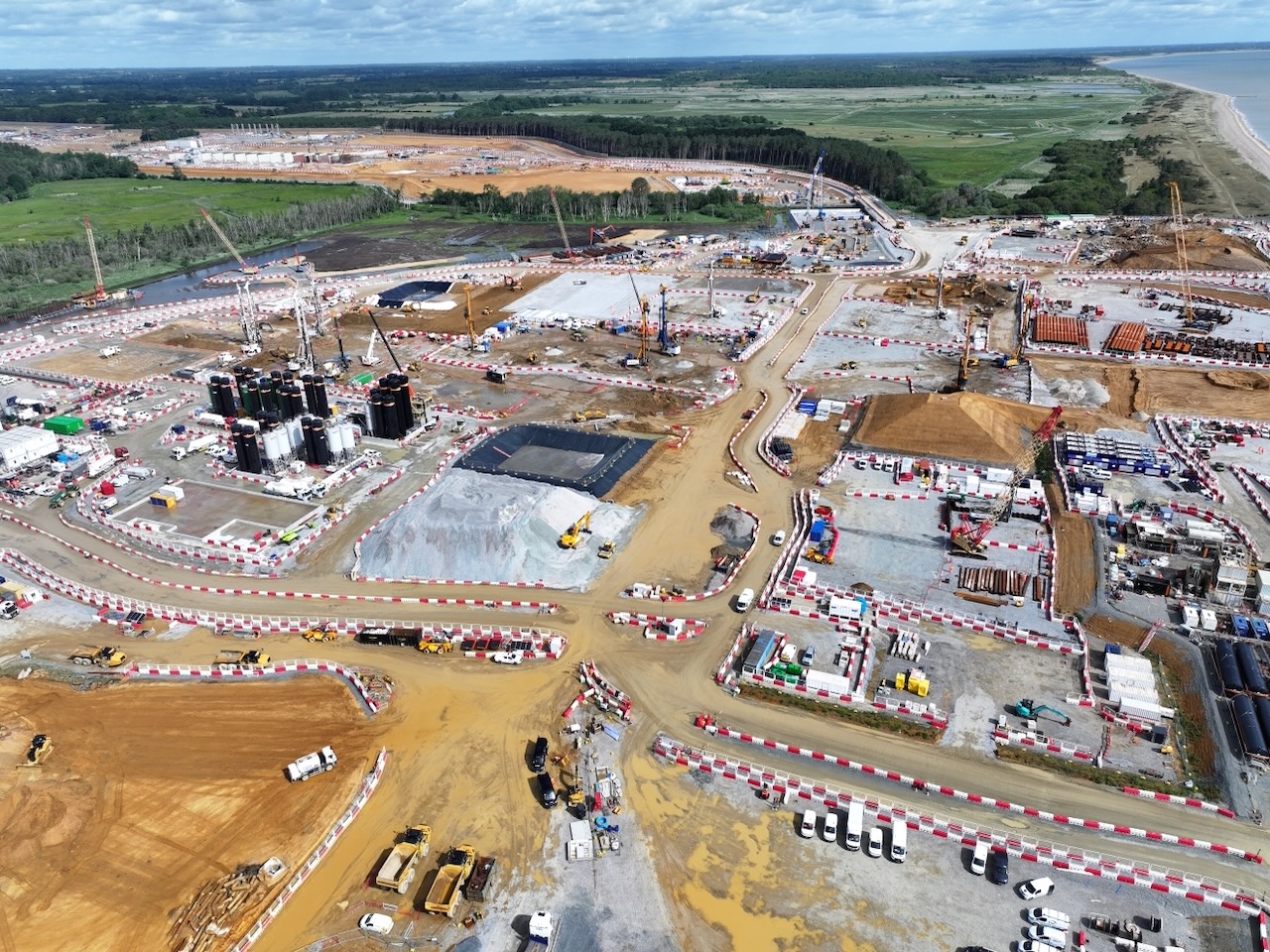
Balfour Beatty Ground Engineering, VSL Systems (UK) and Bachy Soletanche will jointly deliver major geotechnical works for the Sizewell C nuclear project, covering piling, soil mixing, diaphragm walls and plastic cut-off walls. The package will form key below-ground containment and support structures for the twin EPR units, where groundwater control and long-term settlement performance are critical on the Suffolk coast. The collaboration signals early locking-in of specialist contractors for complex deep-foundation and seepage-control systems on one of the UK’s largest current infrastructure schemes.
Andy Burnham’s swearing-in as prime minister on 20 July signals potential shifts for UK infrastructure, particularly around rail investment, regional devolution and funding models for major projects. Engineers will be watching for decisions on schemes such as Northern Powerhouse Rail, HS2 residual works and city-region mass transit, as well as any changes to the National Infrastructure Commission’s remit. Any move towards greater fiscal powers for combined authorities could alter how £bn-scale transport, flood defence and housing-enabling schemes are prioritised and procured.
Construction has started on the £1bn Golden Valley cyber and technology campus in Cheltenham, a major expansion adjacent to GCHQ intended to cluster national security and defence-sector organisations. The first phase will deliver core infrastructure and initial office and lab space to anchor a wider mixed-use development, with subsequent phases expected to add high-spec commercial floorspace, residential units and supporting transport links. For civil and geotechnical teams, early works will focus on site servicing, ground engineering and phased utilities to support secure, resilient data and research facilities.
Greenpeace analysis of England and Wales utility data finds that daily distribution losses from ageing mains and service pipes exceed the volumes saved by temporary hosepipe bans during drought restrictions. The campaign group argues that leakage, often above 20% of put‑in‑system water in some regions, should be tackled through accelerated mains replacement, active pressure management and improved leak detection rather than relying primarily on domestic outdoor-use bans. For civil and water engineers, the figures strengthen the case for prioritising network renewal, smart metering and district metered areas in drought resilience planning.
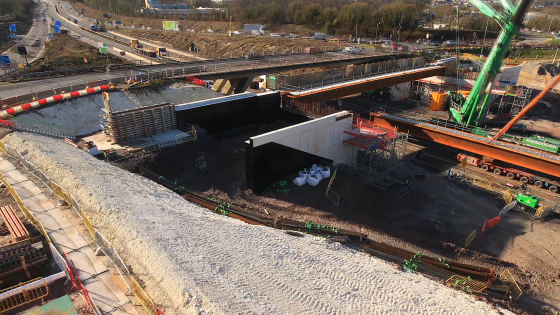
Major upgrade works at Junction 9 of the M3 at Winchester are progressing, with National Highways advancing construction of a new bridge and the A34 northbound link to separate strategic and local traffic. The scheme involves reconfiguring the M3/A34 interchange geometry and building additional link capacity to reduce weaving movements between the southbound M3 and northbound A34. Contractors will need to manage complex staging under live motorway conditions, with significant temporary traffic management and phasing around the new bridge installation.
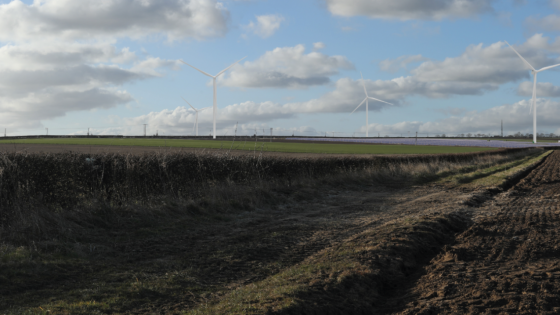
Plans have been lodged for a six‑turbine onshore wind farm extension in the East Riding of Yorkshire, making it one of the first new English onshore schemes to come forward since the government relaxed planning rules. The project would expand an existing renewable energy park, allowing connection to established grid and access infrastructure rather than building a standalone site. For civil and geotechnical teams, the brownfield-style extension suggests focused work on turbine foundations, access upgrades and grid reinforcement rather than full greenfield enabling works.
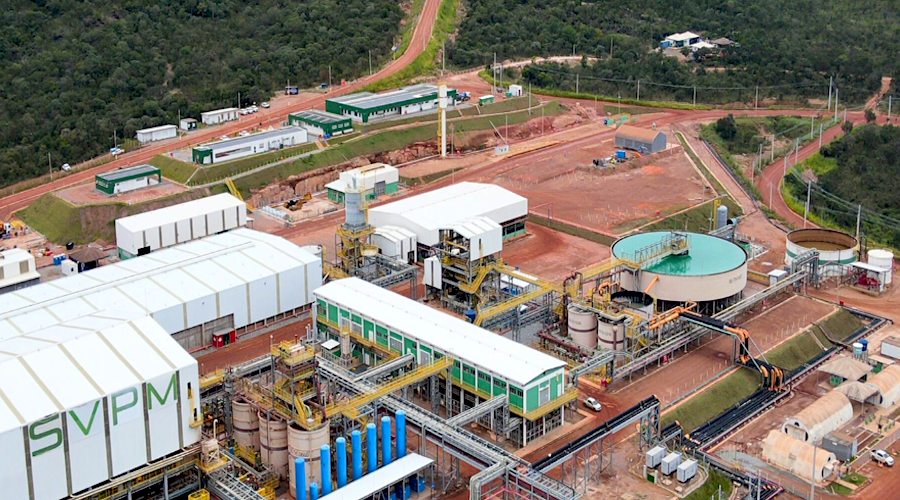
USA Rare Earth has appointed Serra Verde Group chief executive Thras Moraitis as its next CEO from 1 October, following completion of a $2.8 billion cash-and-stock merger expected to close by the end of August, with current chair Michael Blitzer becoming executive chairman. The combined company aims to build a mine-to-magnets rare earths supply chain outside China, anchored by Serra Verde’s Pela Ema operation in Brazil, which is forecast to supply about half of global ex-China heavy rare earth output next year. Serra Verde recently secured a $565 million US International Development Finance Corporation financing package to expand Pela Ema, signalling strong US-backed support for non-Chinese heavy rare earth production capacity.
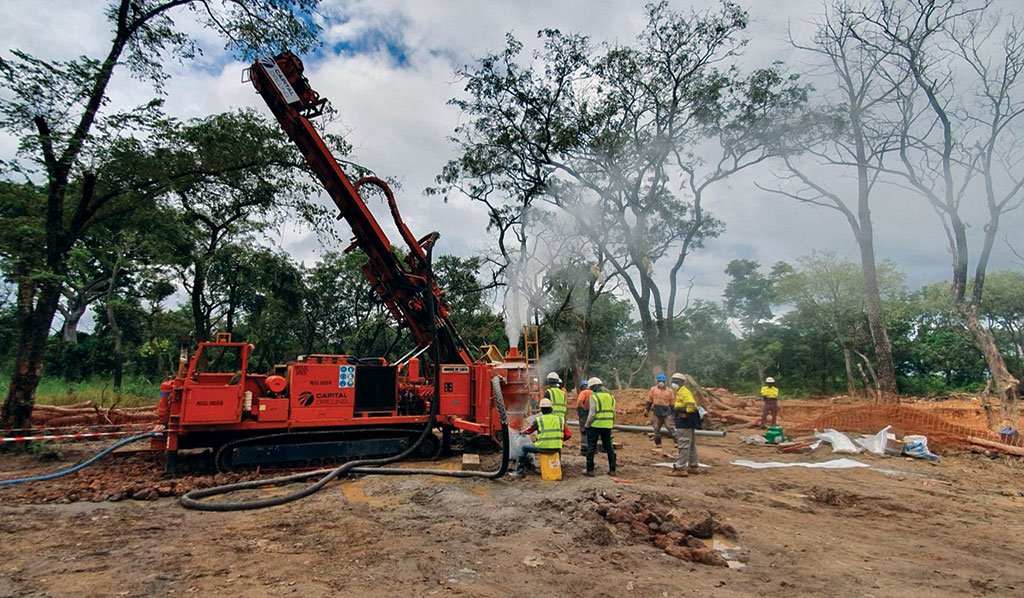
Awalé Resources’ Newmont-backed Odienné project in Côte d’Ivoire has intersected its highest gold grades to date beneath the BBM open-pit, with hole BBDD-31 returning 7 metres at 7.04 g/t gold, 0.16% copper, 0.88 g/t silver and 94 ppm molybdenum from 385 metres depth. A second hole, BBDD-30, cut 46 metres at 1.93 g/t gold and 0.39% copper from 364 metres, plus a separate 38 metres at 2.24 g/t gold and 0.46% copper, confirming a high-grade core extending to at least 600 metres depth. The results, from the first two of 12 planned deep holes and supported by seven active rigs, point to underground potential beneath the 32.4 million tonne inferred resource (1.33 g/t gold, 0.33% copper).
Seabridge Gold has secured a US$100 million unsecured credit line at 7% interest, drawable in US$10 million tranches to year-end 2026, to fund roads, geotechnical, metallurgical and environmental data collection for feasibility-level design at its US$8.8 billion KSM gold-copper project in British Columbia’s Golden Triangle. The financing proceeds despite a B.C. Supreme Court order to redo Indigenous consultation on KSM’s “substantially started” status and a permitting standoff with Tudor Gold over the 12.5 km Mitchell Treaty Tunnels crossing Treaty Creek. KSM’s 2022 prefeasibility study reports 2.29 billion tonnes of proven and probable reserves grading 0.64 g/t gold and 0.14% copper, containing 47.3 million oz. gold and 7.3 billion lb. copper.
Anglo American has reportedly selected the Global Diamond Consortium, led by former De Beers chief executive Gareth Penny, as preferred bidder for De Beers, with the proposal including equity participation from Botswana, Angola and Namibia. Botswana, which produces about 70% of De Beers’ diamonds and already holds a 15% stake, has signalled it wants a larger share as part of Anglo’s portfolio reshaping. The sale process is unfolding against a severe market downturn, with WWW’s rough diamond index down roughly 50% from its 2022 peak and De Beers suspending output at South Africa’s largest diamond mine.
Silver futures rebounded 1.5% to $56.74/oz on Comex after hitting an eight‑month low of $55.50, while gold slipped 0.3% to $4,005/oz, holding just above the $4,000 support level that veteran analyst John Gross pegs as critical alongside $55/oz silver, with the next support near $50. The gold–silver ratio eased to just under 71, Chinese wholesale gold demand and ETFs remain near decade‑low levels despite 20 consecutive months of PBoC buying, and Indian silver import restrictions have pushed local dealer premiums to $6.50/oz. Swap markets now fully price at least one further Fed hike this year as the US‑Iran conflict keeps oil and US gasoline above $4/gal, raising macro risk for precious‑metal‑exposed miners such as Newmont, Barrick, Pan American Silver, Coeur and Hecla, several of which are trading at less than half their 52‑week highs.
London Gold LLC has proposed a US$25 million cash-and-stock acquisition of Bocana Resources (TSXV: BOCA), whose key asset is the 40 km² Escala gold-silver-copper project in Bolivia’s Potosí department, about 40 km from San Cristobal Mining’s major silver operation. Bocana’s C$7.7 million market cap shares, last traded at C$0.075 on 29 June, are halted while terms are finalised, with assets to be rolled into a new London Gold-controlled vehicle targeting a Nasdaq listing and backed by an initial US$1.2 million diligence funding. Investors face limited visibility on London Gold, which has filed dormant UK accounts since 2016 and disclosed neither funding sources for the US$25 million nor its beneficial owners.
Orezone Gold has restarted its Casa Berardi mine in western Quebec after a three-day voluntary shutdown due to nearby wildfires, keeping its 2026 guidance at 62,000–67,000 oz of gold. A skeleton crew stayed on site to maintain the operation while teams pulled forward planned maintenance, which Orezone expects will cut downtime next year. The mine, acquired earlier this year as part of Orezone’s shift to a multi-mine portfolio, produced 20,500 oz in Q2, with lower grades expected in Q3 before higher-grade ore feeds the mill in Q4.
Copper climbed 1.3% on Comex to $6.35/lb (just under $14,000/t), within 5% of its early-June record, as China’s import premium hit $100/t for the first time since May 2025 and Shanghai exchange stocks fell 20% last week to 79,909 t, down 45% year-to-date. Tightness is being driven by Beijing’s VAT crackdown on the “invoice economy”, pushing substitution from scrap into cathode and drawing metal out of LME warehouses despite record 630,293 t in Comex storage. On the supply side, storms cut South32’s payable output at Sierra Gorda to 16,000 t for the June quarter, Antofagasta’s H1 production dropped 9.5% to 285,000 t with cash costs guided up to $2.40–$2.60/lb, and Codelco halted surface operations at Andina and shipments from El Teniente.
Central banks have doubled their gold purchases to an average 1,000 tonnes per year over the past four years, with a World Gold Council survey of 76 institutions showing 89% expect global official holdings to rise and 45% plan to add to their own reserves. Speaking at the Rule Symposium in Boca Raton, senior market strategist Joseph Cavatoni framed the move as a structural response to sanctions, inflation and credit risk in paper currencies. The deeper, policy-driven demand base could underpin bullion prices, but miners still need to convert higher prices into disciplined production, cash flow and managed political and operating risk.
Tactical Resources has secured Nasdaq Capital Market approval via a SPAC merger with Plum Acquisition Corp. III, with New PubCo shares to trade under the ticker “TREO” after the expected 28 July 2026 closing. The company plans to use the listing to accelerate its Peak rare earths project in Hudspeth County, Texas, which holds exclusive rights over about 4 million tonnes of REE-bearing tailings and stockpiles from the Sierra Blanca quarry and already has initial quarry operating permits. Tactical’s feedstock-first model relies on existing mined material, aiming to bypass new mine development and move directly into processing.
XCMG is pushing deeper into global mining fleets, with General Manager Zhai Kun and North America Mining Machinery Product Manager Tao Hong outlining expansion plans from CONEXPO-CON/AGG 2026 in Las Vegas. The company is targeting larger haul truck and hydraulic shovel classes and tailoring models for North American mine standards, including Tier 4 Final/Stage V emissions packages and cold‑climate options. For operators, the message is more competition to established OEMs on ultra‑class equipment procurement, parts support, and localisation of control systems and telematics.