Geomechanics, Streamlined.
© 2026 Geomechanics.io. All rights reserved.
The Competition & Markets Authority’s interim market study finds UK road and rail civil engineering “caught in a negative cycle”, with Boston Consulting Group data showing 58% of 48 road schemes and 56% of 27 rail schemes finishing late, with average time overruns of around 27–29%. Root causes cited include uncertain, short‑term funding, risk‑averse procurement favouring low‑risk contract forms, complex accreditation, and heavy reliance on subcontracting. Proposed remedies under development focus on a more stable project pipeline, stronger client procurement capability, streamlined regulatory processes and rebalanced risk to incentivise innovation and new entrants.
Higgins Group has reported a 51% turnover increase to £315.1m for the year to 31 July 2025, with profit before tax rising to £1.05m and cash in the bank more than doubling to £24.9m while net debt fell by £20m to £14.7m. Higgins Partnerships delivered 189 homes across three new build projects in a predominantly “build year”, spent £7.3m on rectification works and holds remaining provisions of £3.9m. The group now carries a secured order book above £1.1bn and a development pipeline capable of generating over £600m.
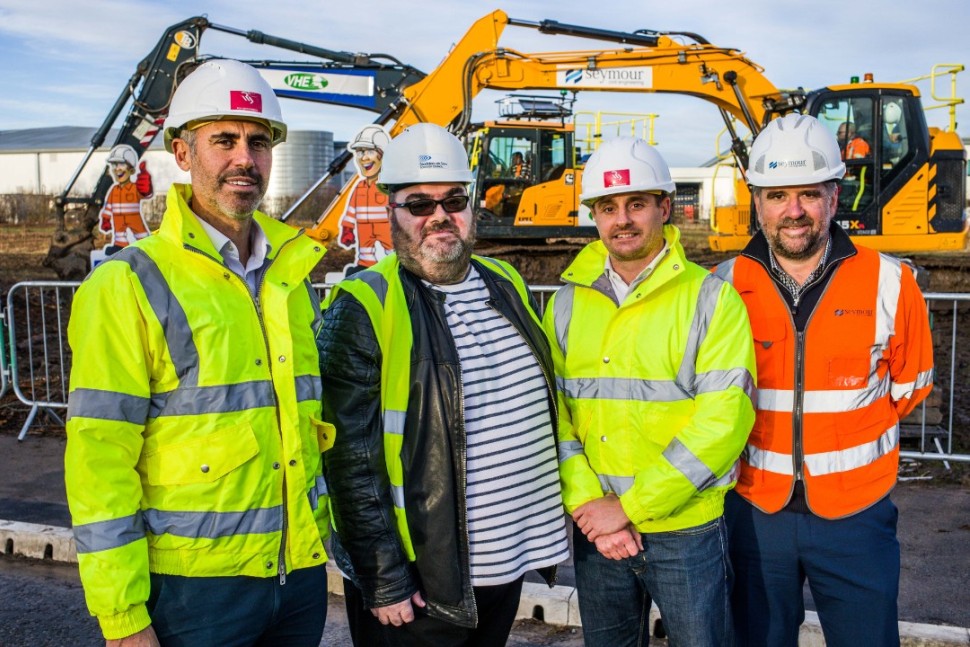
Seymour Civil Engineering has begun infrastructure works for Rula Developments’ 54-acre Teeslink industrial and logistics hub at Stockton-on-Tees, delivering site access roads and development plateaux to service up to 775,000 sq ft of floorspace. The rail-adjacent site, next to Eaglescliffe station and around one mile from the A66, was acquired by Stockton-on-Tees Council in 2021 using Tees Valley Combined Authority Indigenous Growth Fund support. Rula plans build-to-suit units from 3,000 sq ft to 500,000 sq ft on freehold or leasehold terms, with first occupancies targeted by end-2026.
Chromafora’s pilot-scale thiosulphate gold leaching process in Sweden has achieved up to 92% gold recovery without cyanide, in a programme formally reported to and approved by innovation agency and co-funder Vinnova. The process uses thiosulphate lixiviant chemistry instead of sodium cyanide, targeting refractory and complex ores where conventional cyanidation underperforms. For mine operators, the results signal a potential route to maintain high recoveries while reducing cyanide handling infrastructure, permitting complexity and long-term tailings liabilities.
Almonty Industries has begun commercial mining at the Sangdong tungsten mine in Yeongwol, Gangwon Province, with the first truckload of ore delivered to the run-of-mine (ROM) pad, signalling the shift from development to active extraction. The project is centred on redeveloping one of the world’s historically significant tungsten deposits, aiming to supply high-grade ore into Asian and global hardmetal and alloy markets. For mine planners and geotechnical teams, the move commits the site to full-scale stoping, ground support, and backfill sequencing rather than purely development headings.
Silver Storm Mining has ordered a full underground fleet from Chinese manufacturer Siton to restart operations at the 100%-owned La Parrilla silver mine complex in Durango, Mexico, covering load–haul–dump units, underground trucks and both development and production drills. The package also includes new main and auxiliary ventilation fans to upgrade airflow capacity in the multi-level workings, a key step for meeting current diesel equipment and worker exposure limits. Delivery of all critical units is intended to align with the ramp-up of underground development and stoping.
BQE Water has secured its largest-ever contract to operate and maintain the Britannia Mine Water Treatment Plant, 50 km north of Vancouver on the Sea-to-Sky Highway, following a competitive procurement led by Infrastructure BC for the provincial government. The plant treats acid rock drainage from the historic Britannia copper mine, which once discharged some of the most metal-laden effluents on the British Columbia coast. Long-term O&M by a specialist water treatment contractor signals continued regulatory pressure on legacy mine water liabilities and stable demand for high-reliability treatment performance.
Scottish Water has selected preferred enterprise partners for a decade-long infrastructure programme to upgrade water and wastewater assets across Scotland, covering treatment works, trunk mains and sewer networks. The alliancing-style framework is expected to bundle capital delivery, maintenance and digital optimisation, with tier one contractors and consultants forming integrated teams for design, construction and long-term asset management. For geotechnical and civil engineers, the programme signals sustained demand for pipeline renewals, treatment plant expansions and resilience works on ageing embankments, outfalls and strategic mains.
Demolition of two ageing stands at Edgbaston Stadium has been completed, marking the first major construction milestone in a £46M redevelopment to modernise the ground before the 2027 summer cricket season. The scheme will replace the structures with new spectator facilities and upgraded concourses, requiring complex works within the existing bowl and tight urban footprint. Contractors now move into foundation and superstructure phases, with sequencing and temporary works critical to maintaining stadium operations and programme.
Scour is now confirmed by Moray Council as the likely principal cause of the Garmouth Viaduct collapse over the River Spey on 14 December, after an abrupt change in the river’s flow path is thought to have undermined the masonry or concrete support piers. Engineers are assessing how localised bed erosion and altered hydraulic conditions around the pier foundations triggered the failure. The case will sharpen scrutiny of scour risk assessments, real-time river monitoring and foundation protection measures on older rail and footbridges in dynamic gravel-bed rivers.
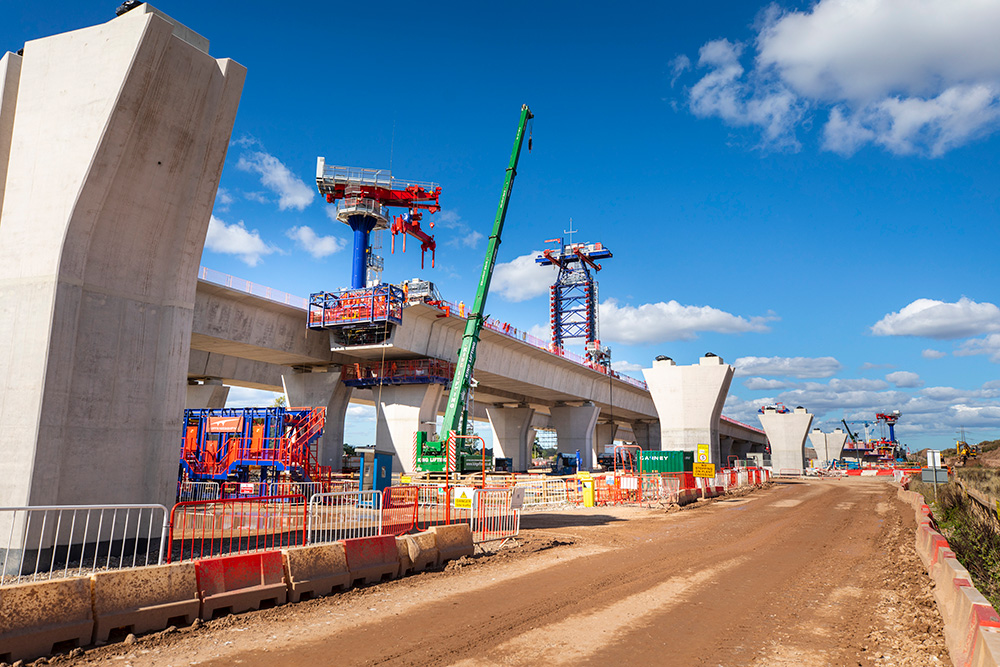
Network Rail has appointed VolkerRail, Laing O’Rourke, AtkinsRéalis and Siemens Mobility to form the Midlands Rail Hub Alliance to design and develop a £1.75bn upgrade of the regional network. The programme is billed as the most significant overhaul of Midlands rail in decades, targeting capacity and connectivity improvements across key inter-city and commuter corridors centred on Birmingham. Civil and systems packages are expected to include new and remodelled junctions, additional track and digital signalling, demanding complex staging around heavily trafficked existing infrastructure.
Plans for the next wave of UK offshore wind farms are being used to argue for onshoring key materials such as monopile steel, transition pieces and high-voltage export cables to domestic fabrication yards. Proponents say UK-based rolling mills, tower factories and cable plants could shorten 220–300km supply chains, cut transport emissions and reduce currency and logistics risk on multi‑GW projects. For civil and marine contractors, a stronger local supply base would influence foundation design choices, port upgrade priorities and contracting strategies for serial installation campaigns.
Britain’s civil engineering sector has recorded its first fall in workloads since the Covid-19 pandemic, with contractors warning that delayed decisions on major infrastructure schemes are feeding directly into order books. The dip, captured in the latest industry workload surveys, is emerging despite ongoing programmes in rail, strategic roads and water, signalling that smaller regional schemes and early‑stage design commissions are being paused or slowed. Firms report growing concern over pipeline visibility for 2026–27, affecting resource planning for geotechnical investigations, temporary works design and specialist ground engineering subcontractors.
Lower Thames Crossing has appointed Department for Transport director general for roads, places and environment Emma Ward as senior responsible owner, confirming a revised completion date of 2034 for the £10bn-plus scheme. The project will deliver a new dual three-lane road and 4.3km bored tunnel under the Thames between Kent and Essex, designed to relieve pressure on the Dartford Crossing. The SRO move signals tighter central oversight of programme risk, consenting and major civils procurement as National Highways pushes towards main works.
The Planning and Infrastructure Act has received Royal Assent, bringing into force a wide package of reforms aimed at accelerating housing delivery and major infrastructure consenting across the UK. Measures include streamlining Development Consent Order processes for nationally significant projects and tightening statutory timescales for planning decisions, with the intention of reducing multi‑year delays on large transport, energy and water schemes. For engineers, the changes signal pressure to front‑load design, environmental assessment and geotechnical risk work to meet shorter pre‑construction and examination windows.
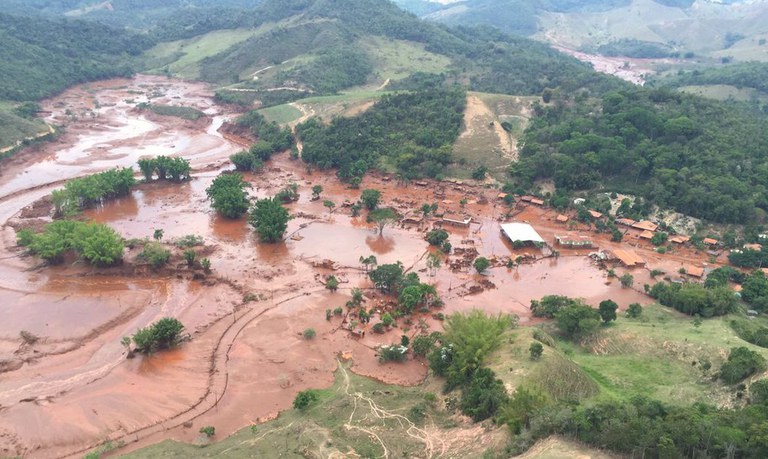
BHP faces a demand for at least £189 million ($253 million) in legal costs in the UK after being found liable for the 2015 Mariana tailings dam collapse at the Samarco iron ore mine in Minas Gerais, which killed 19 people and caused Brazil’s worst environmental disaster. The claim covers legal fees plus about £44 million spent on walk-in centres and call centre staff to communicate with roughly 620,000 affected people, and sits alongside a £36 billion ($48 billion) damages claim set for trial in October 2026. BHP is seeking permission to appeal, calling the costs “shocking” and pushing to defer any ruling on costs until after the damages phase.
Brazil has indefinitely postponed a planned March 2026 auction of mineral exploration areas rich in critical minerals after the National Mining Agency (ANM) said it lacks funds to cover embedded auction costs. The tender was to be the first mining round run jointly with B3, the São Paulo stock exchange operator, using a bidding model already applied in power and oil and gas, and would have addressed a backlog of roughly 100,000 areas awaiting auction. The delay jars with Brazil’s push to market its 94% share of global niobium reserves and significant graphite, nickel, lithium and rare earth potential.
Integra Resources’ updated feasibility study for the DeLamar gold-silver heap-leach project in Idaho outlines a 10-year plan averaging 88,000 oz. gold and 1.6 million oz. silver per year, with 106,000 oz. gold-equivalent output at site cash costs of $1,179/oz. and AISC of $1,480/oz. The redesign shifts to two smaller heap-leach pads and two-stage crushing, cutting pre-production capex to $389 million and delivering a base-case after-tax NPV5 of $774 million, 46% IRR and 1.8-year payback at $3,000/oz. gold. Proven and probable reserves stand at nearly 120 million tonnes grading 0.33 g/t Au and 13.56 g/t Ag, with permitting under US federal rules slated to start early 2026 and first production targeted for 2028.
Sierra Madre Gold & Silver is acquiring First Majestic’s 100%-owned Del Toro silver mine in Zacatecas for up to $60 million, with $30 million due at closing (US$20 million cash, US$10 million in shares) and two further US$10 million milestone payments tied to a >100 million oz AgEq resource and achieving commercial production within five years. Del Toro comprises three fully permitted underground mines, a 3,000 t/d flotation plant and 62.5 km of existing development over 21.6 sq. km of concessions, with historic resources of 7.57 million oz AgEq (M&I) and 11.18 million oz (inferred). Sierra Madre plans ~50,000 m of drilling, an updated resource by early 2028, and a staged restart from mid-2027, while keeping open an accelerated restart within 12 months if silver prices stay strong.
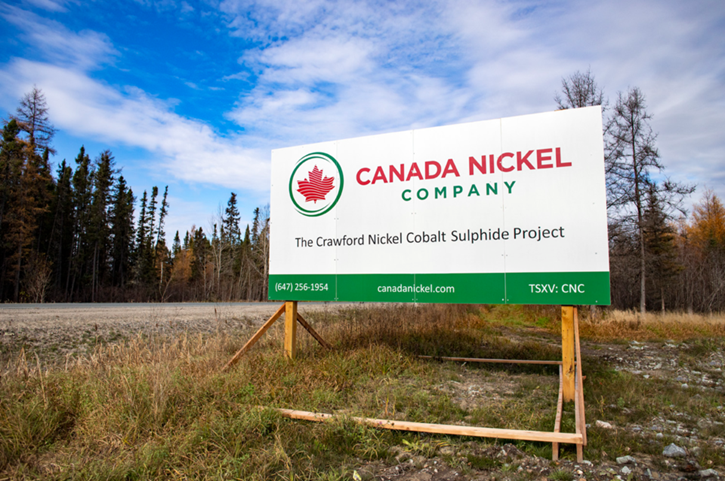
Canada Nickel has declared its Timmins Nickel District in northern Ontario the country’s largest undeveloped nickel district, with contained metal rising about 12% to 20.9 million tonnes after new initial resources at Bannockburn and Midlothian. Bannockburn now hosts 63 million indicated tonnes at 0.28% nickel plus 129 million inferred tonnes at 0.27%, while Midlothian adds 595 million inferred tonnes at 0.28% nickel from drilling totalling 9,268 metres in 22 holes. The district, anchored by the 9.7‑million‑tonne Crawford deposit and seven other defined resources, now exceeds The Metals Company’s Clarion‑Clipperton seabed nickel resource.
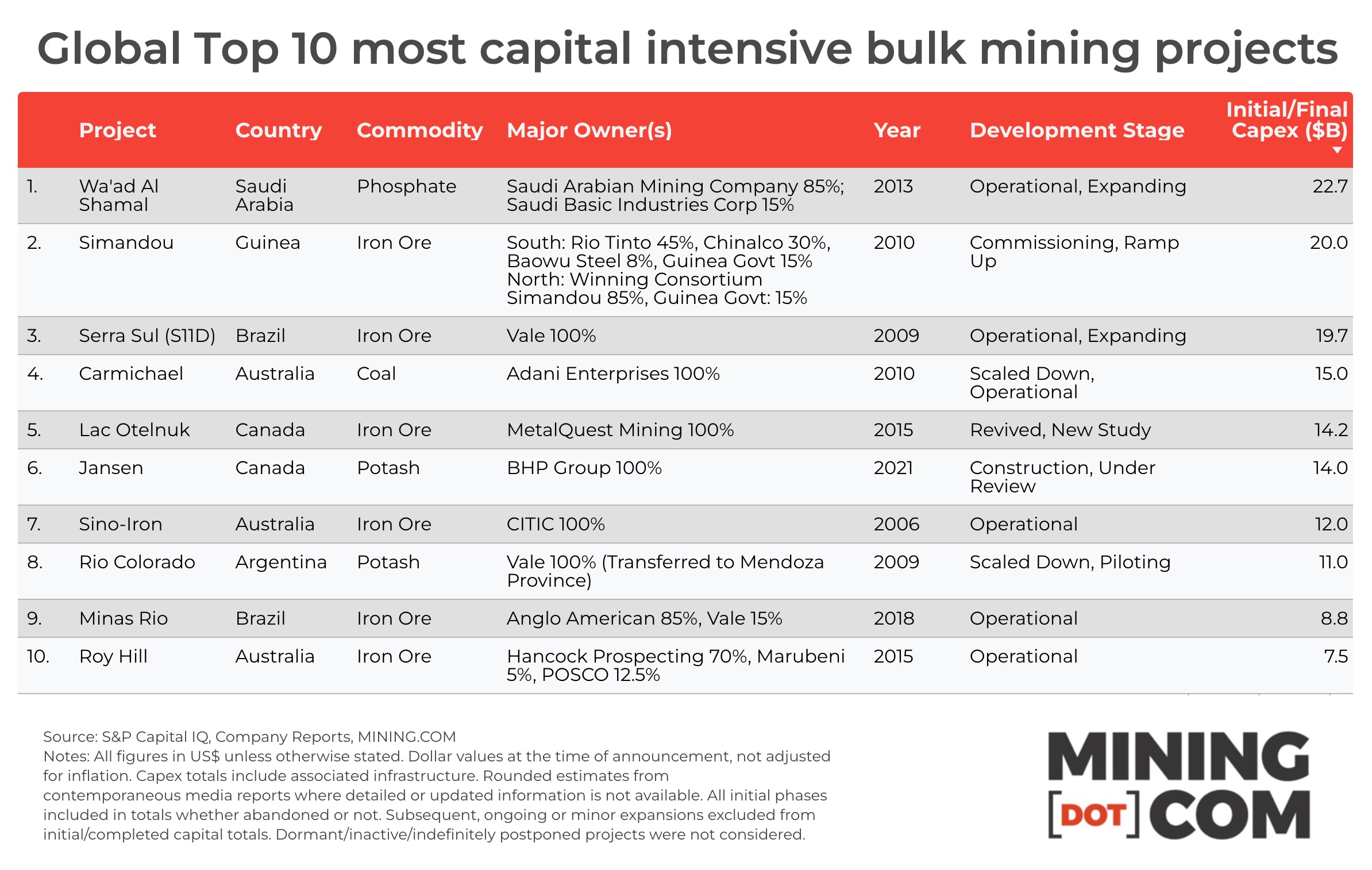
MEGAMINES ranks Saudi Arabia’s Wa’ad Al Shamal phosphate complex as the world’s costliest mining project, with total industrial-city investment of $22.7 billion and Ma’aden’s mine-and-refining CAPEX estimated at $15.5 billion, including an $8 billion original plant and a $7.7 billion Phosphate 3 expansion due by 2027. Guinea’s Simandou iron ore development follows with more than $20 billion in shared mine–rail–port spend, a 600 km trans-Guinean railway to a new deepwater port, and targeted output of 120 Mtpa of ~66% Fe ore by 2028. Brazil’s Serra Sul (S11D) at $19.5 billion plus a $2.8 billion brownfield expansion to 120 Mtpa, and Adani’s Carmichael coal project, originally scoped at 60 Mtpa with A$16.5–A$22 billion CAPEX but now operating at 10 Mtpa with a 200 km rail link, illustrate the scale, long timelines and redesign risk inherent in bulk mining megaprojects.
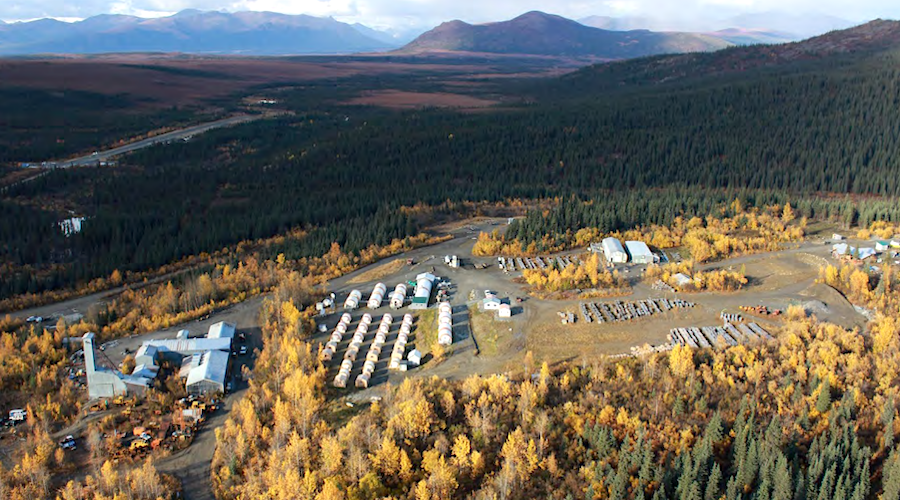
Trilogy Metals and South32’s 50/50 Ambler Metals JV has approved a $35 million 2026 work programme at Alaska’s Upper Kobuk Mineral Projects, targeting mine-permit submissions for the high-grade Arctic copper deposit under federal FAST-41. Drilling will focus on geotechnical and condemnation holes for mine design and infrastructure siting, while the Bornite camp is upgraded for multi-year geotechnical and exploration campaigns and an independent UKMP management team is re-established. Arctic’s 2023 feasibility study outlines a 13-year operation producing 149 Mlb/y copper plus zinc, lead, gold and silver, with an after-tax NPV8 of $1.1 billion and 22.8% IRR.
Ontario and Canada have signed a “one project, one review” agreement to coordinate federal and provincial environmental and impact assessments, targeting long-delayed mining and infrastructure schemes in the Ring of Fire and other critical mineral districts. The deal dovetails with Ontario’s One Project, One Process (1P1P) framework, which aims to cut mine approval timelines from up to 15 years to a maximum of two years, with Frontier Lithium’s PAK project the first pilot. For geotechnical and mining teams, the move signals materially shorter permitting horizons for cobalt, lithium, nickel and copper projects backed by a C$500 million processing fund.
Tata Steel has signed an MoU with Lloyds Metals & Energy to jointly develop iron ore mining, slurry pipeline logistics, pelletisation and steelmaking projects in Maharashtra’s Gadchiroli district. The partners will first target operating existing mining concessions and associated infrastructure to lift iron ore output from the region. For mine planners and process engineers, the deal signals potential investment in long-distance slurry transport, beneficiation and pellet plant capacity integrated with downstream steel facilities.