Geomechanics, Streamlined.
© 2026 Geomechanics.io. All rights reserved.
Core Lithium has reported a substantial ore reserve increase at its Finniss lithium project in the December 2025 quarter, materially extending mine life and supporting higher spodumene concentrate output from the Grants open pit and BP33 underground deposits. The updated reserve, derived from infill drilling and revised pit and stope designs, is based on a conventional dense media separation plant near Darwin Port, with trucking distances kept short to reduce logistics costs. For geotechnical and mine planners, the larger reserve base supports longer-term pit slope optimisation, underground sequencing, and potential plant debottlenecking studies.
Michelin has introduced the MICHELIN Xtra Power L5** 26.5 R25, a new OTR tyre engineered for the latest high-powered mine and quarry wheel loaders operating in extreme loading and mucking conditions. The L5** profile and 26.5 R25 size target severe-duty fronts on large loaders, where sidewall damage, rock cuts and heat build-up typically limit tyre life. Michelin is positioning the design to combine higher robustness and productivity with improved operator comfort, signalling incremental gains in tyre performance for hard-rock loading fleets.
NHL has completed and delivered the first three commercial “oil-to-electric” conversions of its 55 t class TR60 mining dump trucks at its Baotou plant in Inner Mongolia, shifting the model from diesel to battery-electric drive. The TR60 retrofit package replaces the diesel powertrain with a high-capacity traction battery system and electric drive components while retaining the original chassis and payload class. For mine operators, the upgrade route offers a lower-capex path to electrification, reduced diesel logistics, and compatibility with existing TR60 fleets and maintenance regimes.
Epiroc reports that exploration was again one of its fastest-growing business lines in 2025, with President and CEO Helena Hedblom linking the uptick to a broader market push for new orebody discovery alongside automation, electrification and digitalisation. The company is leveraging its integrated exploration portfolio – from surface and underground drill rigs to rock drilling tools and digital data solutions – to capture this demand. For mine planners and geotechnical teams, the trend signals sustained investment in early-stage drilling campaigns and associated data quality, core handling and resource-definition workflows.
Industry leaders in Roads & Infrastructure Magazine’s “Roads Review: Looking Forward” say optimism for 2026 is driven less by mega-projects and more by a cultural shift towards valuing the people who keep pavements, bridges and drainage assets operating. David Lightfoot, QLD Delivery Coordinator at RoadAid, points to stronger, more capable maintenance teams and a deeper appreciation of frontline crews managing resurfacing, pavement repairs and traffic control under live loads. For practitioners, this signals continued investment in workforce capability, retention and collaborative delivery models alongside traditional capital works.
MPB Structures has begun Phase 2 civils on the Wednesbury to Brierley Hill extension of the West Midlands Metro under a £37M contract covering the full civil engineering package. Works will include formation of trackbed, structures and associated utilities for the light rail corridor, building on the partially completed Phase 1 alignment. Contractors and designers will be watching how MPB sequences earthworks, drainage and structural interfaces to minimise disruption on a constrained brownfield route through the Black Country.
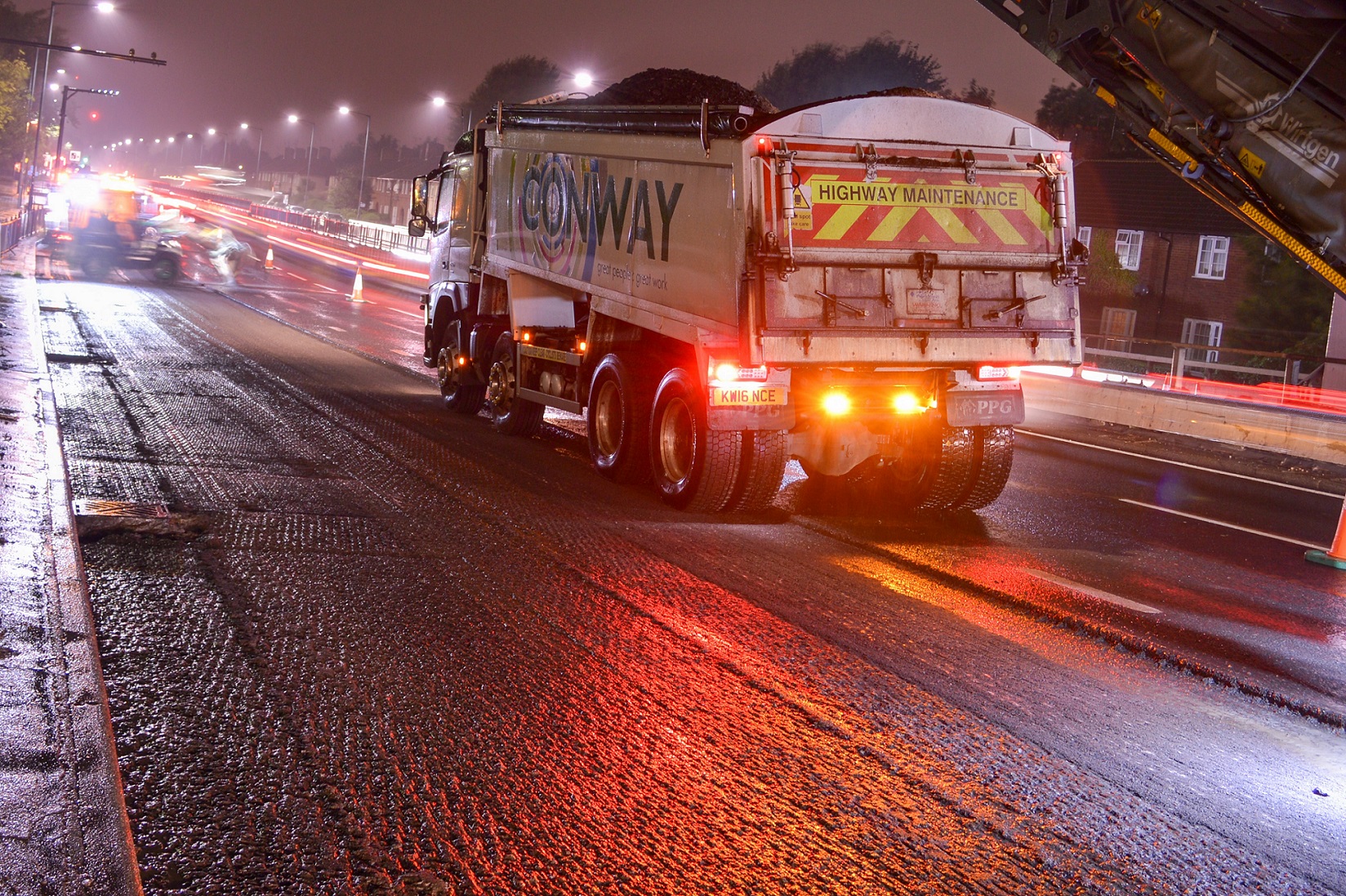
The UK Government’s December announcement of the “biggest ever boost” to local roads funding gives highways authorities a rare multi‑year uplift after a decade of short, stop‑start settlements. With budgets now stretching into 2026, councils can bundle resurfacing, drainage renewal and junction safety schemes into larger, multi‑year contracts, cutting unit costs on asphalt, traffic management and site mobilisation. For geotechnical and pavement engineers, the shift enables more whole‑life asset management, earlier intervention on failing subgrades and better planning of coring, condition surveys and design work.
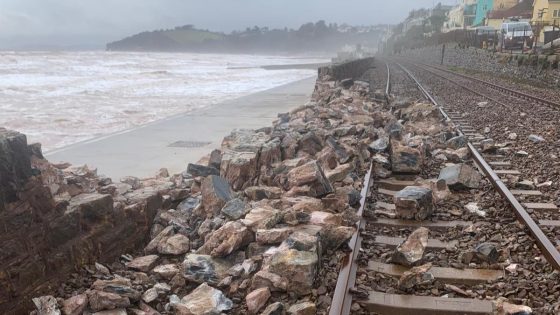
Rail services between Teignmouth and Dawlish Warren have restarted after Network Rail engineers removed debris from the coastal tracks caused by a sea wall collapse during Storm Ingrid. The failure occurred on the exposed Dawlish–Teignmouth frontage, a critical single coastal rail corridor where wave loading and overtopping have previously driven major resilience works. Engineers will now need to reassess wall stability, drainage and scour protection along this reach, with likely implications for design freeboard, armour detail and inspection regimes under more frequent extreme storm events.
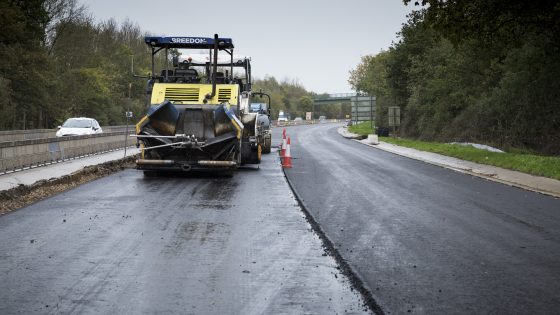
Yorkshire Highways Alliance has opened tenders for a £37.4M multi-supplier Specialist Surface Treatment Works framework covering member councils’ road networks across the region. The framework will bundle programmes such as surface dressing, micro-asphalt and other thin surfacing to extend pavement life and defer full-depth reconstruction on both urban and rural carriageways. Contractors will need proven capability in high-output treatment trains, traffic management on live highways and quality control of skid resistance and texture depth to secure places on the panel.
A proposed amendment to the Railways Bill that would have required Great British Railways to commit to a rolling programme of mainline electrification was rejected by the House of Commons Bill committee. Ministers argued that mandating continuous overhead line installation in primary legislation is “not the right way”, favouring case‑by‑case schemes instead. The decision prolongs uncertainty for track designers, bridge clearance modellers and traction power planners seeking long‑term programmes for 25kV AC upgrades and associated civil works.
North Sea energy ministers from the UK, Germany, Denmark, the Netherlands and six other European states have signed a joint declaration in Hamburg to deliver 100GW of offshore wind capacity and expand cross‑border electricity interconnectors. The agreement centres on large-scale co‑ordination of seabed planning, grid integration and shared offshore hubs in the North Sea basin. For civil and marine contractors, this signals a sustained pipeline of foundations, subsea cables and converter platforms in increasingly deeper, harsher offshore conditions.
A £2.4bn reduction in the Department for Transport’s capital spending line between the 2021 Spending Review and the Autumn Budget is being attributed by the Government to “accounting changes” rather than cuts to planned schemes. The shift appears in Treasury tables covering multi‑year allocations for rail enhancements, major road upgrades and local transport settlements, raising concern among project sponsors over how much funding is actually available in cash terms. For civil contractors and consultants, the uncertainty complicates pipeline planning, framework bidding and resourcing for long‑lead schemes.
Terrain Tamer is accelerating its global expansion from established branches in New Zealand, Fiji and France into high-growth mining hubs in southern Africa, supplying heavy-duty 4x4 driveline, suspension and filtration components for remote haul roads and exploration tracks. The company is targeting underground and open-pit fleets using Toyota LandCruisers and similar light vehicles, focusing on extended-life leaf springs, upgraded wheel bearings and reinforced differential parts designed for high dust loads and corrugated laterite surfaces. For mine operators, the move broadens options for reducing unplanned LV downtime and standardising parts across multi-country operations.
Belt support bars from Flexco have been installed at a high-throughput aggregate operation to control persistent conveyor spillage that was causing safety hazards and unplanned clean-up stoppages. The low-friction bars sit directly under the loading zone to maintain belt profile and seal integrity with existing skirting, reducing fugitive material at transfer points and limiting damage to idlers and belt edges. Operators report fewer shutdowns for manual clean-up and improved housekeeping around the conveyor structure, with knock-on benefits for inspection access and component life.
WA Mining Conference and Exhibition will return to the Perth Convention and Exhibition Centre on 16–17 September 2026 as Western Australia’s flagship event for mining and resources. Organised by Prime Creative Media and led by show director Rebecca Todesco, the two-day programme will again combine a technical conference with a trade exhibition focused on equipment, automation, processing and decarbonisation solutions. Mining engineers, geotechs and operations managers can expect concentrated access to OEMs, technology vendors and service providers active across WA’s iron ore, gold, lithium and critical minerals sectors.
Zijin Gold will acquire Canada’s Allied Gold for about C$5.5 billion in cash, paying C$44 per share—a 5.4% premium to Allied’s last close and 27% above its 30‑day average—as it accelerates overseas expansion amid record bullion prices. The deal adds three African producing mines expected to deliver up to 400,000 oz/y of gold, with Mali’s Sadiola contributing roughly half, plus the Kurmuk development project in Ethiopia and operations in Ivory Coast. A C$220 million break fee, Mali jurisdiction risk and the all‑cash structure may deter rival bids from peers such as Endeavour Mining and Fortuna.
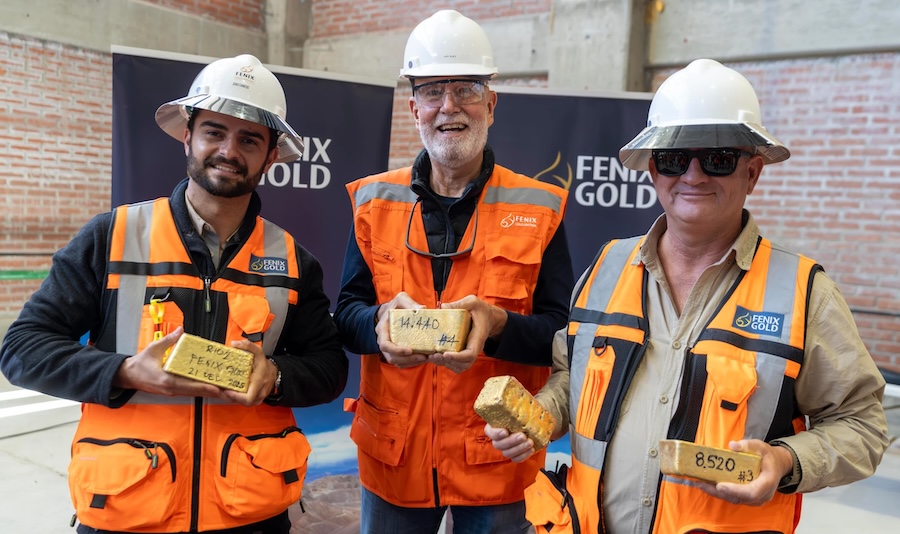
Rio2 has poured first gold at its $235 million Fenix mine in Chile’s Atacama region, producing 897 oz on 23 January after a 358 oz commissioning pour in December, with both pours also yielding about 131 oz of silver. The run-of-mine heap leach operation, located on the Maricunga gold belt, avoids crushing and tailings infrastructure and is ramping toward 20,000 tonnes of ore per day, targeting 60,000–70,000 oz of gold in 2026. Construction created roughly 1,200 jobs, with about 550 permanent roles planned over the mine’s 17-year life.
The US Department of Commerce has agreed a non-binding $1.6 billion package for USA Rare Earth under the CHIPS programme, combining $277 million in federal funding with a $1.3 billion senior secured loan and taking a 10% equity stake via 16.1 million shares plus 17.6 million warrants at $17.17. Together with a separate $1.5 billion PIPE at $21.50 per share, USAR could raise $3.1 billion to accelerate its Round Top project in Texas, targeting 40,000 t/d of feed and 8,000 tpa of processed rare earth products by 2030. The funding underpins a US “mine-to-magnet” chain including a 5,000 tpa NdFeB magnet plant in Stillwater, Oklahoma (planned to double to 10,000 tpa), HREE metal and alloy capacity via Less Common Metals (10,000 tpa), and DOE-backed digital twin work on HREE separation at Wheat Ridge, Colorado.
Hemlo Mining’s latest drilling at the Williams property in Ontario has defined a new E-Zone about 300 metres west of existing underground infrastructure, with hole 6702503 returning 10.9 metres at 4.65 g/t gold from 165 metres and 5 metres at 15.79 g/t from 534 metres, and hole 6702505 cutting 12 metres at 7.08 g/t from 599 metres. The E-Zone currently extends roughly 1,000 metres vertically and 500 metres east–west, remains open at depth, and is hosted in volcanic–sedimentary rocks with quartz-carbonate vein systems analogous to the long-producing C-Zone. Hemlo plans a 300-metre exploration drift this year to access the zone and infill drilling to test continuity along strike and at depth, with results expected to feed into a mineral resource update later this quarter.
Pope Leo XIV met more than a dozen mining and energy leaders at the Vatican, including BHP’s Mike Henry, Vale’s Gustavo Pimenta, Ivanhoe Mines’ Robert Friedland and Sigma Lithium’s Ana Cabral, to press for “integral ecology” and stricter ethical standards in resource extraction. The session, under the Building Bridges Initiative and linked to projects such as Borgo Laudato Si’, focused on human rights, decent work and environmental justice in critical minerals supply chains. Leo cited coltan from the DRC as emblematic of minerals enabling modern devices but tied to paramilitary violence, child labour and community displacement.
Gold surged as much as 2.5% to a record ~$5,111/oz on Monday, with silver jumping to $113.60/oz, as investors expanded the “debasement trade” amid concerns over US and Japanese sovereign debt and heightened geopolitical risk from moves such as the Trump administration’s Greenland annexation agenda and intervention in Venezuela. Central banks remain strong buyers, while family offices and first‑time private investors across Asia and Europe are rapidly adding bullion, according to the World Gold Council and BullionVault. Forecasts now pitch year‑end gold at $5,400–$6,000/oz (Goldman Sachs, SocGen, Morgan Stanley), with bookmakers William Hill offering 7/4 on $5,500.
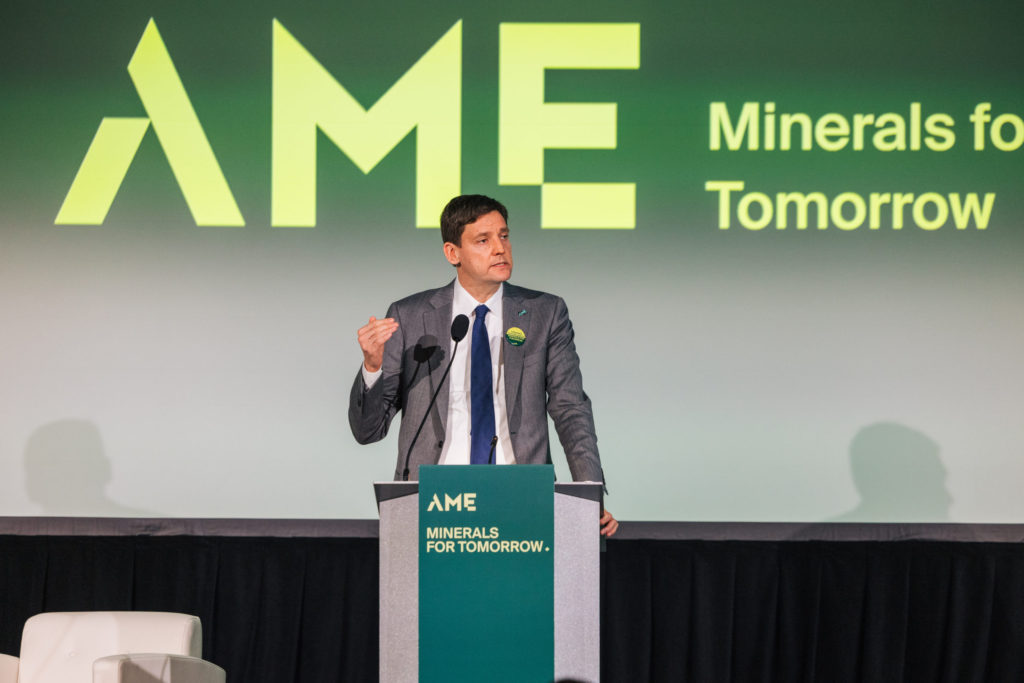
British Columbia is adding C$3 million to shore up mineral claims permitting, with C$1 million for extra Ministry of Mining and Critical Minerals staff to enforce fixed timelines and C$2 million to bolster the Mineral Claims Consultation Framework (MCCF) launched in March 2025. The move comes as mineral exploration spending hits a record C$750.9 million, yet MCCF decisions are averaging 127 days against a 90–120 day target and mineral claims staking has fallen 29%, with a 60% drop in area staked versus the seven-year average. AME CEO Todd Stone said the funding is critical for prospectors and juniors seeking predictable approvals.
Gold’s surge to a new record above US$5,100/oz, up 15% year-to-date and extending its strongest run since 1979, is being framed by investor Kevin O’Leary as validation of gold as a permanent 5% portfolio hedge rather than a trade. O’Leary stresses holding physical bullion in 100 g and 1 kg bars with paid vault storage, supplemented by coins for liquidity, and rebalancing the position quarterly. He argues institutional investors such as sovereign wealth and pension funds typically hold 5–19% in gold, while compliance rules still keep most of them out of cryptocurrencies.
A Staffordshire site manager who obstructed Health & Safety Executive (HSE) inspectors after they spotted two workers accessing a roof from an excavator bucket on 11 February 2025 has been fined £3,000, with £6,450 costs and a £1,200 victim surcharge by Birmingham Magistrates Court. David Robert Lane, 59, refused to identify himself, claimed workers were unpaid relatives, issued threats, and later sent expletive-laden emails after being charged under two counts of section 33(1)(h) of the Health and Safety at Work etc Act 1974. HSE, which conducts more than 13,000 inspections annually, signalled it will prosecute in rare cases of serious obstruction.