Geomechanics, Streamlined.
© 2026 Geomechanics.io. All rights reserved.
Energy Exploration Technologies (EnergyX) has commissioned one of North America’s largest roll-to-roll membrane production machines at its Austin, Texas plant, enabling industrial-scale output of up to 500,000 m² per year of ion exchange membranes for its GET-Lit lithium separation systems. The in-house line reduces dependence on overseas membrane suppliers and underpins EnergyX’s Lonestar lithium project in southwest Arkansas, as well as its move into nuclear-grade lithium isotopes for fusion and fission. The same proprietary membranes target desalination, carbon capture and electrodialysis markets projected at US$7.5 billion by 2035.
Nouveau Monde Graphite is advancing Phase 2 of its Matawinie graphite mine in Québec, designated a “major project of national interest” by the Canadian government, by awarding key contracts for construction capacity, services, equipment and materials. The recently signed packages include provisions for full execution once remaining project milestones and financing are secured, locking in contractor availability and pricing ahead of the main build. For mine planners and project engineers, this signals a move towards shovel‑ready status and a tighter timeline for detailed civil, earthworks and process-plant design coordination.
Parliament’s continuing struggle with the deteriorating Palace of Westminster fabric is again in focus, with unresolved decisions on how to tackle extensive stone decay, ageing mechanical and electrical systems, and fire-safety risks in a live legislative building. JCB is relaunching a redesigned range of JCB-branded power tools, signalling renewed competition in the professional cordless segment and potential shifts in site equipment procurement. Persimmon is pushing a soil recycling initiative on its housing sites to cut disposal and import costs, with implications for on-site segregation, geotechnical verification and materials management.
NTN is promoting high-performance tapered roller and spherical roller bearings for mining applications exposed to extreme loads, abrasive dust and frequent shaft misalignment. The range, supplied locally through Motion Australia, targets critical equipment such as conveyors, crushers and vibrating screens where premature bearing failure drives unplanned downtime. For site engineers, the focus is on higher dynamic load ratings, improved sealing against fine particulates, and bearing geometries that tolerate misalignment without excessive heat or spalling.
Pilbara Minerals has approved the restart of its Ngungaju spodumene processing plant at the Pilgangoora operation in WA’s Pilbara, aiming to capture improving lithium prices after last year’s curtailments. The restart will add a second processing stream alongside the existing Pilgan plant, lifting total site nameplate capacity once fully ramped and re‑utilising previously idled crushing, grinding and flotation circuits. For mine planners and process engineers, the move signals renewed confidence in hard‑rock lithium throughput and may trigger fresh contracting for drilling, tailings, and power and water infrastructure upgrades.
A new state-of-the-art minerals processing facility has opened in Queensland to accelerate testwork and flowsheet development for critical minerals, positioning local projects to move faster from resource definition to pilot scale. The lab is geared to handle complex ore characterisation, bench-scale processing and variability testing, supporting commodities such as rare earths, vanadium and battery-grade manganese under controlled, repeatable conditions. For miners and process engineers, this centralised capability should de-risk plant design, reduce reliance on overseas laboratories and shorten timelines for metallurgical optimisation.
Caterpillar has completed its roughly $1.1 billion acquisition of mining software specialist RPMGlobal, adding mine planning, scheduling and simulation platforms such as XPAC, HAULSIM and TALPAC to its portfolio. The deal folds RPMGlobal’s cloud-based enterprise solutions for fleet management, maintenance and ESG reporting into Caterpillar’s MineStar ecosystem, tightening integration between OEM equipment data and planning tools. For engineers, this signals deeper OEM-backed digital workflows for haulage optimisation, drill-and-blast design and life-of-mine scheduling, with potential lock-in around Caterpillar machine data and interfaces.
Alcoa of Australia has secured a clearing exemption from the Western Australian Government while it undertakes a strategic assessment of its existing and potential bauxite mining areas in the northern Jarrah Forest through to 2045. The exemption allows continued vegetation clearing under the Environmental Protection (Clearing of Native Vegetation) Regulations 2004 while Alcoa prepares a whole-of-operations environmental impact assessment under the WA Environmental Protection Act. For geotechnical and mine planners, the review timeframe to 2045 signals long-horizon pit sequencing, haul road, and residue storage planning under tighter cumulative biodiversity and water catchment constraints.
Glencore is accelerating its copper strategy after securing a land access deal with Gécamines for Kamoto Copper Company in Kolwezi, unlocking restricted ore zones, extending mine life into the mid‑2040s and supporting a 300,000‑tonnes‑per‑year output target. Analysts estimate the group aims to almost double copper production by 2035 at a capital intensity of about $16,200/t Cu‑equivalent, with peak development capex near $4.5 billion in 2031 and total investment potentially reaching $11 billion. Management plans to self‑fund growth, while considering partners at Agua Rica and El Pachón and a 40% sale of its DRC copper‑cobalt business.
Industry leaders, investors and policymakers will convene in Islamabad in April for the Pakistan Mineral Investment Forum, with attention centred on Barrick’s Reko Diq copper-gold project and wider critical minerals such as cobalt, lithium, rare earths and zinc. Analyst Erik Groves will spend over 10 days in Pakistan, visiting Balochistan project areas, federal and provincial mining offices, and university geology departments to map how permitting, power, water and transport planning actually function. The series will probe whether Pakistan’s “institutional middle” can deliver predictable approvals and coordinated infrastructure for large-scale copper and critical mineral developments.
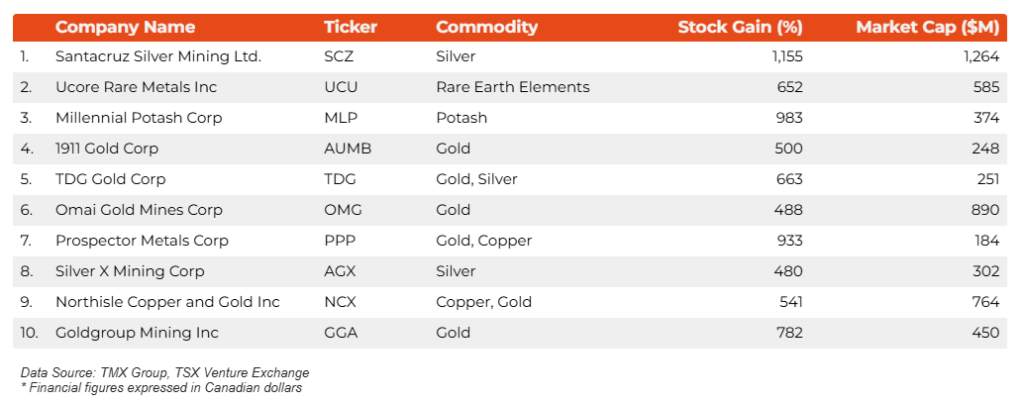
Mining stocks dominated the 2025 TSX Venture 50, taking 48 of 51 spots as Santacruz Silver Mining posted a 1,137% market cap increase and Ucore Rare Metals rose 1,109% on rare earth processing momentum. The mining cohort reached a combined market capitalisation of $19.9 billion with an average 443% share price gain, while overall TSXV 50 trading volumes doubled year-on-year to 13.2 billion shares. Nearly 80% of companies operate in Tier-1 jurisdictions in the Americas, with 43 issuers raising over $1.5 billion in equity during 2025.
Northern Dynasty Minerals’ shares fell up to 45% to C$1.52 after the US Department of Justice filed a brief in Alaska backing the EPA’s Clean Water Act veto on the Pebble copper-gold-molybdenum project. The EPA move, which blocks storage of mine waste that it says would destroy more than 2,000 acres of wetlands in the Bristol Bay sockeye salmon watershed, effectively halts what was slated to be North America’s largest copper, gold and molybdenum mine. A 2023 study projected 6.4 billion lb copper and 7.4 million oz gold output over 20 years, now in limbo pending summary judgment.
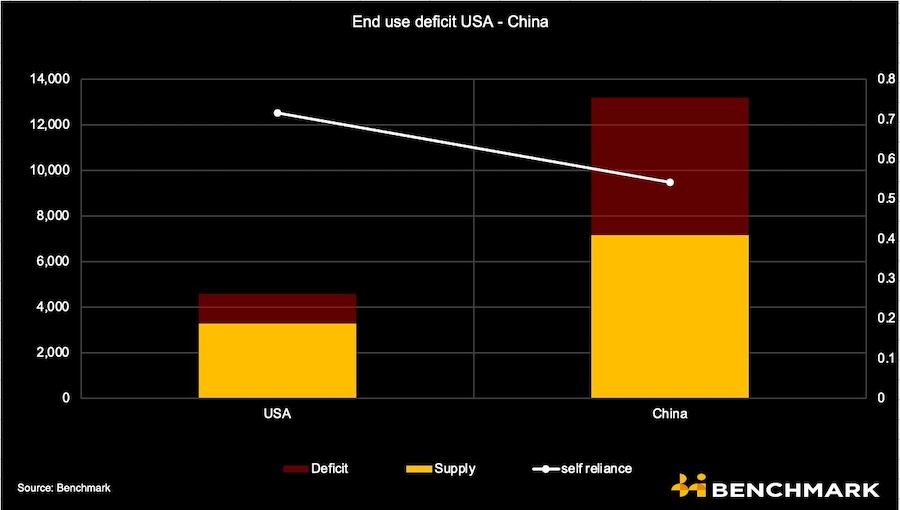
US copper supply can already cover 146% of domestic demand from mines and scrap, yet nearly 48% of US concentrate is exported because smelting and refining capacity is too small, leaving manufacturers reliant on imported cathode, Benchmark Mineral Intelligence reports. Analyst Albert Mackenzie argues that expanding US refining and scrap-processing capacity would do more for supply security than Washington’s Project Vault push for overseas mine ownership, as much US-controlled foreign output never returns home. Globally, Benchmark estimates 61 new copper mines and about $285 billion will be needed by 2030, with demand potentially reaching 50 million tonnes a year by 2050.
Anglo Asian Mining expects copper output from its Azerbaijan operations to reach 20,000–25,000 tonnes in 2026, roughly triple 2025 levels, as the Gilar and Demirli mines move into their first full year of production after delivering 7,915 tonnes between May and July 2025. The company guides to copper all-in sustaining costs of $6,800–$7,800 per tonne, with gold output forecast at 28,000–33,000 oz and silver at 170,000–210,000 oz at $1,500–$1,800/oz. A proposed takeover by ACG Metals, which recently acquired the Gediktepe mine in Türkiye, has been abandoned over valuation.
Rio Tinto has taken control of Nemaska Lithium with a 53.9% stake and plans to invest more than US$300 million in Quebec in 2026, alongside up to US$200 million in new equity from the provincial government. Capital will advance Nemaska’s 32,000 t/y lithium hydroxide plant at Bécancour, now about 60% complete, and the Whabouchi spodumene mine in the James Bay region, with commissioning at Bécancour targeted for 2026 and first production in 2028. Rio is also assessing feed from its Galaxy mine and Whabouchi to optimise spodumene supply to the plant.
Canada and Mexico are preparing a joint minerals, infrastructure and supply chain action plan for the second half of 2026, aimed at cutting bottlenecks in permitting, transport corridors, power supply, processing capacity and customs for cross-border critical mineral projects. The move sits alongside the US–Mexico Action Plan on Critical Minerals and Canada’s role in the G7-linked Critical Minerals Production Alliance and Minerals Security Partnership, signalling a shift from price management to “de-risking” mine-to-market flows. Investors will watch for a defined shortlist of minerals, concrete midstream projects in processing and refining, and specific trade and finance tools rather than broad diplomatic language.
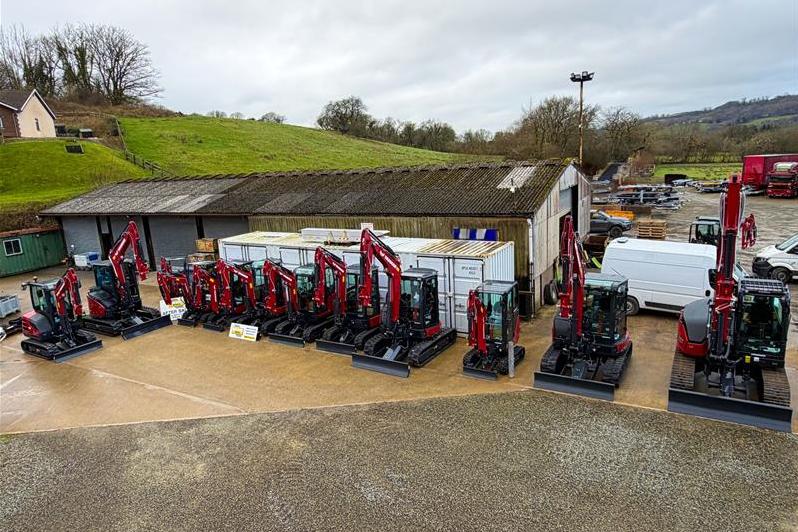
Construction machinery manufacturer Yanmar Compact Equipment has appointed Mason Brothers and Robert Coates Plant Sales as dealers, extending coverage across all of Wales plus Shropshire, Staffordshire and Derbyshire. Mason Brothers, a three-generation firm with depots in Narberth and Bridgend, already distributes Mecalac and Bomag, while Talke-based Robert Coates Plant Sales, founded in the early 1980s, handles Case, Manitou and Ammann. The move gives Yanmar denser regional support for compact equipment fleets in the Midlands and northwest, simplifying sourcing and service for plant hirers and contractors.
Gateway 2 approval from the Building Safety Regulator clears Watkin Jones to start a 201-bed, four-block high-rise PBSA scheme at Freestone Yards on Freestone Road in Bristol’s Temple Quarter, opposite the £500m Bristol Temple Quarter Enterprise Campus. The brownfield redevelopment, for a Moorfield Group–Tiger Developments joint venture and to be operated by Host, will comprise 65 ensuite clusters and 136 self-contained studios. Targeting BREEAM Excellent, the scheme is scheduled for completion in summer 2027, signalling tighter regulatory and viability constraints on new high-rise residential supply.
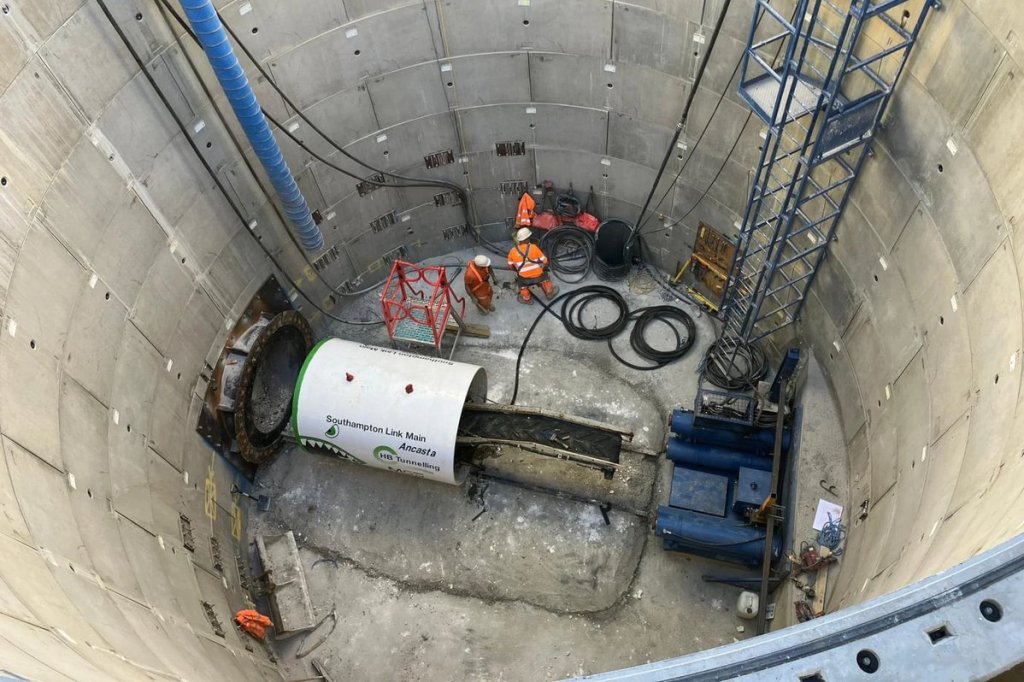
A 6,500kg manually operated tunnel boring machine, Ancasta, is driving a 1.5m-diameter tunnel at depths starting around 14m for Southern Water’s 19km Southampton Link Main between Otterbourne, Yew Hill reservoir and Rownhams water supply works. MGjv, the Galliford Try–M Group Water joint venture, is using two manual TBMs alongside conventional trenching to thread the pipeline beneath major roads, rail lines and sensitive ecological sites, with tunnelling running from September 2025 to May 2026. The £100m-plus scheme, spanning over three years, is aimed at boosting network resilience and reducing abstraction pressure on the Test and Itchen rivers.
University Hospitals Sussex NHS Foundation Trust has appointed McBains to provide project and cost management for the £250m, five-storey Sussex Cancer Centre at the Royal Sussex County Hospital in Brighton, with Laing O’Rourke as main contractor. The new facility, due to open in 2029, will triple current cancer treatment capacity to around 60,000 patients a year and is being built on the cleared site of the former Barry Building. As phase two of the 3Ts Redevelopment, it will be linked to the 2023-opened Louisa Martindale Building via a new landscaped plaza, ahead of a future logistics yard replacing the existing cancer department.
Leeds City Council has extended consulting engineer WSP’s highways and transport contract for a further four years, continuing a relationship that began in 2003 and has included schemes such as the Regent Street flyover replacement, Corn Exchange public realm works and the Stourton Park & Ride upgrade. The renewed agreement covers transport policy, traffic management, highway maintenance and reconstruction, highway structures, street lighting, civil engineering design, geotechnical services and flood risk management. WSP will now concentrate support on delivering the council’s Connecting Leeds Transport Strategy, with embedded specialists and long-term secondments remaining central to day-to-day project delivery.
Trial dates have been set at Bristol Crown Court for two Office for Nuclear Regulation prosecutions over incidents at the Hinkley Point C nuclear power station site, including the November 2022 death of worker Jason Waring and an August 2022 rebar mesh wall collapse that seriously injured slinger Paul Dunne in a prefabrication yard. NNB Generation Company (HPC), Bouygues Travaux Publics and Laing O’Rourke Delivery all plead not guilty to breaches of CDM 2015 Regulations 13(1) and 15(2). A separate case adds alleged failures under Regulation 3(1)(a) of the Management of Health and Safety at Work Regulations 1999, with trials scheduled for October 2027 and January 2028, each listed for four to six weeks.
The Department for Education has appointed 23 contractors, including Kier, Bam, Galliford Try, Morgan Sindall, Wates and Willmott Dixon, to its £15.4bn Construction Framework 25 (CF25) for new-build and refurbishment of schools, academies, UTCs and FE colleges. CF25 will run for six years from January 2026 to January 2032, with potential extension to 2034, and is split into two value bands (£4.4m–£12m and over £12m) across 10 regional lots. The framework will shape pipeline, procurement routes and standardised design approaches for education projects over the next decade.
Cardo Group has acquired Bellshill-based Trident Maintenance Services, a family-owned painting and decorating contractor whose turnover jumped from £11.8m to £18.4m with £1.7m pre-tax profit in the year to March 2025. Trident delivers planned maintenance, refurbishment and improvement programmes across social housing, healthcare, education, custodial and commercial estates, adding specialist fabric and finishes capability to Cardo’s existing LCB Group, Osborne Property Services, Jefferies Contractors, Breyer Roofing and SERS Energy Solutions platforms. Cardo chief executive Liam Bevan said the deal strengthens national coverage, particularly in northern England and Scotland, under a strategy focused on local skilled workforces and supply chains.