Geomechanics, Streamlined.
© 2026 Geomechanics.io. All rights reserved.
AI tools that auto-generate options for 2D drawings, BIM models and outline design calculations in hours instead of weeks are forcing consultants to rethink fee structures built around the billable hour. Senior engineers may shift from producing drawings to curating AI outputs, validating load paths, checking code compliance and managing design risk, while fewer junior staff are needed for repetitive drafting and quantity take-off. Competitive advantage is likely to hinge on proprietary workflows, training data and QA processes, rather than simply having access to generic AI design software.
Boliden Somincor has partnered with EDP and Greenvolt to build Portugal’s largest self‑consumption solar generation unit (UPAC) near the Neves‑Corvo zinc mine at Castro Verde, supplying power directly to mine operations. The distributed solar plant will sit adjacent to one of Europe’s largest zinc orebodies, reducing grid dependence for high‑load processes such as hoisting, ventilation and paste backfill plants. For mine planners and electrical engineers, the project signals growing integration of large‑scale on‑site renewables into base‑metal underground operations in southern Europe.
RCT – Powered by Epiroc’s AutoNav Tele automation has been fitted to an Aramine L350D loader to support narrow vein stoping at Vertex Minerals’ Reward Gold mine at Hill End, after the unit was commissioned through Epiroc’s Orange Service Centre in New South Wales. The compact L350D, designed for ultra-narrow headings, is now operated via tele-remote AutoNav control rather than line-of-sight, allowing tramming and loading in constrained drives. For geotechnical and mine planners, this enables extraction in thinner ore lenses while keeping operators out of unsupported ground.
Bosch Rexroth is partnering with MEDATech Engineering to deliver end‑to‑end electrification packages for off‑highway and mining mobile equipment, combining Rexroth’s mobile hydraulics, inverters and controls with MEDATech’s EV drivetrain integration capability. The collaboration targets full systems from componentry and software through to application‑specific design and build, aimed at OEMs and retrofit projects for haul trucks, loaders and other heavy units. For mine operators, this points to more standardised electric powertrain architectures and a clearer route to integrating high‑voltage drivetrains with existing hydraulic and control systems.
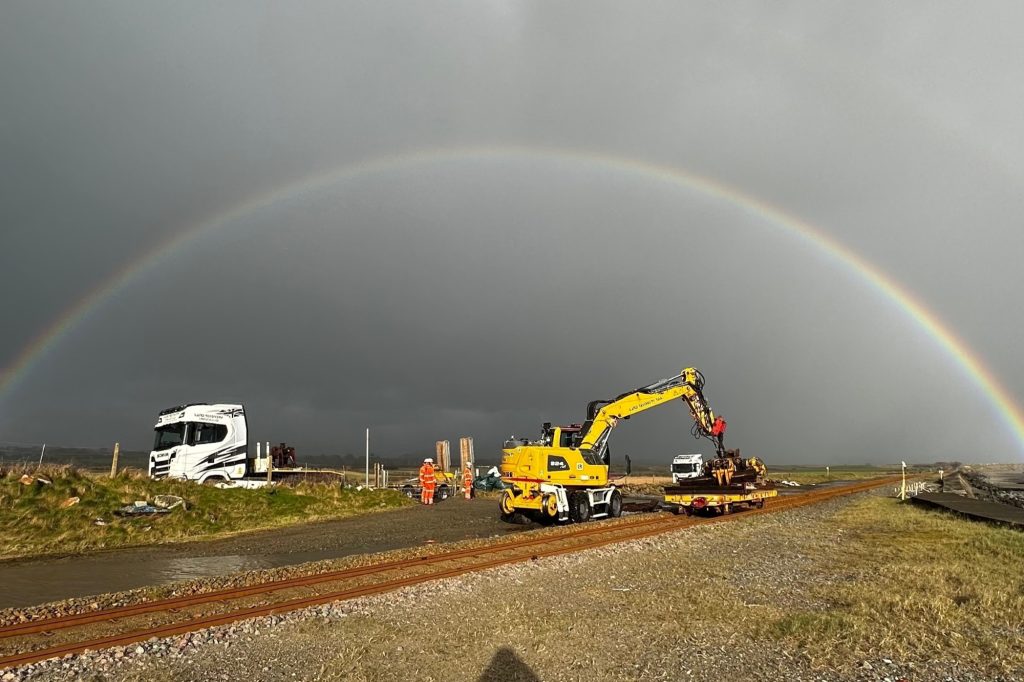
Cambrian Coast Line services between Pwllheli and Dovey Junction resumed on 23 February after a nine-day blockade allowed Network Rail to complete intensive track renewal and infrastructure upgrades. The possession enabled continuous access to coastal sections that are typically constrained by tidal conditions and single-track operation, allowing replacement of life-expired rail and sleepers plus associated drainage and formation works. For civil and permanent-way engineers, the concentrated blockade approach reduces repeated mobilisation on this remote alignment and should improve track geometry, resilience to coastal weathering and long-term maintenance intervals.
Data centres are proliferating along key UK rail corridors to provide low-latency cloud capacity for AI tools used in operations, maintenance and passenger management. Network Rail and major TOCs are trialling AI-driven timetable optimisation and condition-based maintenance, feeding real-time data from track circuits, axle counters and onboard sensors into predictive models hosted in regional server farms. For engineers, the shift means designing rail-adjacent power and fibre infrastructure for high-density data hubs and integrating asset data standards so AI systems can interrogate signalling, track and rolling stock records consistently.
Evolution Mining is redirecting record cash flows into a multi-project copper–gold expansion pipeline, signalling a shift from short-term debt reduction to growth investment. The plan centres on brownfield upgrades at key assets such as Cowal and Ernest Henry, with staged increases in mill throughput and higher copper head grades to lift metal output and extend mine life. For geotechnical and processing teams, the strategy points to sustained demand for pit cutbacks, underground development, and debottlenecking of existing comminution and flotation circuits.
Regis Resources has reported a fresh mineral resource upgrade at the Tropicana gold joint venture in Western Australia, signalling continued growth potential at the large-scale open-pit and underground operation it shares with AngloGold Ashanti. The updated mineral resource statement covers multiple ore sources across the Tropicana, Havana and Boston Shaker deposits, with ongoing drilling targeting extensions along the 200km strike length of the Tropicana Belt. For mine planners and geotechs, the expanded inventory supports longer pit phases, deeper underground development and potential revisions to cut-off grades and waste-stripping schedules.
Genesis Minerals is moving to develop its one‑million‑ounce Tower Hill gold deposit in Western Australia, appointing GR Engineering Services to construct new processing infrastructure for the project. The contract signals a shift from resource definition to execution, with GR Engineering expected to deliver a fit‑for‑purpose plant tied into Genesis’ broader Leonora consolidation strategy and existing regional haulage network. For geotechnical and civil teams, early works will centre on plant foundations, tailings and water management structures sized for mid‑tier gold throughput, plus integration with existing pit and waste‑dump designs.
Adelaide-based quantum technology company QuantX Labs will receive $2.4 million from the Australian Government to build Australia’s first real-time, mine-site rare earths sensor for deployment on processing circuits. The system will use quantum-enabled radio-frequency sensors to measure rare earth concentrations in slurries and ores in situ, rather than relying on off-site assay labs with multi-day turnaround. For plant metallurgists, continuous grade data at the mill or flotation cells could tighten cut-off control, reduce reagent overuse and lift recoveries from complex rare earth deposits.
Alkane Resources has identified a new gold-bearing geological structure at its Tomingley operation in central west New South Wales during the latest exploration drilling campaign, extending mineralisation beyond previously defined limits. The discovery sits within trucking distance of the existing Tomingley processing plant, which is currently fed by multiple open pits and underground workings, giving near-term optionality for resource conversion and mine life extension. Geotechnical and mine planning teams will focus on structural controls, continuity of the new zone and potential impacts on pit wall design and underground access layouts.
XCMG’s 130 t class XDE130 diesel-electric mining truck is gaining traction in Indonesia, complementing the OEM’s larger 230 t class XDE260 already deployed at Exxaro Grootegeluk in South Africa, Ok Tedi in PNG, Serbia Zijin Copper and Rio Tinto’s SimFer Simandou project. The XDE130 targets coal and overburden haulage where pit geometry, ramp conditions and fleet economics do not justify ultra-class trucks, offering a smaller turning radius and lower ground pressure than the XDE260. For mine planners, the truck broadens options for right-sizing mixed fleets and matching haul profiles to mid-range payloads.
Cummins Inc. will showcase advanced power solutions for mining and construction at CONEXPO 2026, joining around 2,000 exhibitors at the triennial trade show in Las Vegas from 3–7 March at the Las Vegas Convention Center. While specific engine models are not yet named, the focus is expected to span low-emission diesel, natural gas and hybrid powertrains relevant to high‑duty off‑highway equipment. Mining and civil contractors should watch for updates on power density, fuel flexibility and integration options for large haul trucks, drills and auxiliary plant.
BUMA has secured a new overburden removal and coal mining services contract with PT Adaro Indonesia for the South Tutupan mine in Tanjung Tabalong, South Kalimantan, running from 1 April 2026 to 31 December 2030. The agreement, which follows BUMA’s long-standing work at Adaro’s main Tutupan pit, covers continued deployment of large-scale truck–shovel fleets and associated mine infrastructure support. For geotechnical and mine planners, the deal signals stable medium-term stripping and haulage requirements, supporting ongoing pit slope development and waste dump sequencing through at least 2030.
Epiroc will use PDAC 2026 in Toronto (1–4 March) to unveil new underground drilling safety and automation products, led by its Uphole Brake integrated safety module. The Uphole Brake is designed to control and secure uphole drill strings during rod handling and tramming, reducing the risk of dropped rods and unintended movement in longhole and production drilling. For mine operators, the package signals further OEM integration of safety functions into drill rigs, potentially simplifying compliance with site-specific ground control and isolation procedures.
Major construction has begun on the $720 million upgrade of Richmond Road in New South Wales, a key corridor currently carrying around 89,000 vehicles per day. The first stage focuses on expanding capacity and improving traffic flow to accommodate forecast rapid growth in volumes linked to Western Sydney’s urban development. Civil contractors and designers will need to manage works under live traffic, stage pavement widening, and integrate upgraded intersections and drainage while maintaining connectivity for freight and commuter movements.
New South Wales’ $520 million land planning package will deliver seven major parks alongside the Transport Oriented Development (TOD) Accelerated Precincts, with Kellyville Centre Park the first cab off the rank. The TOD Accelerated Precincts, finalised in November 2024, re-zoned land around seven transport centres to increase housing capacity and concentrate growth near rail and rapid bus hubs. For civil and geotechnical teams, the programme signals imminent demand for earthworks, drainage, active transport links and public realm structures integrated with existing transport corridors.
Alltech Industries is expanding its Indian-born road and infrastructure product portfolio into the Australian market, aiming for a stronger domestic presence in 2026 after establishing local industry partnerships. The family-owned company, which has grown from a small industrial unit in India to a global supplier, is positioning its pavement, road safety and construction systems for use on Australian highways and urban projects. For civil contractors and road authorities, Alltech’s entry signals additional competition in pre-engineered components and surface treatment solutions tailored to local specifications.
Western Australia will amend the Road Traffic Act 1974 under “Kelly’s Law” to impose tougher, longer licence disqualifications on hit-and-run drivers who flee serious or fatal crashes. The reforms will target offenders who fail to stop and render assistance, preventing them from regaining a licence for extended periods and, in some cases, permanently. For road and traffic engineers, the move signals continued policy emphasis on driver behaviour and enforcement rather than geometric or asset changes to improve network safety outcomes.
Glasgow City Council has started a three-year, £119M programme to upgrade urban roads, footways and street lighting, with a further £20M ring-fenced specifically for carriageway resurfacing. Works will focus on structural renewal of worn carriageways and pavements across the city’s existing network rather than major new alignments, implying extensive planing, binder and surface course replacement and localised base repairs. Contractors and materials suppliers can expect sustained demand for asphalt, cold planing, traffic management and night-time working, with likely prioritisation of high-bus corridors and heavily trafficked junctions.
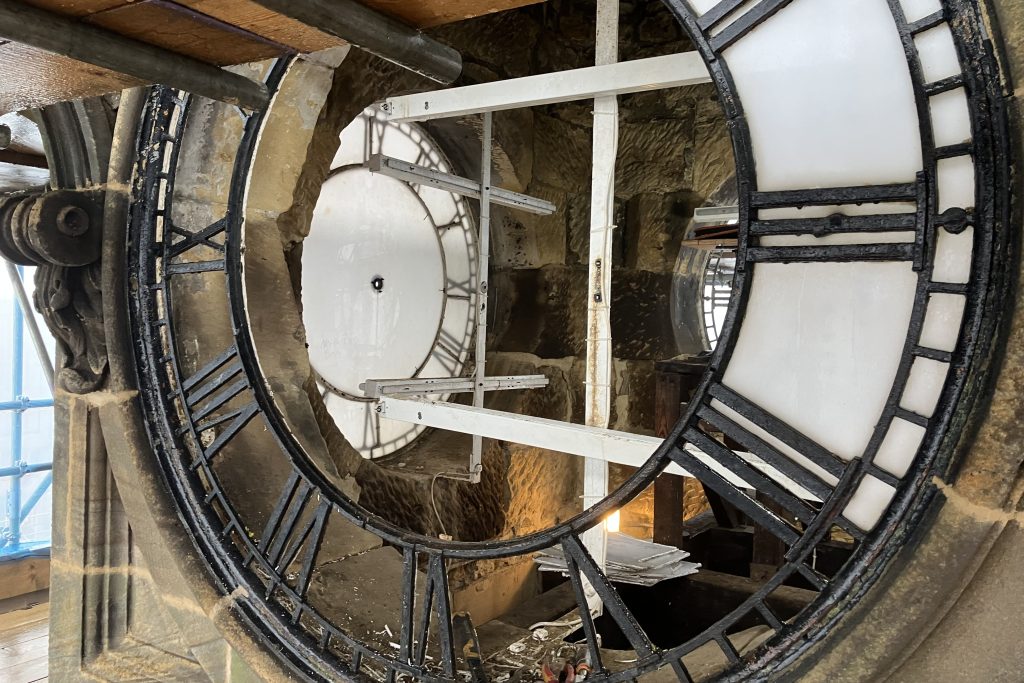
A £14M upgrade of Scarborough’s Grade II-listed railway station has opened up and restored the historic clocktower for the first time in decades as part of a wider conservation programme. Works are understood to focus on structural repairs to the masonry and timber, refurbishment of the clock mechanism and faces, and sensitive renewal of roof coverings and drainage to manage water ingress. For engineers, the project signals continued investment in life-extension of Victorian rail assets, with heritage constraints shaping material choices and detailing.
Cowi has secured the preliminary and detailed design contract from the Icelandic Road and Coastal Administration (Vegagerðin) for a new 5.3km road tunnel in northern Iceland, set to improve all‑weather connectivity on a key regional route. The long single-bore tunnel will demand detailed geotechnical characterisation of volcanic and glacially influenced ground, plus robust drainage and lining design for sub‑Arctic freeze–thaw conditions. Designers will need to address ventilation, fire and evacuation provisions consistent with European road tunnel standards, with constructability in remote terrain a central constraint.
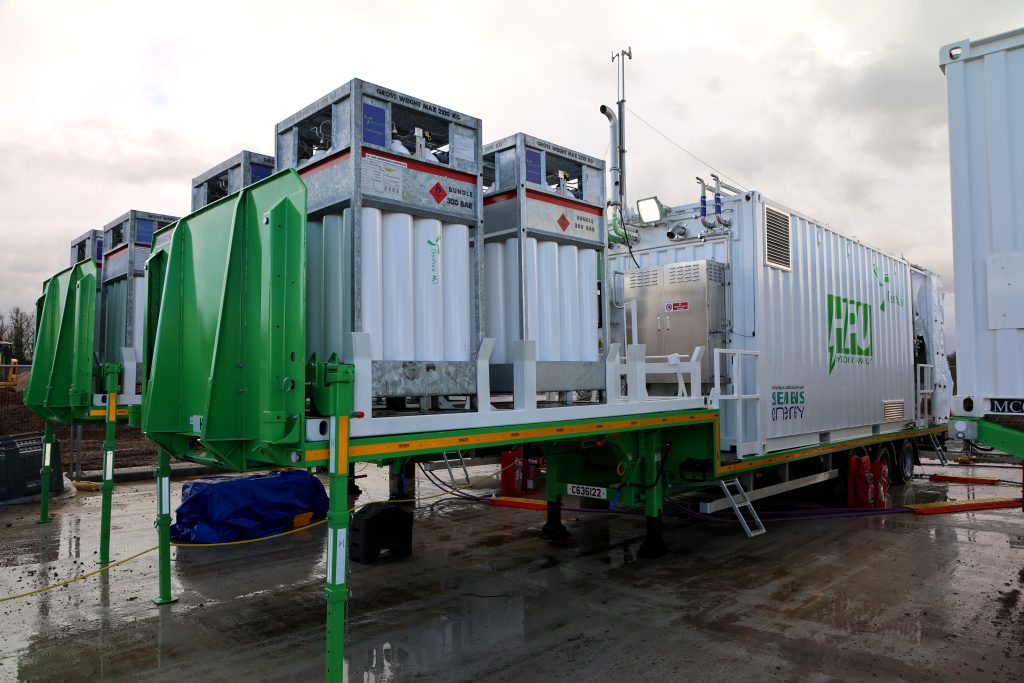
British hydrogen producer GeoPura will supply 2,500t of green hydrogen to power construction of National Highways’ Lower Thames Crossing, billed as the largest single use of green hydrogen on a UK infrastructure scheme. The fuel will support temporary power generation and plant operations on the 23km road and tunnel project beneath the River Thames, reducing reliance on diesel generators. Contractors and plant suppliers will need to integrate hydrogen-compatible equipment, on-site storage, and high-capacity refuelling logistics into construction planning and risk assessments.
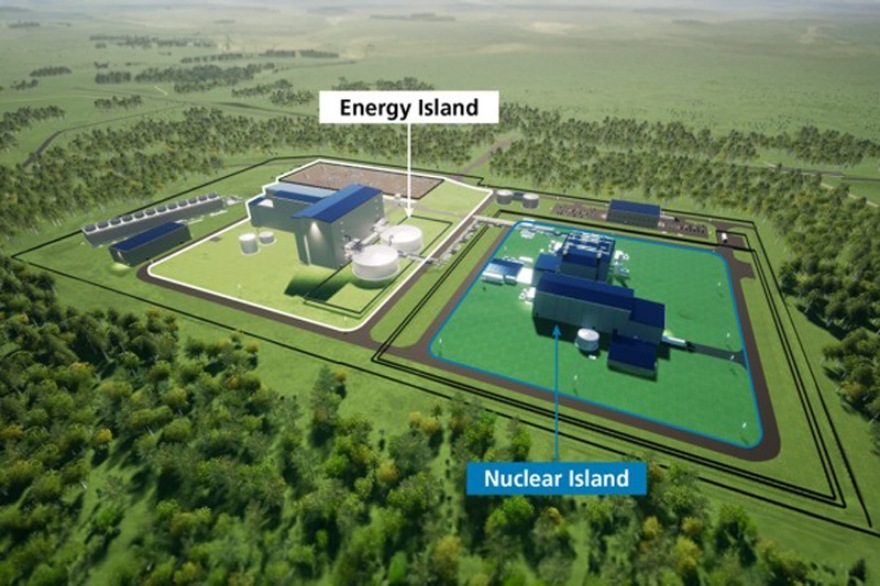
UK regulators have been formally asked to start a Generic Design Assessment of TerraPower’s Natrium reactor, a 345MWe sodium‑cooled fast reactor with integrated molten salt energy storage. The design, backed by Bill Gates and developed with GE Hitachi, couples a liquid sodium primary loop with a molten salt heat storage system to shift output up to around 500MWe during peak demand. For UK civil and nuclear engineers, this signals potential future projects involving non‑water coolants, high‑temperature materials behaviour, and novel seismic and thermal design requirements for reactor and storage structures.