Geomechanics, Streamlined.
© 2026 Geomechanics.io. All rights reserved.
Dumfries and Galloway Council has approved a £68.6M flood defence scheme for the River Nith, clearing the way for construction to start in spring 2026 and for significant remodelling of the town’s riverside corridor. The project will install new engineered flood protection along key riverfront sections, integrating hard defences with urban realm upgrades to streets and public spaces adjacent to the river. Civil and geotechnical teams can now progress detailed design, ground investigation and contractor mobilisation to meet the 2026 start date.
New Civil Engineer founder and first editor Sydney Lenssen, born in 1938, has died in 2025, leaving a legacy in shaping modern civil engineering journalism in the UK. Lenssen was recalled from Australia in the summer of 1973 by the UK Government to help manage public communication during a period of national concern, underlining the strategic value placed on clear technical reporting. His editorial approach helped professionalise coverage of infrastructure, influencing how engineers, policymakers and the public engage with complex projects.
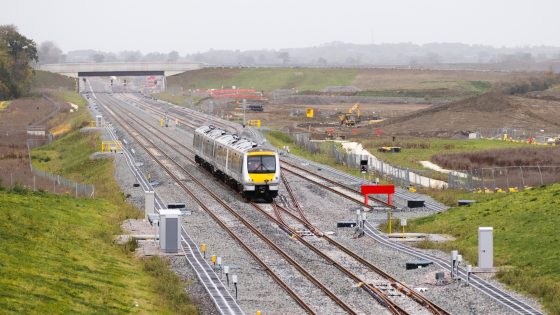
East West Railway Company, which is delivering the 120km Oxford–Cambridge East West Rail link including new sections between Bicester, Bletchley and Bedford, could be absorbed into Network Rail as part of the government’s review of arm’s length bodies ahead of establishing Great British Railways. Bringing EWR Co inside Network Rail would centralise control of route design, consents and future operations for the largely double‑track, 100mph‑design corridor. Any change in governance will affect procurement strategies, asset standards and interfaces with existing main lines at Oxford, Bletchley and Cambridge.
Unions Unite and GMB have condemned contractor behaviour at the Royston hydrogen gigafactory site in Hertfordshire after around 30 construction workers were reportedly suspended for raising health and safety concerns. The workforce had complained about site safety conditions on the large industrial build, which is expected to house hydrogen production and storage plant, before being removed from site. The dispute raises immediate questions for principal contractor and client CDM duties, worker consultation processes, and the robustness of on-site reporting channels for safety-critical issues.
National Grid has awarded two major contracts for Sea Link, a 140km subsea electricity interconnector between Kent and Suffolk designed to reinforce the UK transmission network. The project will require high‑voltage subsea cabling across the southern North Sea and new onshore converter infrastructure at each landfall to integrate offshore wind and other generation into the grid. Contractors will need to address marine geotechnical risk, cable burial depth, landfall HDD or trenching solutions, and interface with existing 400kV assets in constrained coastal corridors.
Genus general manager, commercial, Eoin Gorman argues that de-risking mine electrification starts with integrated planning of power supply, distribution and fleet charging rather than bolt-on battery swaps. He points to remote Australian sites where 11–33kV overhead lines, containerised substations and high‑power DC fast chargers must be staged alongside pit expansions and new electric haul trucks to avoid stranded assets and grid constraints. For engineers, the message is to treat electrical infrastructure as a core part of mine design, with early load modelling and phased capital deployment.
Metso executives David Tulloch, Duncan Wyatt and Guillaume Lambert outline how the company is targeting critical minerals flowsheets with integrated crushing, grinding and flotation circuits, combined with smelting test work at its Pori Research Centre. The approach uses ore-specific pilot campaigns, digital process control and modular equipment packages to raise recovery and reduce energy per tonne, particularly for complex nickel, lithium and rare earth ores. For mine planners and process engineers, the message is tighter ore characterisation upfront and more standardised, scalable plant designs across greenfield and brownfield projects.
Westgold Resources has restarted mining at the historic Great Fingall gold mine near Cue in Western Australia, firing the first production blast after more than a decade on care and maintenance. The operation targets high-grade underground ore beneath the old Great Fingall open pit, using modern longhole stoping and paste fill to extract remnant pillars and deeper lodes. Geotechnical teams will need to reconcile historic workings, old shaft infrastructure and voids with contemporary ground support, seismic monitoring and water management standards in WA’s Murchison region.
Brightstar Resources has released a 22 per cent increase in mineral resource estimate for its Menzies gold project, sharpening plans to develop the site as a standalone mining hub in Western Australia’s Eastern Goldfields. The updated resource focuses on near-surface, open-pittable ounces across key deposits such as Yunndaga and Lady Shenton, supporting a potential central processing facility rather than trucking ore to Brightstar’s Laverton plant. For mine planners and geotechs, the shift towards shallow oxide and transitional material points to conventional drill‑and‑blast with relatively straightforward pit geotechnical design.
Final designs have been approved for the Isaac Resources Excellence Precinct in Moranbah, a $47 million hub to support coal, critical minerals and METS innovation in Queensland’s Bowen Basin. The precinct, led by the Resource Centre of Excellence and Isaac Regional Council, will include a 3000m² innovation centre, underground mining simulation facilities and training workshops targeting automation, decarbonisation and mine rehabilitation technologies. For engineers and METS suppliers, the project signals new testbed capacity close to large open-cut and underground coal operations.
ACG Metals has walked away from a potential takeover of Anglo Asian Mining after a “thorough review” of Anglo Asian’s Azerbaijani gold-copper-silver assets, including the Gilar, Demirli and Gedabek operations, concluded a deal would not create value. Anglo Asian, which commissioned Gilar and Demirli on time and on budget this year and is targeting a mid-tier copper-focused profile, recently reported record November copper output at Gedabek following flotation plant upgrades. Market reaction was immediate, with Anglo Asian shares down 6.5% to 215p and ACG up 2.9% to 1,080p in London.
Chile’s 14 December presidential runoff will decide how Jeannette Jara’s plan for a 10% increase in mining output, expanded state role in lithium and higher renewable penetration competes with José Antonio Kast’s $6 billion public spending cuts and lean-state agenda. Codelco, carrying more than $20 billion in debt after output fell to a 25‑year low in 2022 and still required to remit 70% of profits plus 10% of sales to the state, faces constrained reinvestment. Any policy misstep risks undermining Chile’s $105 billion mining investment pipeline to 2034 and global copper and lithium supply.
Mining productivity has halved since 1997 and has risen only about 1% per year since 2018, even as OECD data show manufacturing output per worker more than doubling and agriculture, forestry and fishing increasing 1.5 times. McKinsey’s “Performing under pressure” report links the slump to deeper pits, longer haul distances, declining grades and remote conditions that push operations below historic performance curves. The firm points to AI, robotics, advanced chemistry, always‑on connectivity and electrification as levers to unlock bottlenecks in loading, hauling, comminution and processing, provided miners build tight feedback loops between strategy and execution.
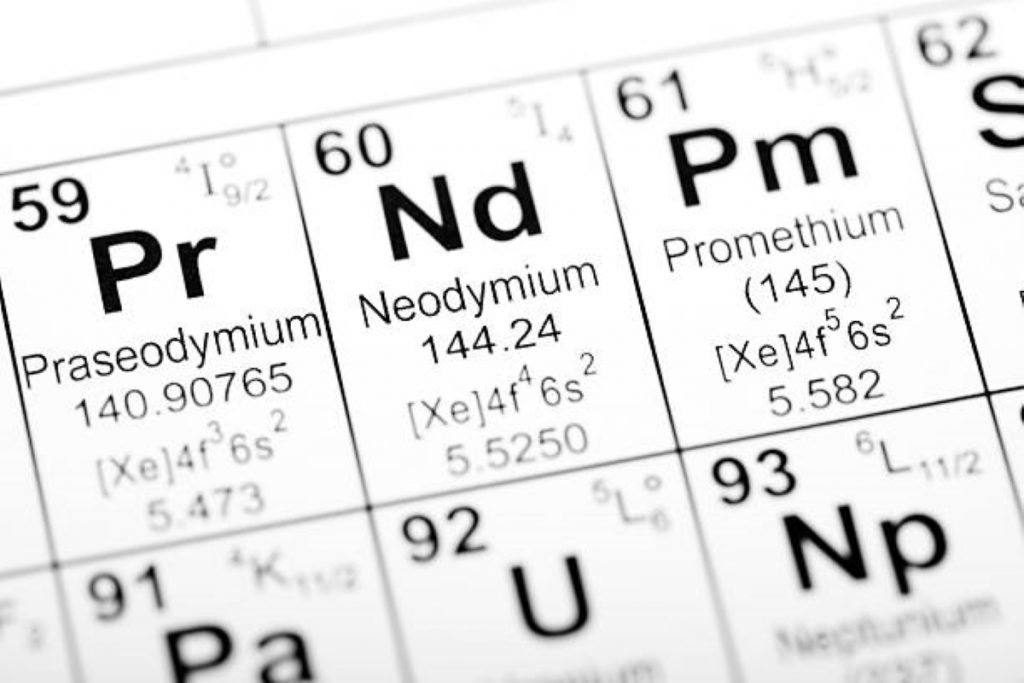
Rare earth elements have moved to the centre of trade negotiations as governments respond to China’s control of almost 90% of refined supply and most high-performance magnet output, Wood Mackenzie’s 2025 mega-trends report shows. Washington has led with a G7 action plan, an April 2024 critical minerals memorandum with Norway, an Oct. 27 mining and processing framework with Japan, and parallel rare earth agreements with Malaysia and Australia. Project-level responses include Arafura’s Nolans project targeting about 4% of global supply, Serra Verde’s US$465 million US development loan, and SRC–ReAlloys and Cyclic–Solvay offtakes linking new and recycled oxides into Western magnet supply chains.
Deep-sea mining tests in the Clarion–Clipperton Zone at 4,280 metres depth, commissioned by Nauru Ocean Resources (a The Metals Company subsidiary), cut macrofaunal density by 37% and species richness by 32% along machine tracks over two years, based on disturbance of 3,000 tonnes of polymetallic nodules. European researchers from the Natural History Museum, University of Gothenburg and the National Oceanography Centre collected 4,350 sediment macrofaunal animals and identified 788 species, mainly polychaete worms, crustaceans and molluscs. The trial used machines only about half the size of planned commercial systems, raising concern that full-scale operations could cause larger, possibly irreversible, benthic impacts.
Antofagasta CEO Iván Arriagada has been re-appointed chair of the International Council on Mining and Metals (ICMM) for a two-year term, succeeding Newmont chief Tom Palmer, who is retiring as CEO at year-end. Arriagada, who previously chaired ICMM from 2022–2024, helped establish the Global Industry Standard on Tailings Management and backed the Consolidated Mining Standard Initiative (CMSI) on common ESG benchmarks. His return signals continuity in ICMM’s 26-member CEO council as it executes its 2025+ strategy on tailings governance and responsible project development.
Copper surged to a new all‑time high on the LME, with three‑month futures jumping 2.1% intraday to $11,800.50/t, surpassing Monday’s record as macro sentiment turned sharply more positive. The US Federal Reserve lifted its 2026 growth forecast to 2.3% from 1.8% and delivered a widely expected rate cut while signalling inflation easing to 2.4%, boosting demand expectations for industrial metals, while China’s commitment to a “proactive” fiscal stance and ongoing supply concerns have driven a year‑to‑date copper gain of nearly 35%.
Singapore’s Land Transport Authority has begun strengthening works on two operational Circle Line bored tunnels after identifying progressive ground deformation, described as tunnel squatting, along a localised section. The targeted programme will install additional structural support within the tunnel lining and improve ground stabilisation around the affected zone, while maintaining train operations with speed restrictions and off-peak work windows. For geotechnical engineers, the case illustrates long-term deformation management in soft ground MRT tunnels and the need for ongoing convergence monitoring and remedial design decades after construction.
Volvo Autonomous Solutions has begun series assembly of its Volvo FH Autonomous mining trucks at Volvo Buses’ Säffle plant in Sweden, marking the shift from pilot builds to industrial production. The facility, long used for high-volume bus manufacturing, has been retooled to integrate V.A.S. autonomous hardware and software stacks directly into the FH platform on the main line. For mine operators, this signals impending availability of OEM-built autonomous haul trucks with factory-integrated perception, control and redundancy systems rather than retrofit kits.
Bent Flyvbjerg, co-author of “How Big Things Get Done” and a leading academic on megaproject cost and schedule risk, will deliver a keynote at the World Mining Congress 2026 in Lima, Peru, from 24–26 June. His work on cost overruns, reference class forecasting and front-end planning is widely used on multi-billion-dollar infrastructure and mining developments. Attendance will interest owners and EPCM teams grappling with budget blowouts and delays on large open-pit expansions, underground block caves and associated rail, port and tailings facilities.
Metso has agreed to divest its Häggblom-branded loading and hauling business in Finland and Sweden to Miilux Oy, a Finnish manufacturer of wear-resistant steels and personal protection solutions using its own proprietary brands and alloys. The deal, which follows a strategic review launched in August 2025, shifts Häggblom’s truck body and bucket operations to an owner focused on abrasion-resistant plate and liner systems. For mine operators, the move signals closer integration between mobile equipment attachments and high-hardness wear materials, potentially affecting lifecycle cost and maintenance strategies for truck fleets and loaders.
REMA TIP TOP has launched MCube CAM, a smartphone-based system that uses AI-supported video analysis to inspect conveyor belt top covers, automating a task traditionally done by manual visual checks. The tool records belt surface condition in real time and feeds data into the company’s MCube monitoring ecosystem, enabling faster detection of damage, wear and splice issues. For mine operators, this points to more consistent inspection intervals, reduced downtime from unexpected belt failures, and better documentation of belt condition for maintenance planning.
Sydney Metro West’s Westmead station has installed the largest cavern formwork system in the Southern Hemisphere to cast the permanent lining of its new underground station cavern. The tallest cavern on the Sydney Metro network at Westmead, standing about 26 metres from invert to crown, has already been fully concrete lined using this modular steel formwork. For geotechnical and structural teams, the scale of the formwork enables continuous, large-area wall pours, tighter control of shotcrete and cast-in-place interfaces, and reduced time working at height in a deep excavation.
LiuGong Australia is expanding its footprint in road construction and maintenance, with councils nationwide adopting its graders, loaders and rollers for local road networks. Flagship models include the 4230D motor grader, powered by a turbocharged 9-litre Cummins engine, aimed at heavy formation trimming and shoulder maintenance. A growing dealership network across major capital cities is reducing downtime for regional contractors by improving access to parts, service support and machine trials on live roadworks.