Geomechanics, Streamlined.
© 2026 Geomechanics.io. All rights reserved.
Ontario is ramping up mining support with C$140 million for Ring of Fire road preparation, a C$500 million Critical Minerals Processing Fund, and billions earmarked for high-capacity transmission lines including the 230 km, 230 kV Greenstone line delivering 350–700 MW with 50% First Nations equity. Kinross Gold’s C$1.4 billion Great Bear project near Red Lake, targeting 518,000 oz/y at US$812/oz AISC by 2029, has been moved into the One Project One Process regime to cut permitting to two years. Engineers should expect accelerated approvals, grid upgrades and new processing capacity across northern Ontario.
Western governments are adopting a “China-light” industrial strategy, pouring tens to hundreds of billions into defence, semiconductors and critical minerals via tools such as the US Defense Production Act, CHIPS and Science Act ($53 billion), and the EU’s €43 billion European Chips Act and Critical Raw Materials Act. China’s integrated model still dominates midstream capacity, refining 68% of global nickel, 73% of cobalt, 95% of manganese, all spherical graphite for battery anodes, and over 90% of rare earth processing and magnet production. For mining and materials players, the key shift is policy focus from new mines to midstream conversion capacity, long-term offtake-style defence contracts, and allied coordination of minerals and materials flows.
Gold extended gains on Friday as the US–Iran nuclear standoff escalated, with spot prices up 1.2% to above $5,250/oz and silver jumping 6% to $94/oz. Bullion has rebounded from last month’s 10% single-day crash, remains about 20% higher year-to-date, and is holding technical support above $5,000/oz. Inflows into gold-backed ETFs this week have more than offset late-January outflows, while traders also price in potential 2026 US rate cuts flagged by Chicago Fed President Austan Goolsbee.
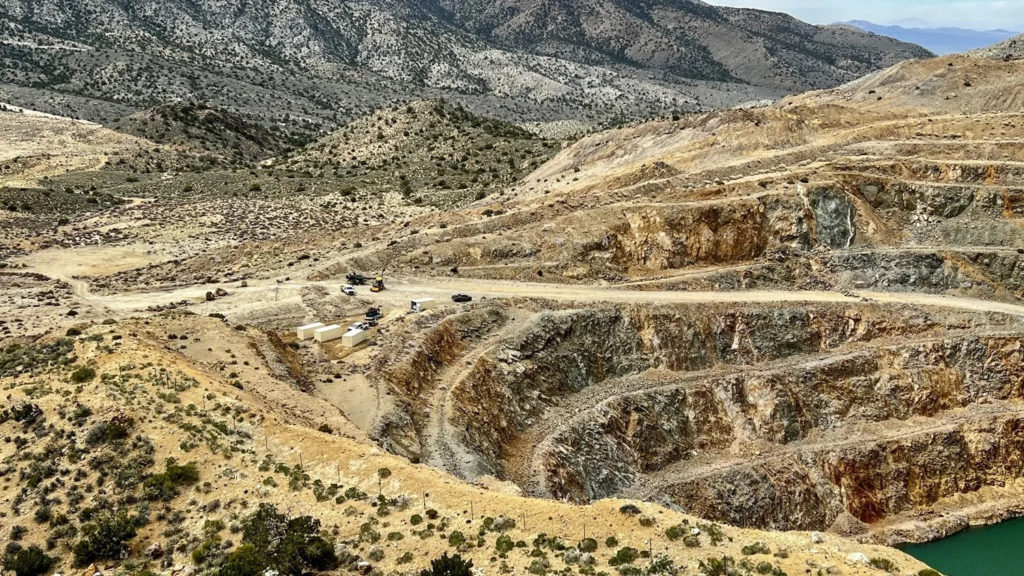
Dateline Resources is moving into heavy rare earths by acquiring the Music Valley project in Riverside County, California, covering 57 mining claims over 1,140 acres with historical USGS rock chips grading 6.69%–15.04% TREO and a fractionated HREE signature rich in yttrium and dysprosium. The deal includes a US$1 million investment in Fermi Critical Minerals, adding exposure to drill‑permitted uranium and rare earth projects in Wyoming and Colorado. Music Valley complements Dateline’s Colosseum project in the Mojave Desert, which hosts a 1.1‑million‑oz JORC‑2012 gold resource in a Mountain Pass‑style geological setting.
Demolition has begun on Winwood, the first of four eight-storey 1960s tower blocks at Sawyers Close, Dedworth, with J Mould using a high-reach demolition excavator to clear the site for Abri’s £176m regeneration. The Hill Group’s The Granges scheme will replace 192 existing flats with 413 new homes, with construction of the first 182 units already under way and initial handovers due in early 2027. Planning approval and additional land from the Royal Borough of Windsor & Maidenhead allow phased construction before full demolition of the remaining blocks between 2027 and 2030.
Hitachi Construction Machinery (Europe) has launched the ZX135-7EB, a 13‑tonne battery-electric excavator with 198 kWh lithium-ion batteries and a dual-mode system that can also run on a CEE 400 V AC three-phase grid connection for continuous operation. Targeted at urban and residential sites with strict noise and emission limits, it offers lower external sound levels, reduced maintenance downtime, and remote monitoring of battery status and motor load. Safety features include the Aerial Angle 270° camera system, and the machine carries both Hitachi and the emerging Landcros branding ahead of the 2027 rebrand.
Construction has begun on Cheadle Eco Park, a £25m, 115,000 sq ft light-industrial scheme for Stockport Council on a seven-acre brownfield site on Bird Hall Lane, comprising six units from 8,374 sq ft to 43,800 sq ft. Designed by AEW Architects to achieve BREEAM Outstanding and EPC A, the park will use air source heat pumps, natural ventilation and smart energy-efficient lighting. The development, backed by a £4.4m Town Fund grant, will be the UK’s largest purpose-built industrial and logistics scheme built entirely from sustainably sourced timber, cutting embodied carbon versus steel frames.
A 34-year-old Manchester plumber, Hannah Spencer, has won the Gorton and Denton by-election for the Green Party with 14,980 votes, taking 40.7% of the vote and a 27.5% swing. Reform polled 10,578 votes and Labour, which previously held the seat, dropped to third with 9,364 votes. Spencer, believed to be the first qualified plumber in the House of Commons and newly trained as a plasterer via a St Gobain intensive course, has pledged to champion tradespeople in parliament.
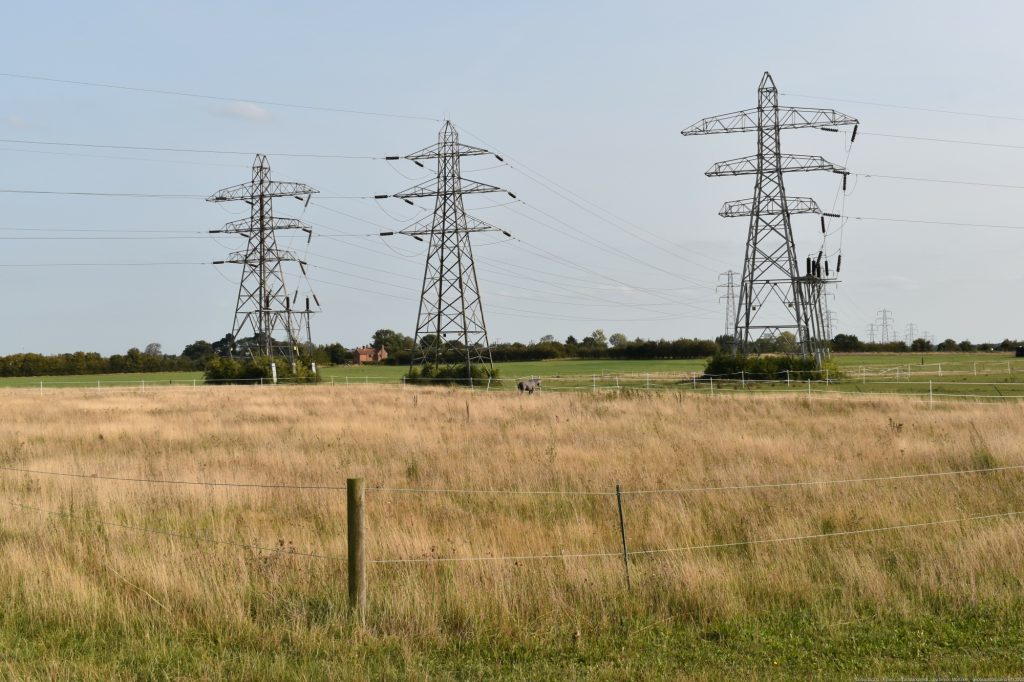
A new “energy infrastructure coordination levy” has been proposed in the House of Commons by a Suffolk MP to compel developers of Nationally Significant Infrastructure Projects (NSIPs) to plan grid, cable and substation works jointly rather than as isolated schemes. The move responds to Suffolk communities facing overlapping onshore works from multiple offshore wind connections and transmission upgrades, with repeated trenching, haul road construction and temporary land take along similar corridors. For civil and geotechnical teams, the levy could drive shared route corridors, consolidated ground investigations and integrated construction phasing across competing NSIPs.
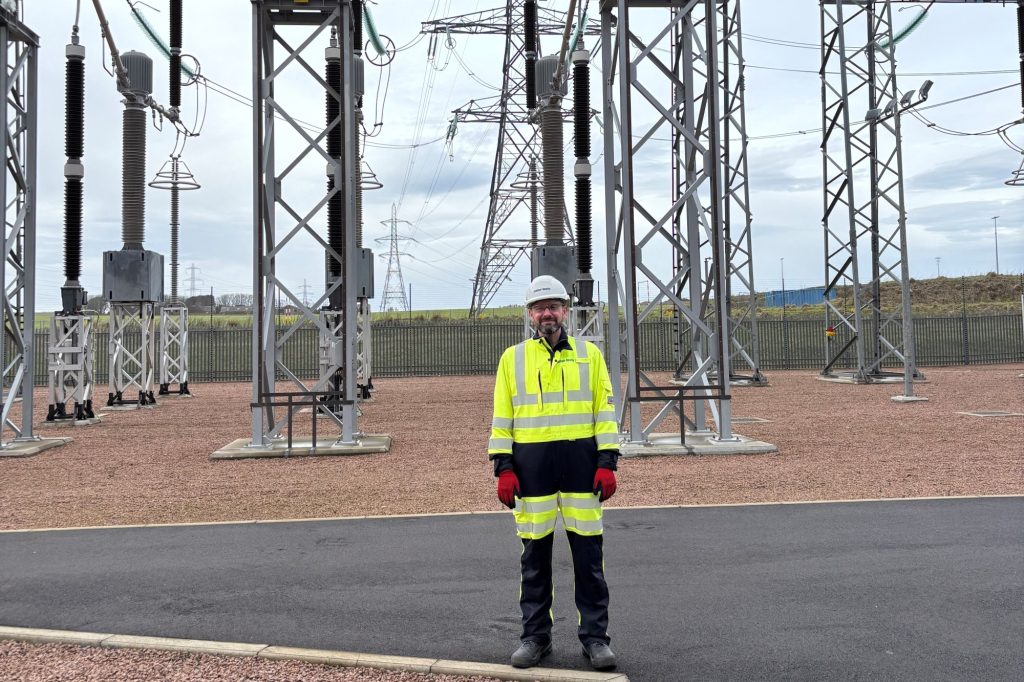
Power grid expansion in the North East of Scotland is being ramped up to connect large-scale offshore wind and North Sea energy projects into the UK transmission network. An experienced electrical engineer and IET member describes delivering new high‑voltage substations, long‑distance overhead lines and subsea cable links to move multi‑gigawatt outputs from coastal landing points to industrial centres. The work signals sustained demand for grid‑scale civil foundations, cable corridors, and substation platforms in challenging coastal and peatland ground conditions.
Replacement of the main rail bridge at Oxford station was re-sequenced and partially pre-built to fit an eight-day blockade window for the wider station upgrade, Network Rail’s senior engineer confirmed. The revised plan shifted significant works, including deck fabrication and bearing installation, away from the blockade, leaving the possession focused on bridge demolition, deck lift-in and track realignment. For contractors and designers, the job illustrates how tight possessions on a busy main line drive off-site assembly, modular bridge elements and highly constrained crane operations.
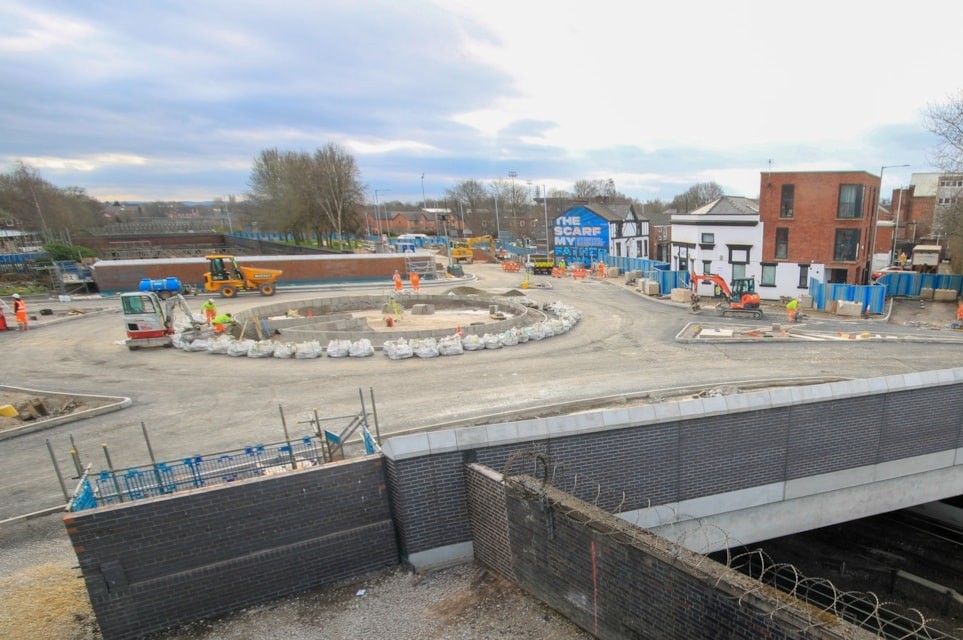
Stockport’s Greek Street roundabout, a key junction between the town centre and Edgeley, is scheduled to reopen on 27 March after prolonged closure linked to rail infrastructure upgrades beneath the junction. The works followed completion of improvements to the railway below in summer, requiring traffic management and diversions across this constrained urban corridor. Reopening restores a primary distributor route over the rail corridor, easing congestion and allowing normal access for construction traffic, buses and emergency vehicles through this part of the network.
Codelco and Rio Tinto have signed a Memorandum of Understanding at the BMO Global Metals, Mining & Critical Minerals Conference to create a strategic framework for joint development of major mining investment projects in Chile. The collaboration is aimed at improving project development and execution performance, drawing on both companies’ experience with large-scale copper operations and complex brownfield expansions. For engineers, the move signals potential alignment on project delivery models, risk-sharing structures and technical standards across future Chilean underground and open-pit developments.
GRX26’s inaugural Global Resources Innovation Expo programme will run over three days with eight plenary keynotes and more than 30 speakers focused on “where innovation meets implementation” in mining and resources. Headliners include former Australian foreign minister The Hon Julie Bishop on new rules of resource diplomacy and Jason Crusan, CEO of AROSE and former NASA director, on cross-sector lessons from space systems engineering. The industry-led agenda signals strong emphasis on deployable technologies, automation and decarbonisation pathways rather than purely conceptual R&D.
Maestro Digital Mine has launched its PoE-enabled SuperBrite Marquee Display for underground mines, using a single Ethernet cable via the Plexus network to deliver both electrical power and real-time data to headings and working faces. The LED display is designed for high-visibility production, ventilation and safety messaging in low-light, high-dust drifts where conventional power distribution is costly and complex. For engineers, PoE removes the need for separate 110/230 V feeds and local transformers, simplifying installation, certification and maintenance of digital signage underground.
SGS’s Lakefield Metallurgical Centre of Excellence will mark its 85th anniversary in 2026, as the Canadian mining sector faces what the company calls a critical inflection point. The Lakefield facility, long used for complex metallurgical testwork on gold, base metals and critical minerals, is being profiled alongside the PDAC 2026 conference in Toronto. SGS experts are expected to focus on flowsheet development, pilot-scale processing and ore characterisation services that de-risk new projects and brownfield expansions in Canada and abroad.
Hillgrove Resources’ Kanmantoo underground copper mine in South Australia has driven a sharp profit increase in 2025 on the back of higher copper production and improved unit costs as the operation ramps up. The mine is transitioning from its former open-pit to a fully underground layout targeting the Nugent and deeper Kanmantoo orebodies, with stoping and development ore feeding an upgraded on-site concentrator. Management is positioning Kanmantoo for a strong 2026, signalling further throughput increases and longer mine life, which will influence regional processing, power and tailings planning.
GeoStruxer’s digital twin of a 12,000‑square‑metre grain warehouse in Jazan, Saudi Arabia, enabled a redesign of the original slab‑on‑grade foundation to a piled solution that cut pile numbers by 70% and CO₂ emissions by 44%. Using Bentley’s PLAXIS 3D and Leapfrog, the team integrated geotechnical models with structural analysis to optimise pile length, spacing, and layout while maintaining bearing capacity and settlement criteria. The approach reduced concrete and steel quantities, shortened construction time, and provided a reusable geotechnical model for future port developments.
One of the world’s largest copper producers has ordered 16 Sandvik D25KX down-the-hole rotary drill rigs to replace its surface drilling fleet at a Zambian open pit operation. The 2025 order includes Sandvik Remote Monitoring Service plus 12 months of on-site technical support, operator and maintainer training, and a dedicated spare parts stock. The package is aimed at sustaining high drilling uptime and productivity on large-diameter production blast holes in hard rock conditions typical of Zambian copper pits.
Bridgestone Americas will debut three new off-the-road tyres at CONEXPO-CON/AGG in Las Vegas next week: the 27.00R49 Bridgestone MasterCore V-Steel M-Traction Deep (VMTD), the 24.00R35 Bridgestone V-Steel Rock Deep Ultra (VRDU), and the Firestone Multi Block T. The 27.00R49 and 24.00R35 sizes target large haul trucks and rigid dump trucks in hard-rock mining and quarrying, while Firestone Multi Block T is aimed at smaller quarry and construction fleets. For operators, the key decision points will be matching tyre selection to haul profile, underfoot conditions, and rim inventory.
BQE Water has signed a contract with Hudbay Minerals to advance engineering of a SART (sulphidisation, acidification, recycling and thickening) plant to IFC stage for integration into Hudbay’s Snow Lake mill in Manitoba, marking the first SART installation in Canada. The plant will treat metallurgical bleed streams and cyanide-bearing mine water, enabling cyanide recovery and copper sulphide precipitation rather than conventional lime neutralisation. For operators, this signals growing interest in reagent recovery and metal by-product capture as part of mill flowsheet design in cold-climate Canadian operations.
Construction has finished on the 170‑kilometre Stockinbingal to Parkes section of Inland Rail in New South Wales, one of 12 segments of the planned 1600‑kilometre Melbourne–Brisbane fast freight corridor. The package involved upgrading existing rail to accommodate double-stacked freight trains and higher axle loads, improving clearances and formation to support long-haul intermodal traffic. Completion of this link enables continuous inland freight movements through central NSW, reducing reliance on coastal routes and easing pressure on road freight networks.
Kutter is deploying a full Wirtgen Group train – including the MOBISCREEN MSS 502 EVO screening plant, MR 100 NEO impact crusher and MOBIBELT MBT 20 stacker – to mill, crush and recycle reclaimed asphalt directly on road projects. By treating RAP as a fully reusable raw material and processing it on site, the contractor cuts truck movements, fuel use and CO₂ emissions while feeding its own asphalt plants with controlled, consistent recycled aggregate. The setup supports high recycling rates without compromising layer thickness control or surface performance on rehabilitation works.
SAMI Bitumen Technologies has opened a new technical centre to expand research and development of bitumen additives and performance enhancers for Australian road construction and maintenance. The facility centralises laboratory testing, product formulation and quality control for polymer-modified binders, emulsions and warm-mix technologies, improving collaboration between SAMI’s technical teams and its large-scale production network. For pavement designers and asset owners, the centre signals faster validation of high-performance binders and more consistent field performance data for heavily trafficked highways and sprayed-seal networks.