Geomechanics, Streamlined.
© 2026 Geomechanics.io. All rights reserved.
MSHA’s updated respirable crystalline silica rule is tightening permissible exposure limits and pushing US mines to move from reliance on personal protective equipment to engineered cabin air controls, BreatheSafe argues. The company points to sealed, pressurised operator cabins with HEPA-grade filtration and continuous pressure monitoring as critical for haul trucks, drills and loaders working in high-dust headings and crusher zones. For mine operators, compliance will hinge on verifiable in-cabin dust reductions, robust maintenance of filtration systems and integration with existing ventilation and dust suppression plans.
International No-Dig 2026 will bring the global trenchless community to the New Zealand International Convention Centre in Auckland on 28–29 October 2026, focusing on underground infrastructure installation and renewal without open-cut excavation. The event will showcase technologies such as horizontal directional drilling, microtunnelling and cured-in-place pipe (CIPP) lining that are increasingly used across New Zealand’s urban networks to minimise surface disruption and traffic impacts. For geotechnical and civil engineers, it signals growing regional demand for subsurface investigation quality, accurate utility mapping and trenchless-ready ground models.
The new Brunners Bridge has opened at Mitchells Flat in the Upper Hunter, New South Wales, replacing an ageing structure with a modern heavy‑duty crossing engineered for larger freight vehicles. The upgrade involved a full bridge replacement to remove previous load and geometry constraints that limited heavy vehicle access and regional freight efficiency. For road and bridge engineers, the project signals ongoing demand for rural freight routes designed to contemporary heavy vehicle envelopes and higher axle loads.
Protective wear-resistant coatings are being adopted across Australian mines and quarries to combat constant abrasion and corrosion on chutes, hoppers and crusher liners, where unprotected steel can lose millimetres of thickness in months. Products such as Loctite PC ceramic-filled epoxies and sprayable urethanes are being specified for high-slag, high-impact zones to extend service intervals on ore handling and slurry transfer assets. For maintenance engineers, the shift is towards engineered coating systems designed around specific particle size, impact velocity and chemical exposure rather than generic paint-style protection.
Hastings Technology Metals has signed a binding technical services and research agreement with Enuo Holdings to investigate boosting niobium output alongside rare earths in its Australian project portfolio. The collaboration will focus on process development and metallurgical testwork to recover niobium from existing ore streams, potentially adding a secondary revenue source without major changes to mine plans. For mine planners and plant designers, the move signals growing interest in multi-commodity flowsheets that integrate niobium recovery into rare earth processing circuits.
Australia’s mining sector is being reshaped by the convergence of AI‑driven automation, critical minerals demand and national security concerns, with Canberra pushing for onshore processing of lithium, rare earths and other strategic inputs. Operators are deploying machine‑learning tools for orebody modelling, real‑time fleet optimisation and predictive maintenance on autonomous haul trucks and drills, while tightening export controls and foreign investment rules seek to protect supply chains. For engineers, this points to more data‑centric mine planning, higher electrical loads for processing, and closer scrutiny of project ownership and offtake agreements.
CSIRO is calling for deeper collaboration between miners, METS companies and researchers to accelerate low‑emissions technologies across exploration, extraction and processing for a clean‑energy minerals supply chain. The agency is pushing joint work on electrified and automated haulage fleets, coarse particle flotation and in‑situ recovery to cut diesel use, water consumption and tailings volumes. For geotechnical and processing teams, the message is to engage earlier with CSIRO-led consortia to pilot site‑specific solutions rather than bolt on generic decarbonisation projects later.
The UK’s National Wealth Fund has set a five‑year plan to deploy its remaining capital by 2030/31 and catalyse over £100bn of private and public investment into UK companies, infrastructure and supply chains. Funding is expected to target grid upgrades, large‑scale renewables and industrial decarbonisation projects, alongside manufacturing and logistics capacity in critical supply chains. Civil and geotechnical contractors should anticipate more pipeline visibility on major schemes and tighter alignment with national net zero and resilience objectives.
£100M Liverpool Baltic rail station has been pushed back by around two years after the Liverpool City Region Combined Authority confirmed it has still not appointed a main contractor. The new urban station, planned on the Merseyrail Northern Line between Liverpool Central and Brunswick to serve the rapidly densifying Baltic Triangle, now faces a revised programme with knock-on effects for detailed design, utilities coordination and rail possession planning. The delay raises procurement and cost‑escalation risks for the sub-surface works and interface with existing rail infrastructure.
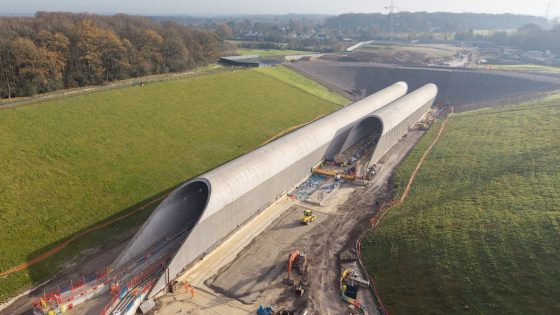
Construction of the porous portals at the north and south ends of HS2’s 16km Chiltern tunnel required tightly sequenced technical concrete pours, with complex formwork and reinforcement detailing to achieve the perforated façade geometry and acoustic performance. Engineering leads coordinated staged casting to control heat of hydration, minimise shrinkage cracking around the voids, and maintain cover to reinforcement in thin web sections. The approach signals future demand for similarly precise concrete placement and quality control on high‑speed rail portals where aerodynamic pressure waves and noise attenuation drive geometry.
The Department for Transport has opened applications for the inaugural chair of Great British Railways, offering £200,000–£300,000 per year for a minimum 2.5 days per week to oversee the new rail body’s formation. The chair will be expected to provide strategic leadership across infrastructure, operations and timetabling as responsibilities transfer from Network Rail and the DfT into GBR. For civil and rail engineers, the appointment will shape long-term decisions on renewals, enhancements and asset management frameworks across the national network.
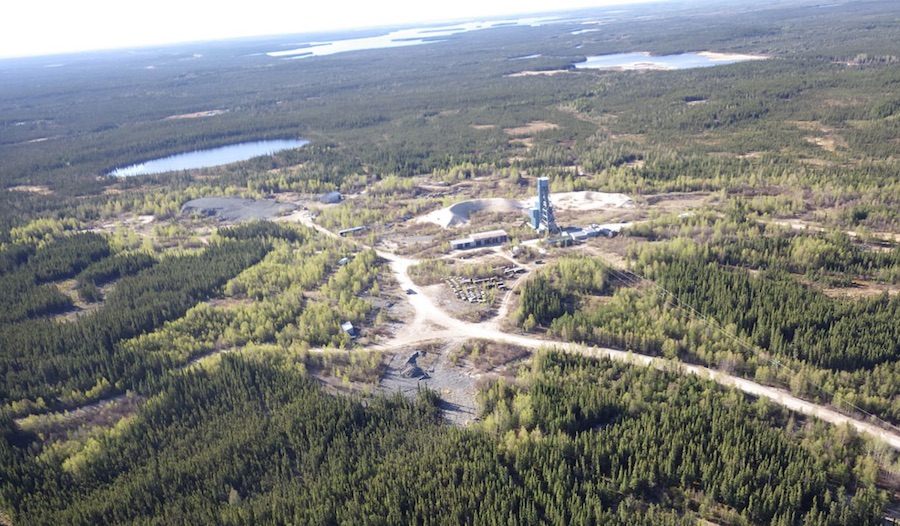
Agnico Eagle is divesting its 55% stake in the Barsele gold project in northern Sweden to partner Goldsky Resources for $166 million, comprising $20 million in cash and 75.5 million Goldsky shares at C$2.64, and retaining a 2% net smelter return royalty. The deal, expected to close by 30 June pending TSX Venture Exchange and Goldsky shareholder approvals, will lift Agnico’s holding from 7.4 million to about 82.9 million shares, or roughly 32.5% of Goldsky on a non-diluted basis. Goldsky becomes sole owner-operator at Barsele, while Agnico shifts to a royalty and strategic-equity position as part of portfolio optimisation.
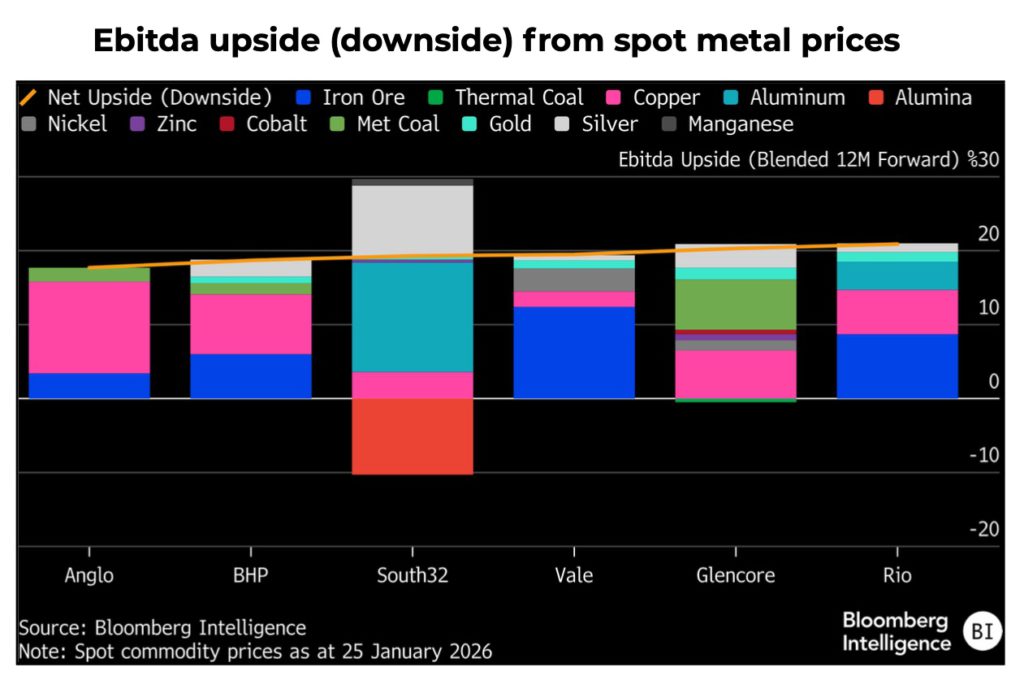
Copper’s price rally is setting up one of the strongest earnings years since early 2025 for diversified miners, with spot levels implying 18%–21% upside to 2026 consensus Ebitda and Rio Tinto and Glencore each showing about 20%–21% potential. Copper is projected to generate over 35% of diversified miners’ 2026 Ebitda, with Anglo American’s Teck deal pushing its copper share above 70%, BHP nearing 50%, Glencore about 35% and Rio at roughly 26% versus 47% from iron ore. Execution risk looms as Glencore advances Coroccohuayco and the Alumbrera restart, BHP progresses Jansen and the Vicuna study, and Vale pursues a plan to double copper output by 2030.
Gold prices surged above $5,300/oz to a record $5,311.29, up over 2% on the day and nearly 20% year to date, as the US dollar fell to a four-year low and investors rotated from currencies into hard assets ahead of a closely watched Fed decision. The move follows bullion’s first break through $5,000/oz earlier in the week and is being driven by expectations of a more dovish, less independent Federal Reserve and heightened geopolitical risks, including US threats over Greenland and Venezuela. Silver outperformed, hitting $117.69/oz after a 2025 price doubling, prompting CME margin hikes and a trading halt in China’s only pure-play silver fund, with Citigroup now calling $150/oz within three months.
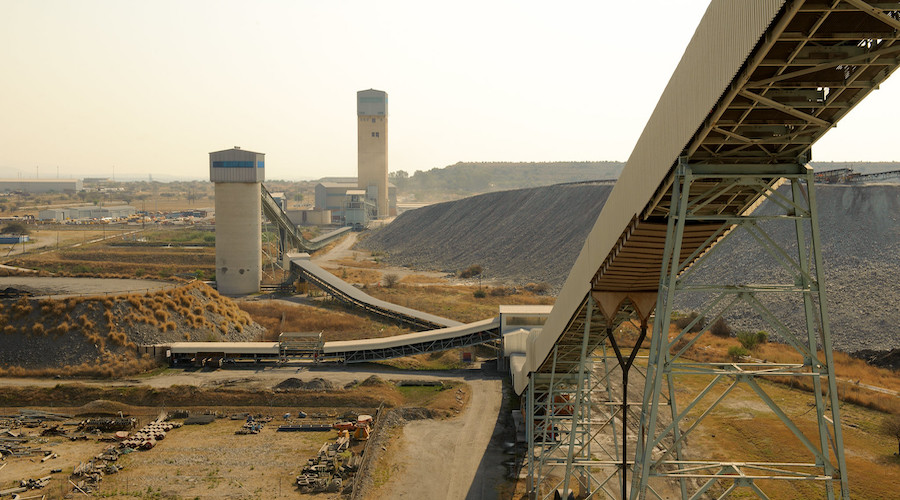
BlackRock has lifted its stake in Sibanye-Stillwater to 5.001%, up from 3.57%, pushing the South African precious metals producer’s shares up 3.6% to a record $20.84 in New York and valuing the company at about $14.2 billion. The move comes as gold breaks through $5,300/oz, silver exceeds $117/oz and platinum hits a record high, materially improving revenue potential for Sibanye’s global PGM and gold portfolio. South Africa’s Public Investment Corp. remains the largest shareholder with more than 20%.
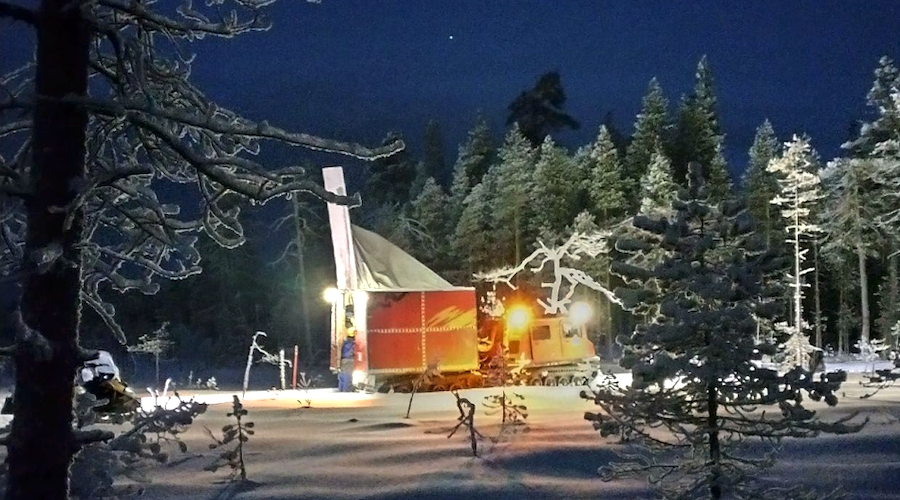
Alamos Gold has reported new gold mineralisation at its Lynn Lake project in Manitoba and Qiqavik property in Nunavik, Quebec, with Lynn Lake hole 25LWX082 at the Linkwood satellite deposit cutting 5 metres at 21.7 g/t from 305 metres and Qiqavik hole 25QKX014 at Avinngaq intersecting 8 metres at 3.07 g/t from 98 metres. Additional Lynn Lake drilling at Burnt Timber returned 16 metres at 2.77 g/t from 95 metres and 10 metres at 1.96 g/t from 182 metres, supporting a 2023 feasibility study outlining a 27‑year mine life from 2029 and 176,000 oz/y over the first decade. Qiqavik’s 2024 campaign drilled 29 holes for 8,736 metres across five targets, with gold in all areas and 72% of holes above 1 g/t, indicating multiple structurally controlled targets for follow‑up in an underexplored Archean terrane.
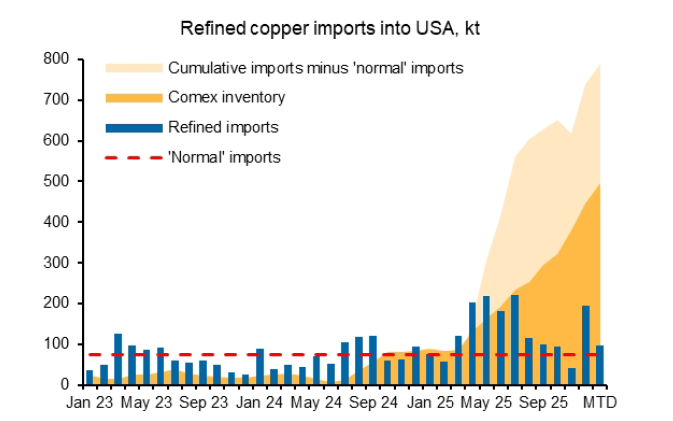
US copper tariffs now look less likely after the White House’s Section 232 decision on processed critical minerals directed the Commerce Department to pursue supply agreements first, with Macquarie’s Alice Fox saying this “significantly weakens the case for copper tariffs”. Comex copper inventories have already climbed about 412,000 tonnes since December 2024, with a further estimated 375,000 tonnes off-exchange, while CME-LME arbitrage for January–March has dropped to zero or negative, starting to pull metal out of US warehouses. A US-backed Mercuria–DRC joint venture giving US buyers first refusal on roughly 500,000 tonnes of copper and 40,000 tonnes of cobalt per year further supports a delay in any tariff decision, but a final rejection of tariffs could rapidly release US stocks and hit prices.
Minaurum Silver has reported an inferred mineral resource at its 100%-owned Alamos project in Sonora of 5.37 million tonnes grading 202 g/t silver, 0.21 g/t gold, 0.43% copper, 0.97% lead and 2.01% zinc, equivalent to 320 g/t AgEq and containing 55.2 million oz AgEq. The estimate, which incorporates smelter and processing deductions more typical of advanced studies, is based on 104 drillholes totalling 35,888 m and 10,194 samples across the Promontorio, Travesia and Europa veins. Mineralisation remains open along strike and at depth, with a 50,000 m Phase II drilling campaign under way to expand the resource beyond three of the 26 identified vein zones.
Munnelly Group reported a 14% rise in turnover to £167m for the year to 31 March 2025, but pre-tax profit edged up only 4% to £1.55m, signalling tight margins in a difficult UK construction market. Cash reserves increased 35% to £7.3m with no third-party borrowings, giving the Hertfordshire-based labour, logistics and site services provider balance-sheet capacity for investment. New chief executive Paul David Munnelly plans continued spend on people, systems and capability, and is openly targeting selective acquisitions across the built environment.
IPAF has issued its three millionth Powered Access Licence (PAL) card since launching MEWP and MCWP operator certification in 1993, with cardholders now spread across more than 60 countries. Annual issuance has grown from about 11,000 operators in the first year to cumulative milestones of one million in 2014, 1.5 million in 2017 and two million in 2020, driven by expansion into markets including the USA and Italy. Smart card and digital PAL formats via the ePAL app now link operator credentials to machine security and telematics, simplifying on-site competence verification for contractors and plant hirers.
Atlas Copco’s B-Air 185-12, billed as the world’s first battery-driven portable air compressor, is now available for UK demonstrations, delivering 5–12 bar at 5.4–3.7 m³/min from a 55 kWh onboard pack with no fuel or grid connection. The 1,500 kg unit uses an electronic pressure regulation system to switch between tasks such as 6 bar hand tools, 10.3 bar sandblasting and 12 bar cable blowing, and is designed to run for a full typical shift. A permanent magnet motor with variable speed and a NEOS Xtreme IP66 inverter claims up to 70% higher energy efficiency than diesel compressors, with lower noise and zero tail-pipe emissions for urban and enclosed sites.
Mears has secured a 10-year, £450m housing maintenance and asset management contract from Birmingham City Council covering 11,500 council homes in the city’s west-central region. The all-encompassing scope includes day-to-day maintenance, gas servicing, heating installation and longer-term improvement programmes, with an option for a five-year extension. Mears plans to build a permanent local delivery base and transfer around 170 staff, signalling sustained demand for building services engineering, compliance upgrades and lifecycle refurbishment across a large, dense urban housing portfolio.
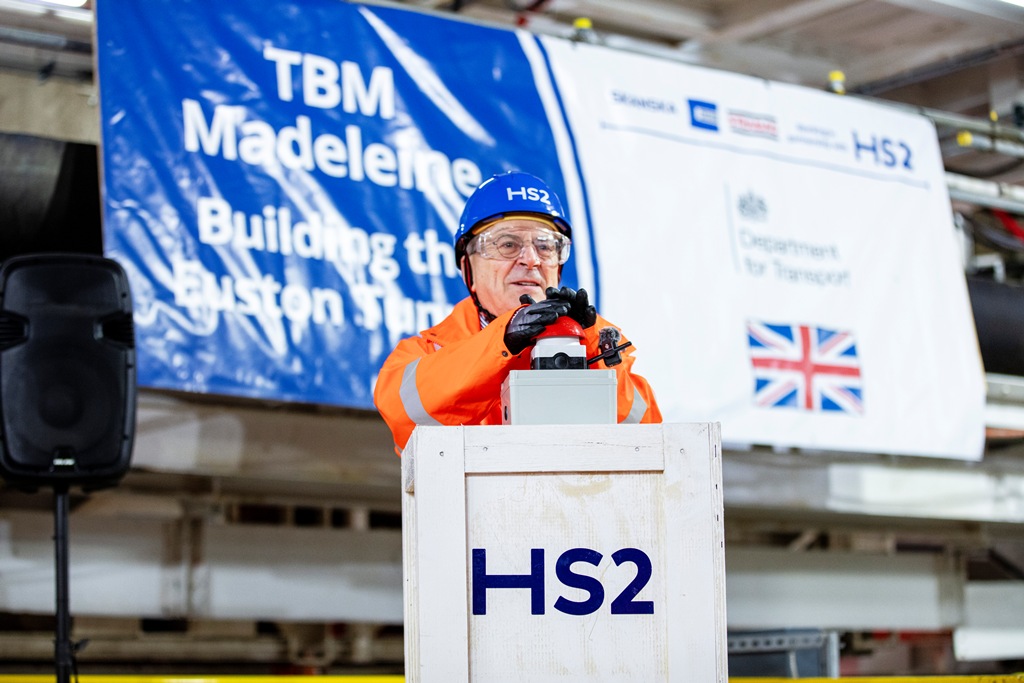
The first of two Herrenknecht tunnel boring machines for HS2’s Euston Tunnel, 1,624‑tonne “Madeleine”, has begun driving the 4.5‑mile twin‑bore section between Old Oak Common and Euston, the fifth and final deep tunnel on the 140‑mile London–Birmingham route. Contractor Skanska Costain Strabag JV will use the 853‑metre Atlas Road logistics tunnel to supply 48,294 precast concrete ring segments and handle more than 1.5 million tonnes of spoil via conveyor to the Willesden Euro terminal depot. Spoil will then be moved by rail for reuse on schemes in Kent, Cambridgeshire and Warwickshire, reducing HGV movements in west London.
UK construction materials suppliers report demand, not supply, as the critical constraint, with UK brick deliveries to November 2025 down 6.1% year-on-year while brick stocks have climbed 14.5% to 542.1 million units. The CLC Material Supply Chain Group, co-chaired by Builders Merchants Federation chief executive John Newcomb and Construction Products Association chief executive Peter Caplehorn, cites concrete volumes falling about 28% nationally over four years and 39% in London over two years, alongside a 1.3% drop in Q4 2025 construction output despite 0.3% UK GDP growth in November. Producers are mothballing sites, delaying capex and cutting jobs, with the group warning that restarting capacity could take up to six months and urging targeted government stimulus focused on housing and residential RMI to avoid long-term structural damage.