Geomechanics, Streamlined.
© 2026 Geomechanics.io. All rights reserved.
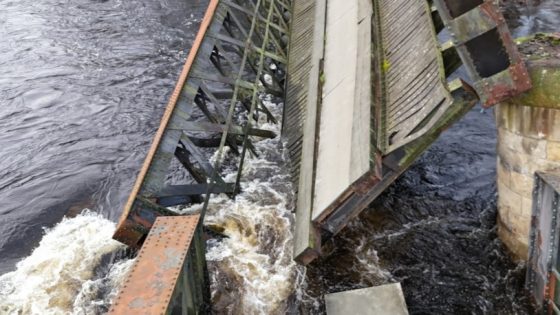
Spey Viaduct’s collapsed spans over the River Spey will be cut and lifted out in sections under a Moray Council plan to create safe access for structural and geotechnical investigation following the 14 December failure. The segmented removal will allow close inspection of critical elements such as bearings, pier foundations and connection details that are currently submerged or unstable in the river channel. Findings are expected to inform both the viaduct’s future and any revisions to inspection and scour management regimes on similar river crossings.
Gold built Victoria’s mining legacy, but the state is now targeting a new wave of critical minerals including rare earths, lithium and high‑purity alumina alongside its established gold sector. Exploration is intensifying in the Bendigo and Stawell zones, with juniors and majors using deeper diamond drilling and modern geophysics to chase structurally controlled deposits beneath historic workings. For geotechs and mine planners, the shift means more complex underground designs in highly altered host rocks and greater emphasis on tailings reprocessing, acid‑forming potential and multi‑commodity processing flowsheets.
Rio Tinto has strengthened its share structure as major institutional investors signal support for a potential merger with Glencore, positioning the combined group as a dominant player in iron ore, copper and aluminium. A deal would consolidate Rio’s Pilbara iron ore system and Oyu Tolgoi copper interests with Glencore’s large thermal coal, cobalt and zinc portfolios, concentrating ownership of several Tier 1 orebodies. For geotechnical and mining engineers, such consolidation could accelerate portfolio-level decisions on mine life extensions, brownfield expansions and closure schedules across multiple continents.
The Minerals Council of Australia is pushing for a Victorian mining growth plan centred on school outreach, TAFE pathways and university places in geoscience, metallurgy and mining engineering, alongside faster permitting. Recommendations include streamlining approvals under the Mineral Resources (Sustainable Development) Act, expanding regional training hubs near centres such as Bendigo and Ballarat, and aligning curricula with mine automation and critical minerals processing. For operators, the agenda signals potential relief on project lead times but also a need to engage earlier with education providers to secure skilled labour.
SLR Consulting’s mining sector lead for Africa and the Middle East, Angus Bracken, argues that sustainability decisions must be based on integrated insight across the full value chain, from conceptual scoping through operations to closure. He points to linking mine design, tailings and waste rock strategies, water and energy balances, and closure landforms in a single decision framework, rather than treating ESG, permitting and technical studies as separate workstreams. For engineers, this means earlier trade-off studies on haul profiles, processing routes and residue storage options to avoid costly redesign late in the project cycle.
Zoomlion is developing a wide-body battery trolley haul truck option that builds on the recent resurgence of trolley-assist systems at large open pits such as Collahuasi and Los Pelambres, which currently rely on diesel-electric trucks. The concept targets battery-electric trucks drawing power from overhead catenary on uphill hauls, using on-board batteries for off-trolley sections to cut diesel use and ramp emissions. For mine planners, this points to future pit designs and ramp geometries explicitly optimised for mixed catenary–battery operation rather than pure diesel haulage.
Codelco and Schneider Electric have signed a memorandum of understanding to form a strategic alliance focused on digital transformation and energy efficiency across Codelco’s mining operations. The framework targets co-development and deployment of advanced automation, power management and data-driven optimisation solutions, likely integrating Schneider’s EcoStruxure platforms with Codelco’s existing process control and electrical systems. For mine operators, the move signals more systematic use of real-time energy monitoring, load management and process digitalisation to cut operating costs and emissions intensity at large-scale copper assets.
Trafo Power Solutions has designed and supplied a skid‑mounted mobile substation for an Australian mine, providing a transformer and associated switchgear on a single transportable base for rapid deployment. Managing Director David Claassen says the in‑house engineered unit is built for harsh mining conditions, with a robust steel skid, integrated cooling and protection systems, and plug‑and‑play terminations to minimise on‑site installation time. The solution allows the mine to relocate power infrastructure as pits advance, reducing civil works and downtime during reconfiguration.
The $148.8 million Mandurah Estuary Bridge Duplication has opened its new westbound carriageway to traffic, easing pressure on the existing bridge that currently carries more than 33,000 vehicles per day between southern Mandurah and the city centre. The project adds a parallel structure across the estuary, effectively doubling lane capacity on this key north–south coastal route in Western Australia. Remaining works will focus on completing the eastbound duplication, tie-ins and approach road upgrades, which will influence future traffic loading, maintenance access and estuary-side geotechnical performance.
More than one million trips have already been made through Victoria’s West Gate Tunnel since opening in December, with over 20 per cent of journeys by trucks diverting heavy vehicles away from inner‑west residential streets. The twin tunnels and new links to the Port of Melbourne, central city and CityLink are easing congestion in suburbs such as Footscray, where arterial corridors previously carried high freight volumes. For civil and traffic engineers, early usage data will inform ramp metering, pavement performance monitoring and future freight route planning across Melbourne’s west.
Australasian Railway Association has issued new recommendations on how federal financial support should be structured for state and territory rail infrastructure, linking funding models to measurable growth in revenue, jobs and wider economic output. The submission calls for more predictable, long‑term Commonwealth commitments to multi‑year rail programmes, rather than ad‑hoc project grants, to stabilise supply chains and specialist labour. For engineers and contractors, the proposals signal a push towards larger, programmatic rail packages and clearer investment pipelines for works such as Inland Rail sections and station precinct upgrades.
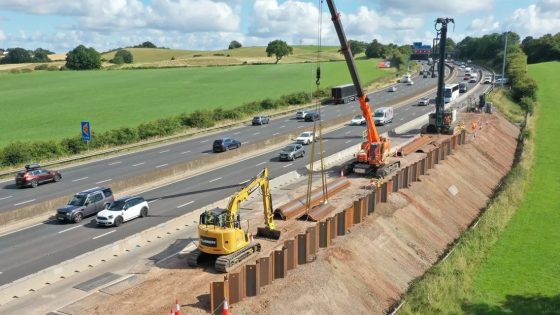
The SMP Alliance has released a “legacy and learnings” report detailing how its alliancing model delivered smart motorway upgrades and retrofit emergency areas amid major programme disruption and scope change. The report covers collaborative planning between National Highways, designers and contractors, rapid redesign of refuge areas and technology systems after the 2023 smart motorway cancellations, and re‑sequencing works under live traffic. For practitioners, it sets out practical lessons on risk‑sharing, integrated control centres, and standardised design packages to keep lane closures and possession durations to a minimum.
The government’s £45bn Northern Powerhouse Rail (NPR) pledge is facing scepticism from opposition MPs, with the scheme branded “castle-in-the-air planning” amid a lack of detailed route, phasing or funding breakdown. Transport secretary Heidi Alexander insists the Department for Transport has absorbed HS2 lessons on cost escalation, land acquisition and phased delivery, signalling tighter cost controls and earlier constructability input for new high-speed and upgraded corridors. For civil and rail engineers, the key uncertainty is how NPR’s scope will balance new-build alignments with upgrades to existing trans-Pennine routes.
Anglian Water has opened procurement for a £1.5bn major projects framework covering AMP8 design-and-build works to cut pollution and upgrade water and wastewater assets across eastern England. The multi-lot framework will target schemes such as storm overflow upgrades, new or expanded treatment works and network resilience projects, with packages expected to span civils, MEICA and process engineering. Contractors will need strong track records in regulatory compliance for water quality and environmental permits, plus capacity to deliver large, multi-site programmes under tight outage and consent constraints.
Biodiversity net gain requirements on Nationally Significant Infrastructure Projects are being framed as a source of “desperately needed” long-term climate resilience, with large linear schemes such as new highways, rail corridors and strategic energy infrastructure able to create continuous habitat networks at scale. Experts point to legally secured 30‑year management plans, species-rich grassland and woodland planting, and restored wetlands as measures that can buffer flood risk, reduce heat stress and stabilise soils around major assets. For designers and contractors, this shifts BNG from a planning obligation to a core part of geotechnical and drainage resilience strategy.
Australia’s Federal Government has released an Australian Critical Minerals Prospectus detailing 49 mining projects and 29 midstream processing proposals across commodities such as lithium, rare earths and high-purity alumina. The prospectus is aimed at attracting offshore capital into upstream deposits and midstream plants, including projects like Iluka Resources’ Eneabba monazite operation in Western Australia, to build domestic separation, refining and value-adding capacity. For engineers and project developers, the document signals a pipeline of greenfield and brownfield work spanning mine development, concentrators and chemical processing infrastructure.
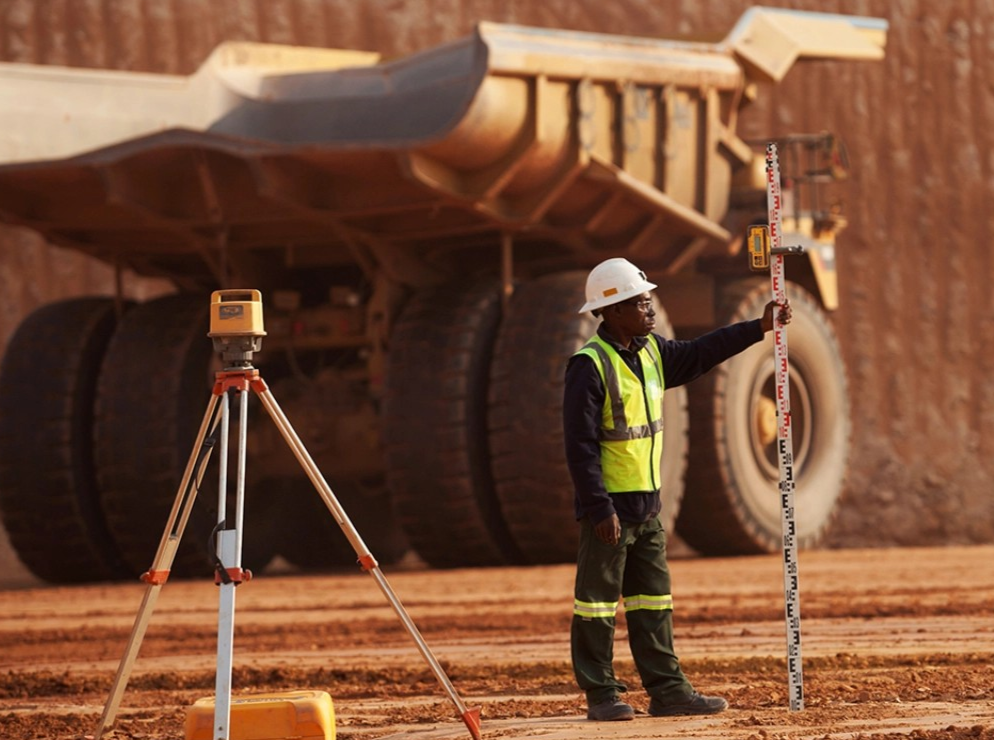
Leveraging mining tyre management for cost and emissions gains, Kal Tire argues that optimising haul truck tyres can materially cut both fuel burn and tyre spend in open-pit operations where loading and haulage already account for roughly 50–60 per cent of operating costs. The company points to better inflation control, haul-road maintenance and tyre selection for specific pit profiles as levers to reduce rolling resistance and extend tyre life on 200–400 t class trucks. For engineers, the message is that tyre data, road design and maintenance planning should be integrated into mine planning, not treated as a consumables issue.
University of Texas at Austin spinout Supra Elemental Recovery has raised an oversubscribed $2 million pre-seed round, led by Crucible Capital, to commercialise a proprietary refining platform for high-purity gallium, scandium and other critical minerals from US industrial byproducts, mine tailings and e-waste. The non-toxic process combines solvent extraction and ion exchange, claiming up to 100× greater selectivity and speed than conventional methods, with initial focus on semiconductor supply chains and validation for cobalt and lithium. Commercial pilots are targeted for 2026, directly addressing the US’s 100% import dependence on gallium and scandium.
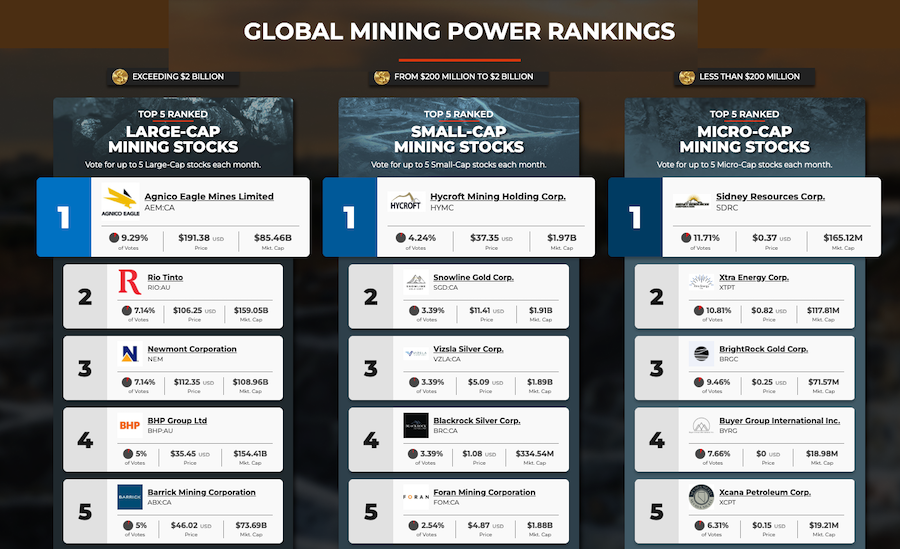
Agnico Eagle, Hycroft Mining Holding and Sidney Resources topped MINING.COM’s January Global Mining Power Rankings, with Agnico securing 9.2% of large-cap votes on the back of multi-jurisdictional production, an 89% Toronto share price gain and portfolio moves including the sale of its 55% Barsele stake and an $80 million Avenir Minerals critical minerals platform. Hycroft led small caps with 4.2% of votes after advancing metallurgical testing and project optimisation at its Nevada gold-silver operation amid firmer prices. Micro-cap Sidney Resources captured 11.7% of votes, expanding its Warren Mining District position by acquiring Unity GoldSilver Mines assets, staking about 7,600 acres and progressing proprietary laser mining technology and rare earths concentration work.
Glencore has agreed a non-binding deal to sell a 40% stake in its Mutanda Mining and Kamoto Copper Company assets in the DRC’s Lualaba province to the Orion Critical Mineral Consortium for an enterprise value of $9 billion. Mutanda and KCC together produced 247,800 tonnes of copper (about 30% of Glencore’s global output) and 35,100 tonnes of cobalt last year, with Orion CMC gaining rights to appoint non-executive directors and direct sales of its share of production under the US–DRC strategic partnership. The mines will remain operated by Glencore, while Orion CMC, backed by ADQ and the US International Development Finance Corp., plans further critical mineral and infrastructure investments across the DRC and wider African copper belt.
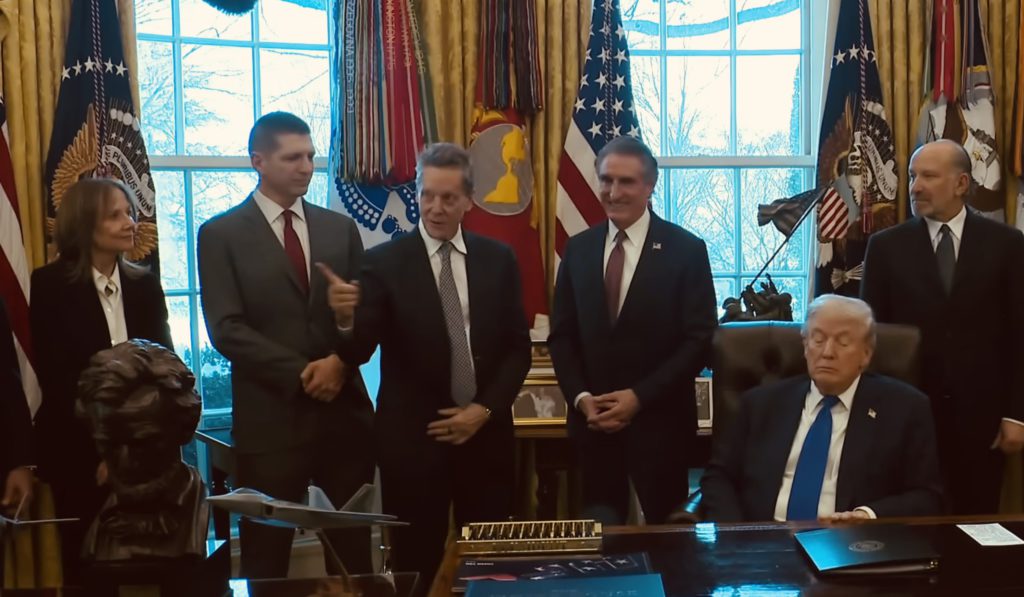
US President Donald Trump has created a US$12 billion federal minerals stockpile and accelerated mine permitting and project funding, moves Ivanhoe Mines founder Robert Friedland says have left “the morale of the miners…sky high”. Friedland credited the US Export-Import Bank’s indication of up to US$825 million in long-term debt for Ivanhoe Electric’s Santa Cruz copper project in Arizona and thanked Commerce Secretary Howard Lutnick for backing critical minerals developments. The event, held in the Oval Office with industry leaders including General Motors CEO Mary Barra, signals continued policy support for US copper and rare earths supply chains.
Torngat Metals has delayed first production at its C$2‑billion Strange Lake heavy rare earths project in Nunavik to 2029–30, targeting permits in early 2027 and a bankable feasibility study in the first half of 2026. The project combines a mine and concentrator, a 180‑km access road to Voisey’s Bay, and an $800‑million separation plant at Sept‑Îles designed for 15,000 t/y of rare earth oxides, including 540 t/y dysprosium and 80 t/y terbium. Financing includes $165 million in federal loans, with Canada Infrastructure Bank considering up to $500 million for access infrastructure.
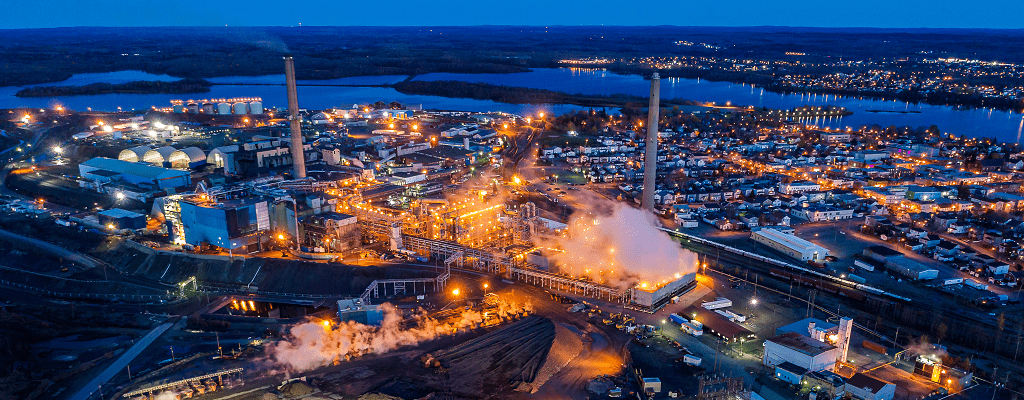
Glencore has frozen nearly C$1 billion of planned investment at its 100‑year‑old Horne copper smelter in Rouyn‑Noranda, including C$300 million earmarked for emissions‑reduction upgrades, after failing to secure a regulatory framework with the Quebec government. Without these projects, the smelter will be unable to meet new emissions limits taking effect from March 2027, forcing a review of the site’s future and signalling a potential closure. Capital spending at Glencore’s CCR copper refinery in Montreal will also be scaled back over the medium term.
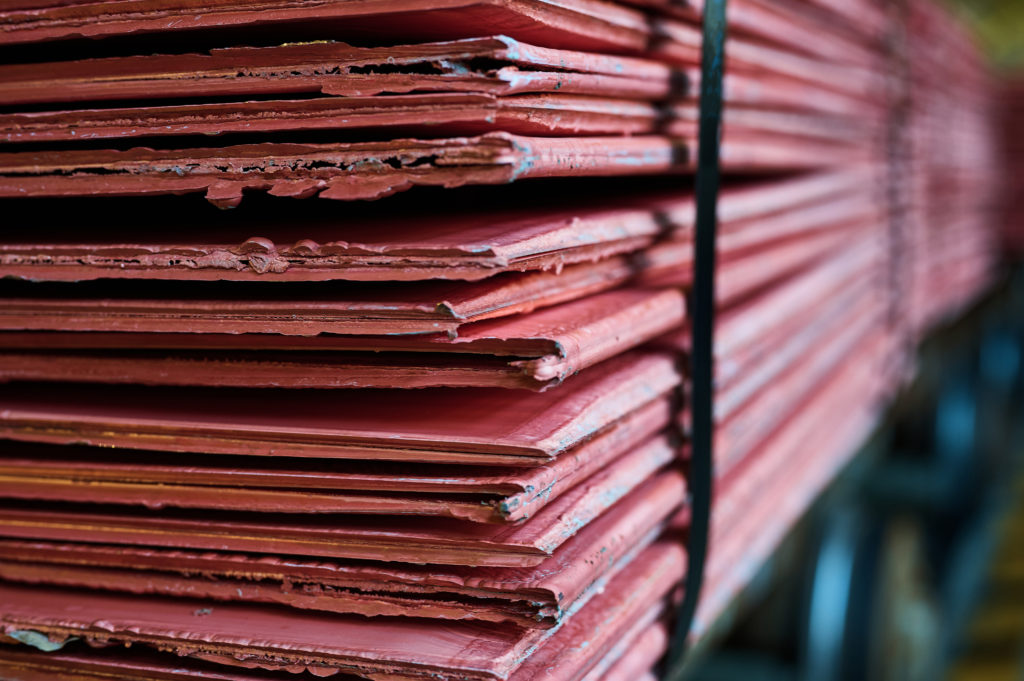
China’s state-backed China Nonferrous Metals Industry Association is urging Beijing to expand strategic copper reserves and coordinate with major state-owned producers to lift commercial inventories, while also considering adding copper concentrates to the stockpile. The move comes as the US launches “Project Vault”, a planned $12 billion strategic minerals reserve, and copper faces potential new US tariffs after being designated a critical mineral by the US Geological Survey. With mine disruptions and strong demand forecasts, London copper prices recently hit a record $14,500/t, up about 40% year-on-year.