Geomechanics, Streamlined.
© 2026 Geomechanics.io. All rights reserved.
Riba president Muyiwa Oki has proposed “The Loop”, a £130bn high-speed rail system encircling the UK and Ireland, conceptually inspired by Saudi Arabia’s 170km linear city project The Line. The vision links the North of England, Wales, Scotland, Ireland and Northern Ireland into a single continuous corridor, implying extensive subsea tunnelling and long-span bridge works across the Irish Sea. For engineers, the scale suggests HS2-level design speeds and alignments replicated over multiple jurisdictions, with major geotechnical, consenting and interoperability challenges.
A £12.6M Environment Agency upgrade to flood defences along Fowlea Brook in Stoke-on-Trent, designed by Arup, has been completed to reduce flood risk to homes, businesses and key transport links. The scheme focuses on improving channel capacity and formalising embankments and walls along critical sections of the brook, which has a history of rapid response to intense rainfall. For geotechnical and civil teams, the works signal ongoing demand for integrated fluvial modelling, foundation design for flood walls, and coordination with existing urban infrastructure.
Thames Water has launched procurement for a multi‑lot framework worth up to £177M (excluding VAT) to deliver site investigation surveys across its asset base. The framework will cover intrusive and non‑intrusive ground investigations, including boreholes, trial pits, in‑situ testing and laboratory analysis to support major water and wastewater infrastructure works. Geotechnical and environmental consultants and drilling contractors can expect long‑term programmes tied to pipeline renewals, treatment works upgrades and resilience schemes across the Thames Water region.
PMET Resources is raising up to C$130 million, split between a C$65 million public share offering at C$5.66 and a C$65 million flow-through placement at C$9.30, to advance its Shaakichiuwaanaan lithium project in Quebec’s James Bay. Funds will support an updated feasibility study on the CV5 deposit, including tantalum co-products and potential underground bulk sampling, plus a preliminary economic assessment for the CV13 lithium–caesium–tantalum deposit. The project’s October study outlined a C$1.5 billion, 20-year mine producing about 800,000 tonnes per year, with an after-tax NPV of C$1.6 billion and 4.7-year payback.
Kidnappers who abducted Vizsla Silver workers on 23 January in Sinaloa, Mexico, have killed at least some of the victims, whose bodies were recovered from a clandestine grave near El Verde, about 15 km from the company’s Panuco silver-gold project in Concordia. Vizsla has suspended certain activities at the high‑grade Panuco project, which hosts 12.8 million proven and probable tonnes grading 2.01 g/t gold and 249 g/t silver and is planned to produce 17.4 million silver‑equivalent oz. per year over 9.4 years. The security crisis has driven Vizsla’s Toronto‑listed shares down 42% since 28 January, raising serious questions over project execution and workforce protection in the region.
TechMet plans to raise up to $200 million in new funding on top of last year’s $300 million round, which included $180 million from the Qatar Investment Authority, to expand its critical minerals portfolio beyond existing stakes in Brazilian Nickel, US Vanadium and Rainbow Rare Earths. CEO Brian Menell, speaking at Mining Indaba 2026, flagged Zambia, Guinea and the Democratic Republic of Congo as priority jurisdictions, alongside the Dobra lithium deposit in Ukraine targeted via a joint US investment fund. The US International Development Finance Corp remains a major backer, with TechMet reportedly valued above $1 billion.
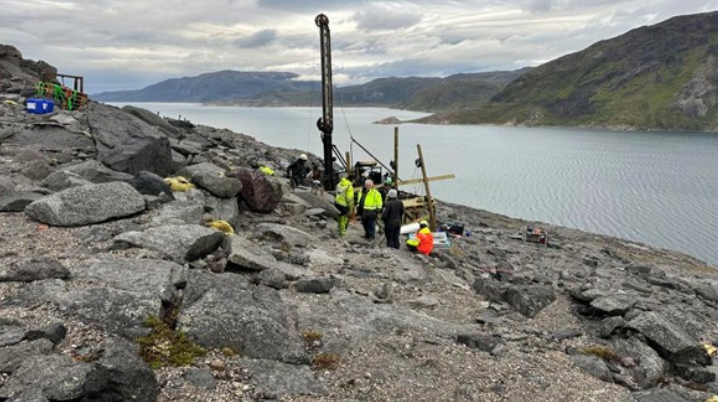
Critical Metals’ 2025 drilling at the Tanbreez project in southern Greenland has extended rare earth mineralisation over a 1,750-metre corridor at Area B, with TREO grades typically 0.35%–0.61% and heavy rare earths comprising up to 27% of the total. Final holes at the Fjord deposit returned consistent >0.4% TREO plus gallium, hafnium, cerium and yttrium, supporting further extension and infill drilling in 2026 to refine pit designs and resource models. Tanbreez currently hosts at least 45 million tonnes within a 4.7‑billion‑tonne intrusive body, underpinning a PEA NPV of about $3 billion and a phased ramp-up from 85,000 to 425,000 t/y REO.
Elevra Lithium has signed a non-binding MoU to supply Mangrove Lithium with up to 144,000 tonnes per year of NAL spodumene concentrate from 2028, ramping to that level by 2030 and covering about 46% of projected sales volumes, on market-linked pricing with floor and ceiling protection. Mangrove plans a 20,000 t/y lithium hydroxide or carbonate plant in Eastern Canada, potentially on-site at NAL, following a final investment decision by June 2027. The project builds on Mangrove’s 1,000 t/y electrochemical refining plant and an $85 million funding round led by Canada Growth Fund.
Gold prices jumped 2.3% on Monday to about $5,070/oz, recovering roughly half of last month’s 12% single-day crash and leaving bullion still 14% higher year-to-date as traders await US January jobs data and clearer signals on Federal Reserve rate cuts. Central bank demand remains strong, with the People’s Bank of China extending purchases for a 15th consecutive month amid broader reserve diversification away from US assets, backed by houses such as Deutsche Bank and Goldman Sachs. Silver climbed 7% to above $83/oz after a >35% January slump, with retail dip buying driving sizeable ETF inflows and markedly higher price volatility.
Victoria is moving to restore confidence in British Columbia’s mine permitting by adding C$3 million in funding, including C$1 million for extra permitting staff and C$2 million to expand the Mineral Claims Consultation Framework, alongside a landmark approval for Skeena Resources’ Eskay Creek restart. Files that miss new service standards will be escalated to the chief permitting officer for a decision within 14 days, with priority attention on Eskay Creek, Newmont’s Red Chris, Teck’s Highland Valley Copper life-extension and Centerra’s Mount Milligan expansion. Key tests now are clarifying the Declaration Act, progressing the North Coast Transmission Line into the Golden Triangle and addressing a forecast labour shortfall of 5,000–10,000 workers by 2035.
Revival Gold is prioritising a restart of the Mercur heap-leach project in Utah, targeting a prefeasibility study by year-end and sequencing development ahead of its Beartrack-Arnett project in Idaho. The company controls about 6 million oz of gold resources across the two brownfield sites and aims for more than 160,000 oz per year from initial heap-leach phases. Beartrack-Arnett is on a longer, roughly 3.5–4-year timeline due to federal land review requirements, while Mercur sits on private ground about 57 km from Salt Lake City in a Carlin-type district.
British Columbia has appealed a December 2025 ruling that found its Mineral Tenure Act breaches consultation duties by allowing mineral claims staking on Gitxaała and Ehattesaht territories without prior First Nations engagement. The 3 February filing to the Supreme Court of Canada argues the appeals court misapplied B.C.’s 2019 Declaration on the Rights of Indigenous Peoples Act (DRIPA) and risks giving UNDRIP “quasi-constitutional status”, creating a “parallel universe of litigation”. Premier David Eby plans DRIPA amendments this spring after talks with First Nations, while leaders including Gitxaała Chief Councillor Linda Innes warn rushed reforms could weaken enforceable rights over exploration permitting.
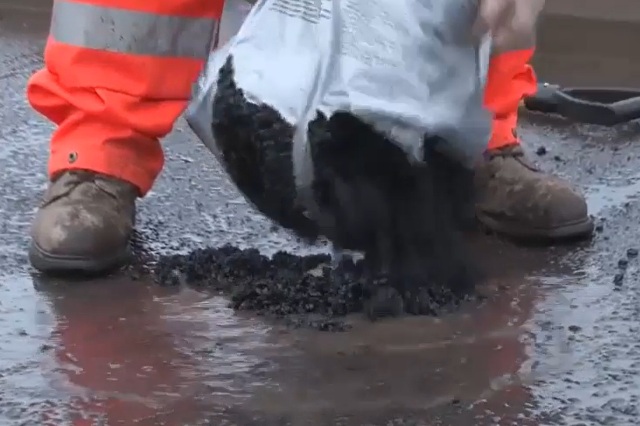
Bromley Council is trialling Viafix cold lay asphalt for pothole patching as it more than doubles its road resurfacing budget to over £5m for its 547 miles of roads. The highly viscous mix is supplied in sacks, can be laid by a single operative in wet conditions and standing water, and follows a simple cut–clean–glue–pour–roll sequence, with each repair expected to take about 20 minutes and carrying a two‑year guarantee. Similar deployments by East Lothian, Cambridgeshire and Renfrewshire councils suggest wider potential for rapid, small‑crew maintenance workflows.
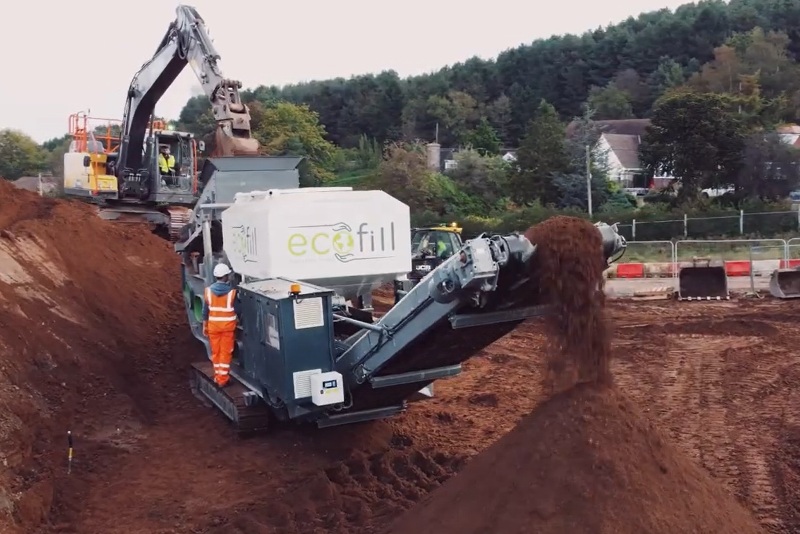
Persimmon Homes has partnered with Leeds-based Ecofill to process surplus on-site soils and clays into certified aggregate replacement materials using mobile plant and proprietary binder mixes, following successful trials on Persimmon developments. The treated material is being used for adoptable roads, retaining walls, piling mats, embankments and trench backfills, with Ecofill stating compliance with relevant national European standards. For engineers, the approach cuts landfill export and imported aggregate haulage, with potential carbon and safety gains on both site logistics and local road networks.
A Croydon Crown Court judge has jailed 56-year-old sole trader Israel Jackson for 12 months after he illegally installed a gas boiler for a 90-year-old homeowner in May 2022 while falsely claiming to be Gas Safe registered and issuing a fraudulent gas safety certificate. The installation triggered gas smells, loss of hot water and two separate “immediately dangerous” notices from British Gas and BT Heating and Property before the boiler was finally replaced in June 2023. HSE found Jackson had continued unregistered gas fitting work despite a 2015 conviction, and served U-Works Services Ltd with a prohibition notice for failing to verify his Gas Safe status.
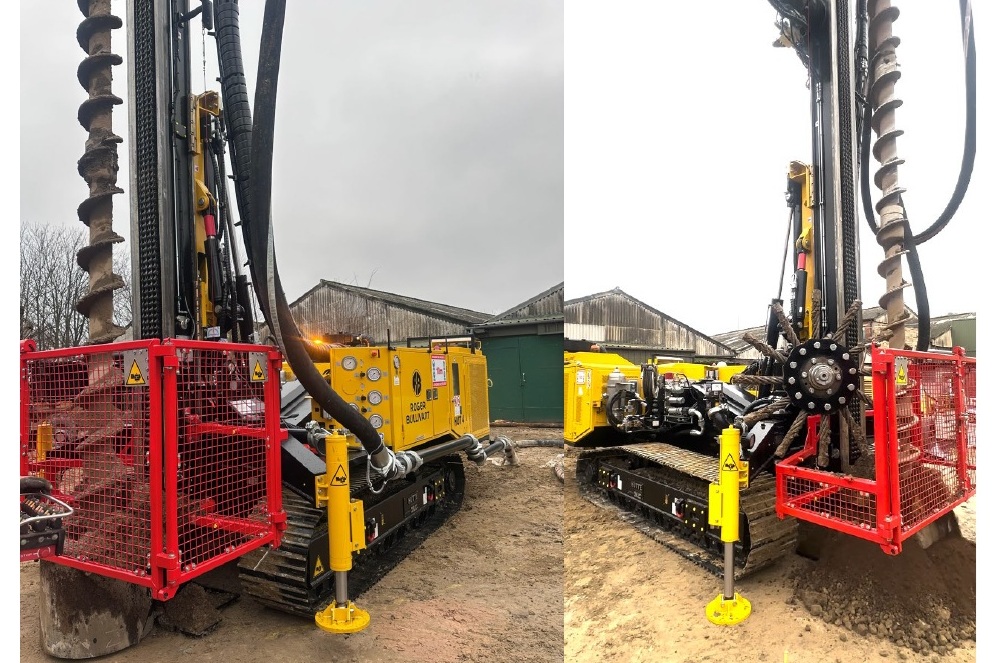
Roger Bullivant Limited has added a Hütte HBR 204MP piling rig to its fleet, capable of installing 300–600mm CFA and SFA piles plus temporary/permanent casings and overburden systems using air or water flushing. A segmental mast allows rapid on-site reconfiguration from a 15.5m mast with 10.6m stroke down to 5.7m/3.8m in under half a day, addressing low headroom, restricted access and variable ground conditions without extra plant. Radio remote control and integrated air-flush capability extend its use on complex commercial and infrastructure schemes, with a second unit due later this year.
Brick merchant Brickability has rebranded as “Brck”, aligning its AIM ticker LSE:BRCK with the group name while retaining “Brickability” for the core subsidiary. Chief executive Frank Hanna says the change is intended to distinguish the holding company from operating units and to reflect a broader portfolio beyond traditional brick distribution. For contractors and specifiers, product lines, subsidiary names and market channels remain unchanged, so any impact is limited to corporate branding and documentation rather than supply, pricing or technical standards.
Scottish contractor Robertson Group has returned to profit with a £20.2m pre-tax gain on £793m turnover for the year to 30 June 2025, reversing a £9.7m loss on £825m turnover the previous year and holding £74m net cash with no external debt. The board is shutting Robertson Civil Engineering as a standalone business after it posted a second consecutive loss – £170,000 pre-tax on just £8m turnover versus £27.8m in 2024 – with civils work to be absorbed into regional small works units. Core Robertson Construction Group delivered £575m turnover and £30.7m pre-tax profit, while facilities management revenue rose 13% but profit slipped from £12.1m to £10.2m under wage and inflation pressure, signalling a strategic pivot away from higher-risk civils packages.
Ardmore Group has reported a £42.3m pre-tax loss on £345.9m turnover for the year to 30 September 2024, driven by historic project losses, multi-year remedial works and a £15m adjudication award linked to its former general contracting arm, Ardmore Construction Limited (ACL). Management says trading since year-end has “materially” improved, with profit before tax of about £11m expected from continuing operations in 2025 and a strong forward order book including the Kensington Forum Hotel. However, Building Liability Order claims over alleged defective works by ACL have triggered a material uncertainty over going concern, despite year-end cash of £27.6m and auditor agreement.
Aarsleff Ground Engineering is promoting an integrated ground solution offer that combines vibro stone columns, rigid and hybrid inclusions, and driven precast piles into a single engineered package for each site. The firm targets projects with variable or weak soils, using mixed systems across a footprint to manage differential stiffness and keep floor slabs flat and frames within tolerance without multiple specialist contractors. For geotechnical and structural teams, the pitch is one design responsibility, coordinated load paths and programme certainty on brownfield or heterogeneous sites.
Pilot Crushtec is expanding its European distributor network on the back of rising EU demand for its TwisterTrac VS350E Stage V mobile VSI crusher, developed specifically to meet EU Stage V emissions regulations. Sales and Marketing Director Francois Marais says the electric‑driven VS350E targets quarrying and mining contractors needing compliant, high-spec mobile crushing and screening trains. The move signals more competition for established European OEMs and could give mines additional options for low‑emission, modular crushing circuits in brownfield upgrades.
Mesabi Metallics has purchased fully electric Epiroc Pit Viper 351 E rotary blasthole rigs via distributor Road Machinery & Supplies Co for its US$2.4 billion taconite iron ore mine and processing complex on Minnesota’s Iron Range. The large-capacity Pit Viper 351 platform, typically used for 270–311 mm production drilling, will be integrated into a greenfield operation designed around high-volume, bench-scale drilling and downstream concentrator throughput. Fully electric drilling reduces diesel use at the pit, simplifies highwall ventilation design and supports future integration with autonomous drilling and fleet electrification strategies.
Eurasian Resources Group reports that digital tools and in‑house AI across its mines and plants delivered more than $111 million in economic impact in 2025, as it brands 2026 its “Year of Digitalisation and AI”. The group is expanding site connectivity and core IT infrastructure to support proprietary optimisation models for processing plants and mine operations, rather than relying on off‑the‑shelf platforms. For engineers, this signals growing demand for robust OT networks, data governance, and integration of AI models directly into control systems and dispatch.
National Apprenticeship Week is being used by engineering and technology leaders to push for a more robust apprenticeship system to supply site-ready technicians, civil engineers and project managers for major UK infrastructure schemes such as HS2 and the Lower Thames Crossing. Commentators argue that current funding rules and levy constraints are limiting uptake by SMEs in ground engineering, rail and highways, despite strong demand for Level 3–6 apprentices in disciplines like geotechnical design, digital construction and materials testing. For practitioners, the message is to engage directly with training providers and use the levy more aggressively to secure future skills pipelines.