Geomechanics, Streamlined.
© 2026 Geomechanics.io. All rights reserved.
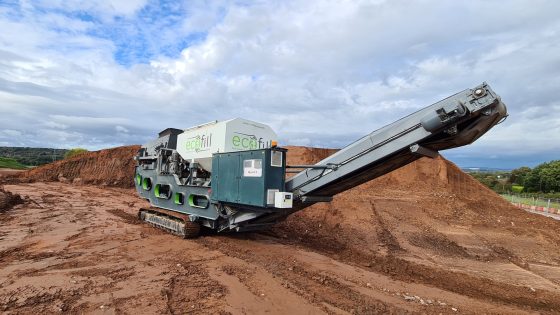
Persimmon Homes has partnered with ground engineering technology firm Ecofill to re-use site-won excavated soils as engineered fill in adoptable roads, retaining walls, piling mats, embankments and trench backfills, displacing imported primary aggregates. Ecofill’s process allows classification and treatment of cohesive and granular arisings to meet highways and structural fill specifications, reducing soil sent to landfill and cutting lorry movements for aggregate haulage. The move signals wider potential for specification-compliant reuse of marginal soils on large housing schemes under UK earthworks and highway adoption standards.
More than 140,000 people have been evacuated from low-lying towns and rural communities in northwestern Morocco after extreme rainfall and emergency releases from multiple upstream dams caused major flooding along several river valleys. Rapid drawdown and high downstream discharges are stressing ageing embankment protections, inundating agricultural terraces and damaging road and bridge approaches, with several river crossings reportedly overtopped. Geotechnical teams now face urgent inspections of dam abutments, spillway structures and saturated slopes, alongside rapid debris clearance to reopen key access routes for relief and repair works.
The Northern Miner has launched the Goldquest Challenge, a student-focused contest built around monthly online quizzes on gold, mining and the metal’s role in technology, finance and sustainability, with each completed quiz earning an entry into a grand prize draw. From all entries, 20 students will be shortlisted to write a gold-themed essay judged by an expert panel on creativity, insight and originality, with the winner receiving an all‑expenses‑paid trip to the 2026 CIM Convention in Vancouver (3–6 May), including flights, hotel, meals and full conference access. Eligibility is restricted to students in select countries, with details set out in the contest’s Rules & Regulations.
AIC Mines has intersected the Jericho copper mineralisation from the Eloise copper mine access drive in Queensland, confirming underground connectivity between the existing Eloise workings and the Jericho deposit. The breakthrough via the Eloise decline reduces the need for a standalone Jericho shaft and allows early development using existing ventilation, power and dewatering infrastructure at Eloise. For geotechnical and mine planners, the link enables integrated ground control, shared services and staged production ramp-up across the combined Eloise–Jericho system.
BME has commissioned a new electronic detonator plant in Kalgoorlie, Western Australia, to localise supply of its AXXIS electronic detonators and support tighter control of blast timing across hard‑rock operations. The company has run field trials across multiple WA mine sites to validate more controlled and reliable blasting, focusing on timing accuracy, reduced misfires and improved fragmentation. Local manufacturing is intended to cut lead times, reduce import logistics risk and give mine engineers closer technical support for complex blast designs.
Uranium prices have surged back above $US100 per pound, the highest level since early 2024, reigniting investor interest in Australian uranium projects across Western Australia, South Australia and the Northern Territory. Developers are revisiting care-and-maintenance assets and advanced exploration plays, with attention on ISR-compatible sandstone deposits and permitted but undeveloped open-pit resources. The price move is likely to accelerate feasibility updates, restart studies and long-lead procurement for processing plants, tailings storage and groundwater management infrastructure.
Sandfire Resources and Havilah Resources have signed definitive transaction agreements giving Sandfire a clear pathway to an 80 per cent interest in the Kalkaroo copper–gold project in South Australia’s Curnamona Province. The deal formalises Sandfire’s role in funding and advancing studies and approvals for the large-scale open pit copper–gold deposit, positioned near existing infrastructure and within a region already hosting multiple base metals operations. For geotechnical and mine planners, the move signals likely acceleration of resource definition drilling, pit design work and long-lead infrastructure planning at Kalkaroo.
Minerals Council of Australia chief executive Tania Constable is calling for a major overhaul of the skilled migration system to ease what she describes as a mining workforce “crunch”, particularly in engineering, geoscience and critical minerals processing roles. The MCA wants faster visa processing, clearer pathways for experienced overseas professionals, and better recognition of mining-specific qualifications to support projects in remote regions such as the Pilbara and North Queensland. Persistent shortages in drill and blast engineers, metallurgists and underground supervisors are already delaying project timelines and driving up labour costs.
Federal Government funding of more than $86.2 million under tranche three of the Safer Local Roads and Infrastructure Program will support 30 new road projects across New South Wales, Queensland, Western Australia, South Australia and Victoria. Works will target safety and resilience upgrades on local networks, likely including pavement strengthening, intersection treatments and improved roadside barriers in high‑risk corridors. Designers and contractors should expect a pipeline of small to mid‑scale rehabilitation and safety packages suited to accelerated delivery and staged traffic management.
RZ Resources, a New South Wales-based mineral sands developer supplying US critical minerals programs, is preparing an ASX listing reportedly targeting a valuation in the order of $1 billion. The company’s portfolio centres on zircon, rare earth-bearing heavy mineral sands and other critical minerals, positioning it as a potential long-term feedstock option for US-aligned supply chains. For geotechnical and mining engineers, the move signals likely acceleration of mine development, resource drilling and processing plant design in eastern Australia’s mineral sands provinces.
Rammer is expanding advanced technical training for its global hydraulic rockbreaker dealer network, focusing on correct installation, nitrogen charging, and troubleshooting of large hammers on high-duty mining excavators. Courses cover Rammer’s integrated systems such as Ramlube automatic lubrication and Ramdata monitoring, enabling dealers to diagnose impact energy loss, excessive tool wear, and carrier–breaker mismatch on site. Better-trained service teams are expected to cut unplanned downtime on production rockbreakers, improve tool life in hard rock and oversize reduction, and standardise maintenance practices across regions.
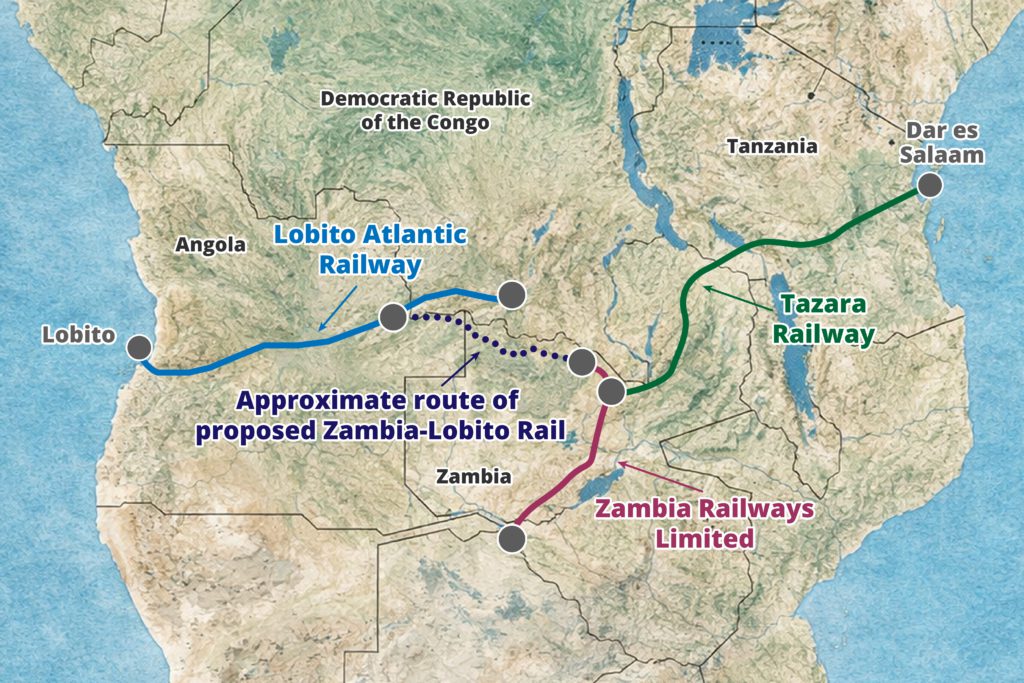
Midnight Sun Mining has declared an initial resource at the Kazhiba deposit in Zambia’s Domes Region, reporting 2.33 million indicated tonnes at 1.41% Cu (72.4 million lb contained), with mineralisation averaging only 30 metres deep over a 300 m x 350 m footprint less than 10 km from First Quantum’s Kansanshi mill. The company is using potential Kazhiba toll-milling cashflow to fund six-rig drilling along the 20 km Dumbwa anomaly, which samples at 0.73% Cu at surface, under COO Kevin Bonel, who previously led Barrick’s 1.6 Bt Lumwana resource. The project sits in a Copperbelt now framed by competing $2.1 billion Lobito Corridor and $1.4 billion Tanzania–Zambia rail upgrades, intensifying US–China logistics and offtake competition around First Quantum, Barrick and Ivanhoe–Zijin operations.
Gold’s surge to nearly $5,000/oz has lifted the intrinsic metal value of the 6.175 kg, 18-carat FIFA World Cup trophy (about 4.93 kg of pure gold) to more than $700,000, over 30% higher than at the 2022 tournament. Refinitiv Metals Research and LBMA data confirm it is now the most valuable major trophy by gold content, ahead of awards such as the Nobel Prize and Golden Globes. With JPMorgan projecting prices above $6,000/oz this year, the trophy’s notional melt value could exceed $1 million during the 2026 World Cup in the US, Canada and Mexico.
Stricter MSHA limits on respirable crystalline silica are prompting Superior Industries to promote new conveyor dust control hardware for transfer points and load zones. The Adjustable Skirtboard Systems allow operators to fine‑tune skirtboard height and position along the belt to maintain a tight seal as liners wear, reducing fugitive dust and spillage without repeated structural modifications. RockGuard™ Skirting Liners use abrasion‑resistant materials and modular segments so mines can swap high‑wear sections quickly, supporting compliance while limiting downtime on high‑tonnage conveyors.
DfT has launched early market engagement for a public-private partnership to design, build and maintain the HS2 Euston high-speed terminus, seeking private finance and long-term asset management capability alongside Network Rail and HS2 Ltd. The PPP is expected to cover the full station delivery scope, including over-site development interfaces, complex staging around existing classic rail operations, and integration with London Underground and local highways. Prospective bidders will need to address construction phasing on a heavily constrained urban site, whole-life cost performance, and handback standards over a multi-decade concession.
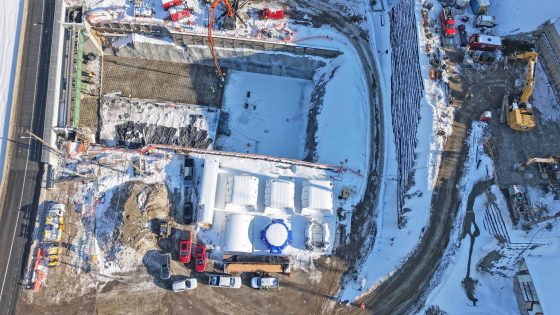
Construction of the $16bn (£12bn) Hudson Tunnel Project beneath the Hudson River between New York and New Jersey has been paused after federal funding disbursements were halted mid-programme. Developer entities backing the new twin-bore rail tunnel, designed to add capacity and resilience alongside the existing 1910 North River Tunnels on the Northeast Corridor, have filed suit against the White House alleging breach of contract. The stoppage raises immediate risk of contractor demobilisation, schedule slippage on critical underground works, and cost escalation for major civils and geotechnical packages already procured.
BHP’s Western Australian Iron Ore (WAIO) operations are installing redesigned haul-truck hoist cylinders that allow higher average payloads per cycle, lifting total moved tonnage and adding an estimated multimillion-dollar annual revenue uplift. The new cylinders are engineered for the existing ultra-class truck fleet rather than requiring new units, targeting improved hoist reliability and reduced unplanned downtime on key production circuits. For mine engineers, the change focuses on payload optimisation and mechanical availability rather than pit redesign or fleet expansion.
Iltani Resources has secured an $8 million investment to accelerate drilling across its Australian base and precious metals portfolio, signalling continued capital appetite for greenfield exploration despite cost pressures. The funding will support step-out and infill programmes targeting high-grade zones, with a focus on expanding JORC-compliant resources and fast-tracking metallurgical testwork. Alongside the raise, the past week saw new executive appointments and asset divestments across the sector, reshaping exploration pipelines and reallocating budgets towards drill-ready prospects.
McLanahan is promoting structured maintenance strategies for its feeder breakers, which combine controlled chain-feeding with primary size reduction for underground and surface coal operations. The company stresses regular inspection of pick segments, conveyor chains and flight bars, plus correct torqueing of gearbox and drive couplings, to prevent unplanned downtime on high-impact duty cycles. Guidance focuses on planning component change-out intervals around known wear patterns and ensuring OEM-spec parts and clearances are maintained to protect motors, gearboxes and crusher rolls in abrasive, high-throughput environments.
Ardea Resources has secured up to $1 billion in non-binding debt funding support from US EXIM Bank and Export Finance Australia for the Goongarrie Hub nickel–cobalt project, part of its Kalgoorlie Nickel Project in Western Australia. The proposed joint venture targets laterite ore to produce mixed hydroxide precipitate for battery-grade nickel and cobalt, aiming to leverage existing rail and power infrastructure north of Kalgoorlie. The scale of the facility signals continued government-backed appetite for large hydrometallurgical battery metals projects despite weak nickel prices.
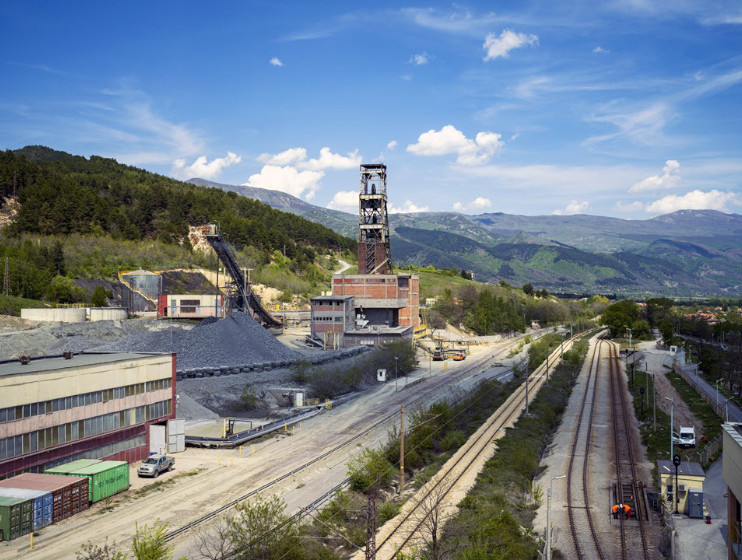
DPM Metals has extended the Chelopech gold-copper mine in Bulgaria to a 10-year life after a 20% increase in measured and indicated resources to 15.3 million tonnes grading 2.18 g/t gold, 9.19 g/t silver and 0.64% copper, plus 9.1 million inferred tonnes at slightly lower grades. Updated reserves now total 1.6 million oz. gold, 6.23 million oz. silver and 308 million lb. copper, supporting roughly 160,000 gold-equivalent oz. per year based on a higher US$2,300/oz gold price assumption. The model incorporates the Sharlo Dere prospect but excludes the Wedge Zone Deep discovery, 300 m below current workings, where new drilling results are due in Q2.
Rio Tinto scrapped merger talks with Glencore in under 24 hours after deciding no structure could deliver sufficient value, rejecting Glencore’s push for its shareholders to hold about 40% of a combined $232 billion group. The core dispute was valuation: Rio wanted a split near the market-implied 69–31 with full control of both chair and CEO roles, while Glencore argued for roughly 60–40 to reflect its coal, trading arm and 10 copper growth projects, or a clear takeover premium. A deal would have doubled Rio’s copper output to around 1 Mt of future growth and reduced its iron ore dependence, but divergent views on commodity cycles and portfolio value killed the transaction.
Heliostar Metals has poured first gold from the restarted San Agustin open-pit mine in Durango, Mexico, its second producing asset after La Colorada, with remaining reserves expected to yield about 45,000 oz. The company’s 2026 guidance calls for 50,000–55,000 oz of gold, including 30,000–32,700 oz from San Agustin, at an all-in sustaining cost of US$2,000/oz, after restarting the operation on time and on budget. A 10,000–15,000 m drilling campaign is targeting additional oxide mineralisation beyond the current 14‑month mine life based on 7.36 Mt at 0.29 g/t Au (68,000 oz probable reserves).
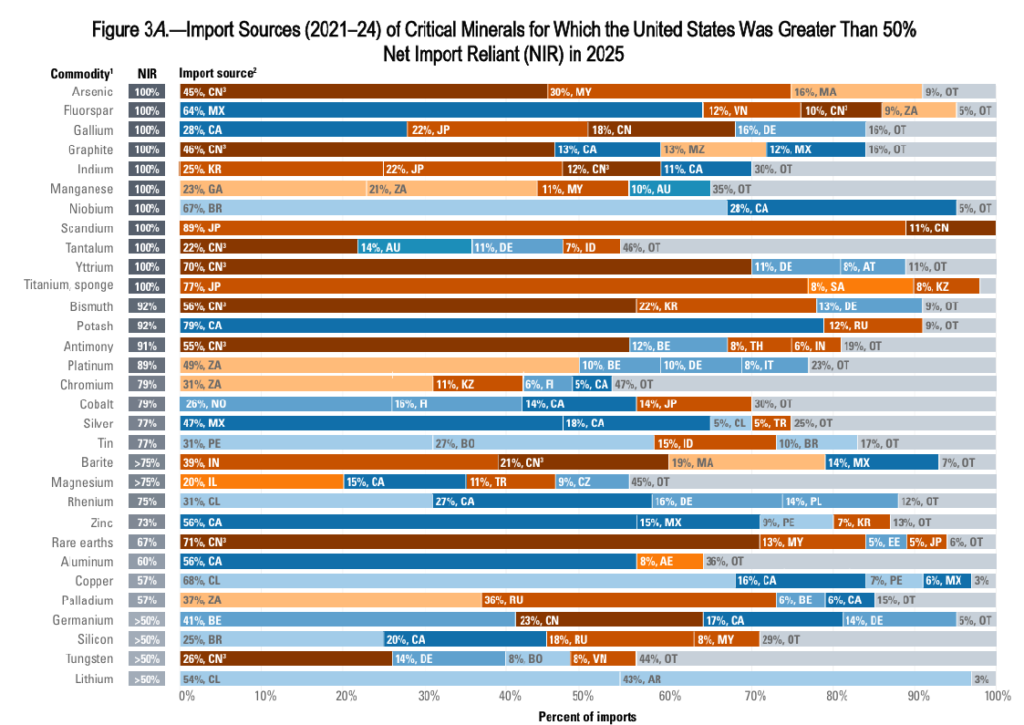
US mineral supply chains became more exposed in 2025, with the USGS reporting 100% import reliance for 16 of 90 tracked non-fuel commodities and more than 50% reliance for 54 minerals, up from 15 and 46 respectively in 2024. The US is totally dependent on imports of arsenic, natural graphite, manganese, niobium, tantalum, titanium sponge and 10 other minerals, with China supplying nearly half of arsenic and graphite, 55% of antimony and 70% of rare earths. In response, the Trump administration has proposed a $12 billion critical minerals stockpile and a JD Vance-led allied trade bloc, while industry warns US mine permitting still averages 29 years.