Geomechanics, Streamlined.
© 2026 Geomechanics.io. All rights reserved.
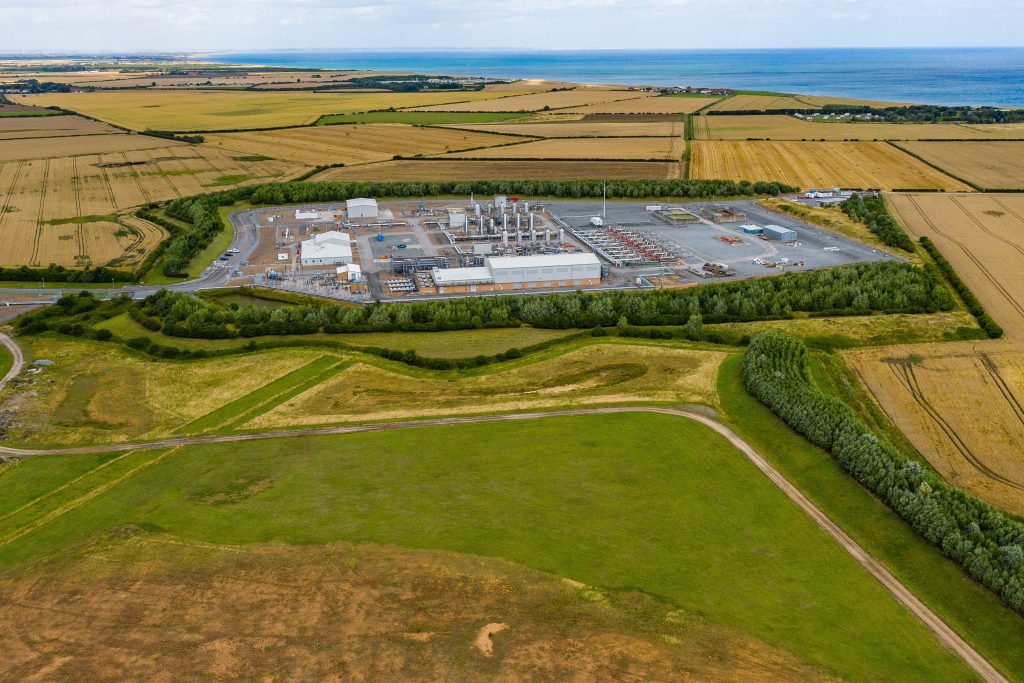
Four major energy firms have submitted a joint proposal for Britain’s first regional hydrogen transport and storage network centred on the Humber, targeting the north‑east coast as a national low‑carbon hydrogen hub. The scheme would require new high‑pressure hydrogen pipelines, compressor stations and large‑scale underground or above‑ground storage to connect industrial users, ports and potential power generation sites. For civil and geotechnical teams, the project signals upcoming demand for corridor routeing, ground risk assessments in estuarine soils, and materials selection for hydrogen‑compatible steels and coatings.
Scotland is on course to meet most emissions cuts required in its first carbon budget for 2026–2030, but the Climate Change Committee warns that weak long‑term policy on building heat decarbonisation and negative emissions technologies threatens later targets. The CCC points to slow progress on large‑scale heat pump deployment, limited clarity on phasing out high‑carbon heating systems, and uncertainty over engineered removals such as bioenergy with carbon capture and storage. For infrastructure planners, this signals potential future policy shifts in heat networks, retrofit standards and CCS‑ready industrial projects.
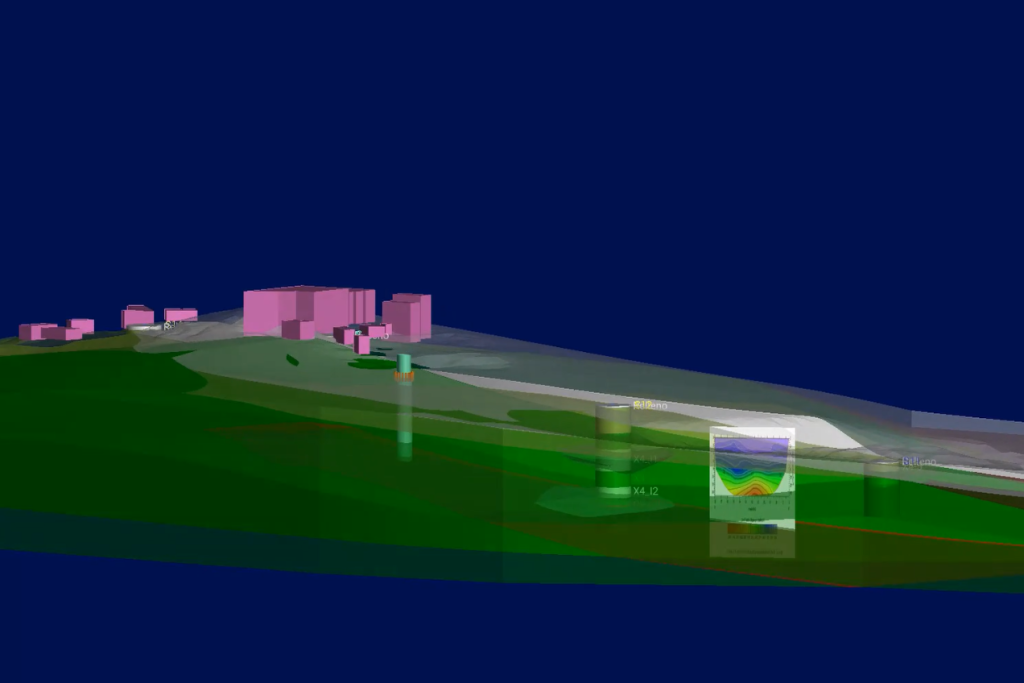
Ayesa head of ground engineering and tunnelling Cláudio Cabral Dias is pushing wider adoption of subsurface 3D ground modelling to de‑risk next‑generation tunnelling, but warns that success depends on structured retraining rather than simply buying new software. He points to integrated 3D geological models that combine borehole logs, geophysics and historical excavation data to predict fault zones and variable rock mass behaviour ahead of TBM drives. Dias stresses that design teams, site engineers and contractors must all learn to interrogate and update these models in real time if they are to influence alignment, support classes and construction sequencing.
Rox Resources is accelerating development of its 100 per cent-owned Youanmi gold project in Western Australia, advancing underground mine planning, drilling and early works towards first gold production. The brownfields operation, centred on historic high-grade lodes, is being progressed in parallel on multiple fronts, including resource definition drilling and underground access preparation. For geotechnical and mining teams, the key focus will be integrating new underground designs with legacy workings and optimising ground support and sequencing in a previously mined, structurally complex goldfield.
Record first-half iron ore shipments of 99.1Mt from Fortescue’s Pilbara operations, at a C1 cost of US$17.78/t, lifted underlying EBITDA to US$7.2b and net profit after tax to US$4.2b for the six months to 31 December 2025. Average realised prices rose to US$111/dry tonne (86 per cent of Platts 62% index), with the company maintaining full-year shipment guidance of 192–197Mt. Strong volumes and low unit costs signal continued pressure on higher-cost producers and ongoing demand for rail, port and mine expansion services in the Pilbara.
New iron ore pricing arrangements being trialled between Chinese steel mills and major Australian producers such as Rio Tinto have prompted the Australian Government to step up monitoring of contract structures and benchmark references. Officials are scrutinising shifts away from traditional Platts index-linked, 62% Fe fines contracts towards more flexible, possibly shorter-tenor or blended-grade pricing formulas negotiated directly with Chinese buyers. Any move in large-volume offtake contracts could alter realised prices at Pilbara operations, affect mine planning and grade control strategies, and influence long-term investment assumptions for new iron ore capacity.
A levee stability example models a flood event over a confined aquifer, comparing pore-water pressure definitions under different PLAXIS licensing options (2D, LE, and LE Advanced). The case contrasts simple hydrostatic assumptions with transient seepage and confined aquifer responses, including delayed pressure dissipation and uplift at the levee toe. Results show how choice of pore-pressure model and licence level materially changes calculated factors of safety and potential slip surfaces, directly affecting design decisions for flood defence embankments on artesian foundations.
ERG’s Metalkol tailings reprocessing complex in the Democratic Republic of the Congo has become the first dedicated tailings operation globally to receive The Copper Mark, a responsible production assurance standard originally developed for primary copper mines and smelters. The Kingamyambo Musonoi Tailings (KMT) project reprocesses historic copper‑cobalt tailings from the Kolwezi area, recovering metal from legacy waste rather than new ore extraction. The certification signals that tailings storage, water management and labour practices at Metalkol have been independently assessed against Copper Mark’s ESG and supply chain criteria.
ITOCHU Corporation is increasing its stake in Hitachi Construction Machinery (HCM) to 33.4%, buying shares from a special purpose company backed by funds managed or advised by Japan Industrial Partners (JIP). The move consolidates ITOCHU’s position as HCM’s largest single shareholder, strengthening its influence over a major global supplier of large mining excavators and haul trucks. For mine operators, the tighter ITOCHU–HCM alignment signals potential shifts in product strategy, financing structures and long-term support models for fleets.
WA Major Projects Conference 2026 will bring government and industry leaders to the Perth Convention and Exhibition Centre on 26–27 March 2026 to examine Western Australia’s next wave of transport, resources and social infrastructure works. The programme, led by the Honourable David Michael MLA, Minister for Mines and Petroleum; Finance; Electoral Affairs, will cover major road and rail corridors, port and logistics upgrades, and enabling works for new mining and energy projects. Geotechnical, civil and materials specialists can expect detail on upcoming tenders, delivery models and long‑term capital pipelines across the state.
A longwall mine roof support system requiring a complete overhaul was rebuilt by Motion using its integrated national network to deliver a fully compliant, site-ready package. The project involved complete strip-down, inspection and refurbishment of hydraulic legs, canopies and base units, with all critical components reconditioned or replaced to OEM specifications and certified to relevant Australian Standards. Centralised project management and in-house machining, hydraulics and testing shortened turnaround and reduced interface risk compared with multi-vendor rebuilds, offering a template for future large-scale support refurbishments.
CEA is expanding its Mackay footprint to service central Queensland’s growing coal and critical minerals sector, adding a new branch to support fleets of Komatsu and JCB earthmoving and materials-handling equipment. The company is targeting larger dragline, dozer and excavator rebuilds, on-site component change-outs and condition monitoring for mines between Moranbah and Rockhampton, where state-backed projects are ramping up. CEA is also providing training and transition support for retained maintenance staff to integrate new plant, telematics and parts supply systems with existing mine workshops.
Aeris Resources has reported a 62 per cent jump in first-half FY26 net profit to $25.6 million, with cash on hand rising to $87.9 million, driven by stronger copper output and prices from its Tritton operations in New South Wales. Group copper production reached 13,000–14,000 tonnes for the half, with all-in sustaining costs held near prior-period levels despite higher development spend at Tritton’s Budgerygar and Avoca Tank underground mines. The stronger balance sheet gives Aeris more room to fund mine-life extension drilling and incremental plant upgrades without relying on new debt.
Alkane Resources has reported multiple high‑grade antimony–gold intercepts at the Kendal prospect, adjacent to the Youle lode at its Costerfield operation in central Victoria, signalling a potentially significant extension of the narrow-vein system. The discovery targets antimony, a critical mineral used in advanced military and defence applications, alongside high-value gold grades typical of Costerfield-style mineralisation. For mine planners and geotechs, the proximity to existing Youle infrastructure suggests scope for incremental underground development and resource expansion rather than a greenfield build.
Tickets are now on sale for the 2026 WA Mining Conference & Exhibition in Perth, following a record 2025 event that drew strong attendance from mine operators, OEMs and METS suppliers across Western Australia’s iron ore, gold and battery minerals sectors. The 2026 program is expected to again focus on automation, decarbonisation and electrification of haulage and processing fleets, alongside data-driven mine planning and remote operations. For engineers, the event offers concentrated access to equipment demonstrations, brownfield upgrade case studies and regulatory updates relevant to WA’s large-scale open-pit and underground operations.
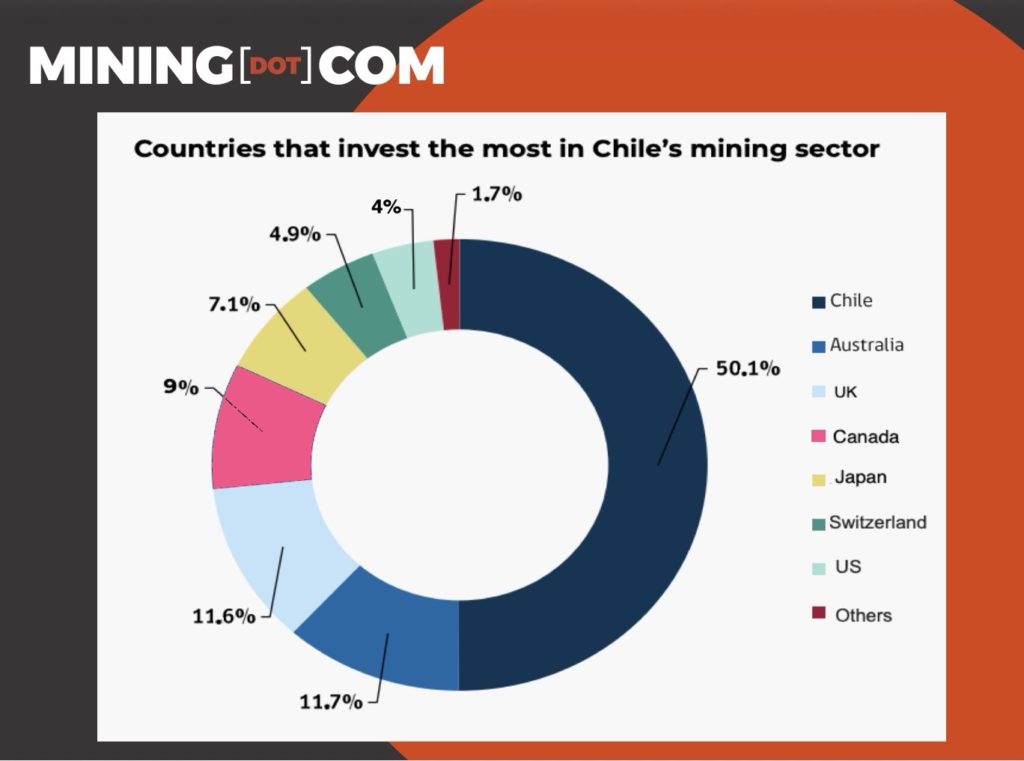
Chile’s incoming right‑wing government under José Antonio Kast is merging the Mining and Economy ministries and handing the combined portfolio to agronomist Daniel Mas, unsettling a sector facing an estimated $105 billion in investment to 2034 and already battling a “cursed” permitting system where major projects can need 500+ permits. The shift coincides with Chile’s first critical minerals strategy, expanding focus beyond copper and lithium to 14 minerals including molybdenum, rhenium, cobalt and rare earths. Analysts warn that without faster approvals and incentives for exploration, Chile risks missing the current price cycle as copper output fell 2% in 2025 amid declining grades and ageing deposits.
Fuerte Metals’ Coffee gold project in Yukon now carries an after-tax NPV of $2.3 billion and 47.8% IRR at $3,620/oz, rising to $4 billion NPV and 67% IRR at $5,000/oz, on initial capex of C$983 million plus C$1.72 billion including sustaining capital. The 13‑year, open‑pit heap‑leach operation is planned to produce 249,000 oz/a for the first five full years (217,000 oz/a LOM) at AISC of $1,274/oz, drawing on 80 Mt at 1.15 g/t Au M&I and 21.2 Mt at 1.17 g/t inferred. Key infrastructure includes a C$71.3 million Northern Access Route from Dawson City, with 40,000 m of drilling and a feasibility study due Q4 2026 ahead of a 2027 construction decision.
Ero Copper’s Furnas project in Pará, Brazil, has delivered a first PEA outlining a 24-year, four-zone operation producing about 1.2 million tonnes of copper, 2 million oz. of gold and 9 million oz. of silver, with average copper-equivalent output of 108,000 tonnes per year over the first 15 years. Using long-term prices of $4.60/lb copper, $3,300/oz gold and $40/oz silver, the study reports an after-tax NPV8 of $2 billion, 27% IRR and initial capex of $1.3 billion (~$16,000/t CuEq). The 2,400-hectare Carajás property, 50 km from Vale’s Salobo mine, carries 275.6 Mt indicated at 0.83% CuEq and 195.9 Mt inferred at 0.76% CuEq from 28,000 metres of Phase 1 drilling.
Hudbay Minerals has secured amended environmental permits from British Columbia’s Major Mines Office for the three-phased New Ingerbelle expansion at the Copper Mountain open pit, extending mine life into 2040 and targeting a 90% increase in copper output via nested pushback pits into the historical Ingerbelle pit. The project is expected to add about 750,000 tonnes of copper, 900,000 oz gold and 5.5 million oz silver from 2027–2037, before low‑grade stockpile re‑handling and closure from 2036–2040. Copper Mountain currently runs a 45,000‑tonne‑per‑day crushing–grinding–flotation plant and produced 22,445 tonnes of copper in 2025.
Hycroft Mining’s share price jumped more than 12% to a one‑month high of US$47.47 after a filing showed Eric Sprott bought a further 150,000 shares at US$42.05 each, lifting his stake to about 36.9 million shares, or 44.45% of the company. The Nevada mine developer, pivoting from historic heap leach operations to large‑scale milling of sulphide ores under existing permits and infrastructure, now carries a market capitalisation of US$3.8 billion, up from US$50 million a year ago. An updated resource statement reports 16.4 million oz gold and 562.6 million oz silver measured and indicated, including 90.2 million oz high‑grade silver with underground potential.
Europe’s delayed “Buy European” single-market legislation, now due 4 March, is being criticised for focusing on finished goods while ignoring upstream critical minerals that underpin industrial sovereignty. Michael Wurmser, founder of Norge Mineraler, contrasts EU inaction with the US DFC-backed Orion Critical Mineral Consortium’s move to buy 40% of Glencore’s Mutanda and Kamoto copper-cobalt assets in the DRC, valuing them at about US$9 billion. He argues Europe has sizeable in‑bloc potential in copper, lithium, high‑purity alumina, phosphate and titanium that must be integrated into industrial policy.
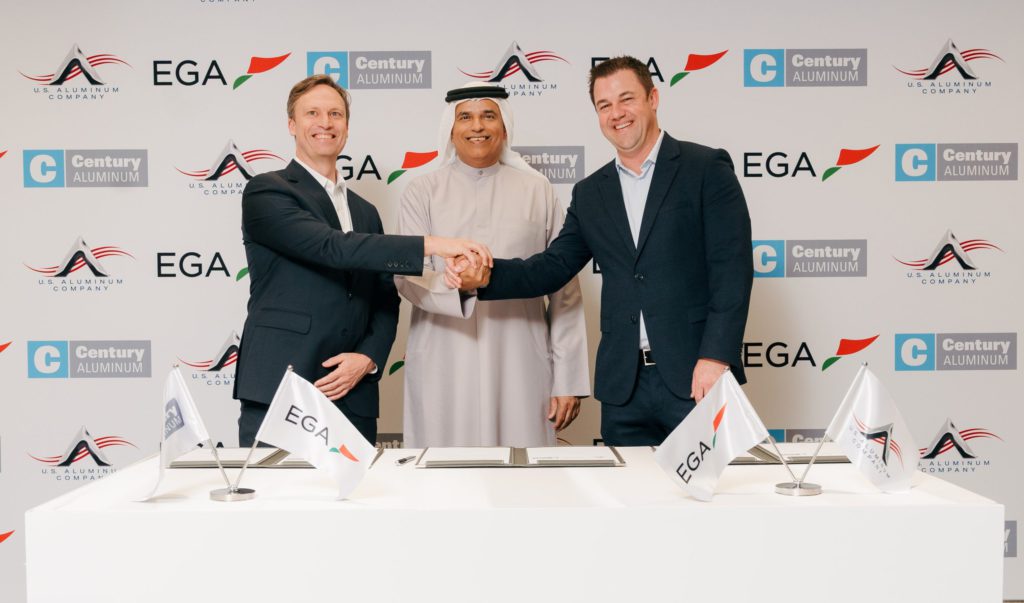
Emirates Global Aluminium and Century Aluminum will build Oklahoma Primary Aluminum, a 750,000‑tonne‑per‑year smelter at Inola that will more than double current US primary aluminium output and be the first new US smelter since 1980. EGA will hold 60% of the joint venture and Century 40%, with construction targeted to start by end‑2026 and first metal by around 2030, creating 4,000 construction and 1,000 permanent jobs. US Aluminum is separately evaluating a co‑located fabrication plant to convert liquid metal into products for electrical, defence, aerospace, automotive and machinery applications.
The Construction Leadership Council board is being expanded from nine to 15 members as government scraps its separate construction advisory panel, adding civil service figures including NISTA chief executive Becky Wood and Cabinet Office markets director Clare Gibbs alongside industry sponsor for people & skills Mark Farmer. New seats are allocated to each of the four strategic workstreams and four sector groups, bringing in ICE director general Janet Young for infrastructure, HBF chief executive Neil Jefferson for house-building, NHIC chief executive Anna Scothern for domestic RMI, and Scape chief executive Mark Robinson for places, assets and commissioning. A new health, safety & wellbeing group led by Berkeley Group’s Karl Whiteman and the planned 2026 CLC Strategy and Construction Industry Workforce Plan signal tighter central government influence over construction policy and skills planning.
Premier Technical Services Group has appointed Craig Doig as managing director of its water treatment division, adding senior leadership capacity to a business that also delivers rope access, façade maintenance, electrical services and fire safety systems. Doig joins from Equans, part of Bouygues Group, where he oversaw a £150m regional facilities management operation spanning Scotland, northern England and Ireland. His remit will centre on scaling PTSG’s compliance-led water treatment services, where robust operational control and documentation are critical for building services, Legionella risk management and asset performance.