Safe and sound conveyor monitoring: reliability and safety gains for mine engineers
Reviewed by Joe Ashwell
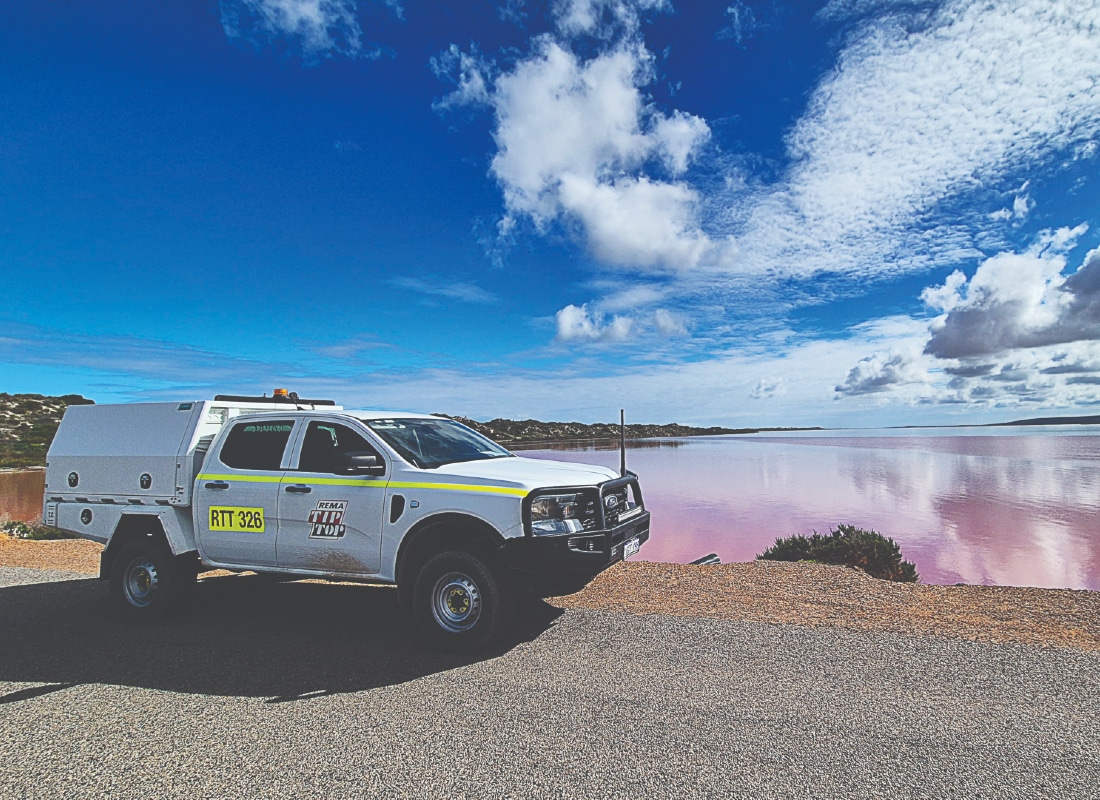
First reported on Australian Mining
30 Second Briefing
Advanced fibre optic cable systems combined with adaptive algorithms and machine learning are being deployed by REMA TIP TOP to monitor conveyor rollers in real time and detect early-stage faults. Mechatronics engineer Rachael Laudehr explains that continuous temperature and vibration profiling along the belt enables pinpointing of individual failing rollers before they cause belt damage, fires or unplanned stoppages. For mine operators, the approach shifts maintenance from periodic manual inspections to targeted interventions, reducing unnecessary roller change-outs and extended conveyor downtime.
Technical Brief
- Fibre optic sensor cables are installed continuously along the conveyor structure, not just at discrete points.
- REMA TIP TOP’s system classifies roller behaviour by comparing live signals against a growing historical baseline.
- Adaptive algorithms filter out normal load-induced vibration, reducing nuisance alarms from changing ore throughput.
- Temperature and vibration signatures are spatially resolved to individual idler frames, not just belt zones.
- Laudehr notes that conventional manual roller inspections are constrained by access, production schedules and permit requirements.
- Monitoring hardware is located off the moving structure, avoiding additional rotating mass or belt-mounted electronics.
- Data streams integrate into existing mine control systems, allowing alarms to feed standard SCADA interfaces.
- For other large overland conveyors, similar fibre-based systems reduce reliance on high-risk walk‑the‑line inspections.
Our Take
REMA TIP TOP’s conveyor monitoring focus here sits alongside its REMATRACK TTX and MCube CAM offerings in our database, signalling a push towards integrated, condition-based maintenance rather than stand‑alone belt products on Australian sites.
Across the 1270 Mining stories in our coverage, relatively few Product–Safety–Projects pieces centre on fixed plant like conveyors in Australia, so this adds to a niche but growing cluster of items on digital and AI‑enabled monitoring of materials handling infrastructure.
For Australian operators, REMA TIP TOP’s broader work on wear linings and slurry handling (as covered in the June 2026 piece) suggests that adopting its conveyor monitoring tools can be tied into a single-vendor strategy for both belt health and upstream wear management, simplifying shutdown planning and accountability.
Prepared by collating external sources, AI-assisted tools, and Geomechanics.io’s proprietary mining database, then reviewed for technical accuracy & edited by our geotechnical team.
Related Articles



Related Industries & Products
Mining
Geotechnical software solutions for mining operations including CMRR analysis, hydrogeological testing, and data management.
Construction
Quality control software for construction companies with material testing, batch tracking, and compliance management.
CMRR-io
Streamline coal mine roof stability assessments with our cloud-based CMRR software featuring automated calculations, multi-scenario analysis, and collaborative workflows.
HYDROGEO-io
Comprehensive hydrogeological testing platform for managing, analysing, and reporting on packer tests, lugeon values, and hydraulic conductivity assessments.
GEODB-io
Centralised geotechnical data management solution for storing, accessing, and analysing all your site investigation and material testing data.