Premier Technical Services Group Ltd (PTSG) has acquired IDSL Group Holdings to build scale in passive fire compliance, spanning fire door inspections, technical surveys, evidence-based remediation, certification and lifecycle maintenance. IDSL adds in-house specialist fire door manufacturing plus strong technical competence in navigating the Building Safety Act and Fire Safety (England) Regulations, giving PTSG tighter control over quality, traceability and regulatory documentation. The combined business targets large, complex remediation programmes at scale, with integrated supply chains and faster mobilisation for critical fire safety works on occupied buildings.
UK office construction output fell 20% in 2025 to £10.2bn, with only 152 new contracts worth £2.7bn let in the first five months versus 185 worth £3.9bn a year earlier, signalling further tightening in 2026. Completions in 2026 across the Big Nine cities are forecast at just 694,000 sq ft, far below the 2020–24 average of 2.2 million sq ft, while UK-wide pipeline equates to only 1.3 years of Grade A supply under construction. City of London prime rents exceeded £100/sq ft after a 6.8% rise, with Grade A vacancy in core locations reported as low as 0.5–2.2%.
Forsyth of Denny has taken delivery of Scotland’s first Liebherr LTM 1300-6.4, a 300‑tonne capacity mobile crane with a 90‑metre main boom, its second long‑boom Liebherr unit. The crane is targeted at tower crane erection and wind turbine maintenance, where the 90‑metre telescopic boom reduces reliance on lattice extensions and multiple setup positions. For contractors, the higher reach on a six‑axle carrier should cut mobilisation time and simplify lifts on constrained wind farm and urban tower sites.
The Federation of Piling Specialists has established a carbon baseline from 63 UK foundation projects, showing about 330,000 tCO₂e emitted in 2025 against a combined turnover of £618m. Using the dataset, FPS has updated embodied carbon benchmarks for principal foundation installation techniques and introduced comparative metrics such as tCO₂e per £1m turnover, per hour worked and per cubic metre of concrete installed. The new benchmarks give piling contractors a sector-wide reference to target lower‑carbon materials, refine construction methods and identify outlier techniques for further optimisation.
Scape has launched procurement for an £8.5bn Defence and Complex Environments Framework, providing a compliant route for highly secure construction and infrastructure works across UK defence, nuclear, and other sensitive sites. The framework is aimed at projects requiring stringent security clearance, complex phasing and constrained access, such as live operational bases, high-containment facilities and critical national infrastructure. Contractors will need proven capability in secure logistics, blast-resistant and hardened structures, and integration with existing defence estate asset management systems.
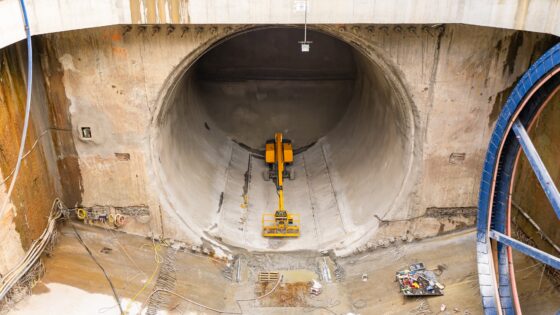
Construction of the tunnel boring machine (TBM) cradle at the Retkinia launch chamber in Łódź, Poland, has been completed, enabling assembly of the first TBM components for the country’s planned high-speed rail tunnel. The Retkinia shaft will serve as the primary launch point for the large-diameter TBM driving beneath the city, a critical interface between surface works and underground excavation. Contractors can now transition from heavy civil works to mechanical and systems installation, locking in alignment, thrust and support conditions for initial tunnelling.
A decisive moment for UK water infrastructure is forcing utilities and engineers to share operational and asset-management knowledge more systematically to keep ageing networks supplying reliable potable water. With many trunk mains, service reservoirs and treatment works operating beyond original design lives and under tighter leakage and drought-resilience targets from Ofwat and the Environment Agency, the sector is under pressure to standardise best practice on inspection, rehabilitation and digital monitoring. For civil and geotechnical teams, this signals growing demand for condition assessment, trenchless renewal methods and data-driven prioritisation of capital works.
The Institution of Civil Engineers has reached 500 female fellows, marking a sharp rise from only a handful of women holding FICE status a few decades ago. Fellowship is the ICE’s highest grade of membership, typically requiring at least 10–15 years of senior responsibility on major infrastructure, geotechnical or structural projects and evidence of leading teams or technical innovation. The milestone signals a broader shift in who is directing complex UK and international schemes, from major highways and rail to dams, tunnels and coastal defences.
Resilient Transport 2026 launches as a multi-year programme to strengthen road, rail and bridge networks against climate-driven extremes, ageing assets and rising demand under tight public budgets. Led through the Institution of Civil Engineers, it will focus on whole-life asset management, flood and heat resilience for pavements and track, and retrofit strategies for existing structures rather than wholesale replacement. For practitioners, the programme signals more emphasis on performance-based design, risk-based maintenance planning and quantifying resilience benefits to secure funding.
Digital delivery on a major Gulf infrastructure programme is compressing the journey from concept visualisation to fully functional model from years to just a few months, with a single 3D environment expected to handle permit reviews, utility clash detection and construction sequencing. Engineers are using the same federated model to test street layouts, drainage corridors and utility corridors before design freeze, then hand it straight to contractors for 4D planning. The piece stresses that rapid model iteration still relies on experienced engineering judgement to set tolerances, interpret clashes and decide when digital outputs are buildable.
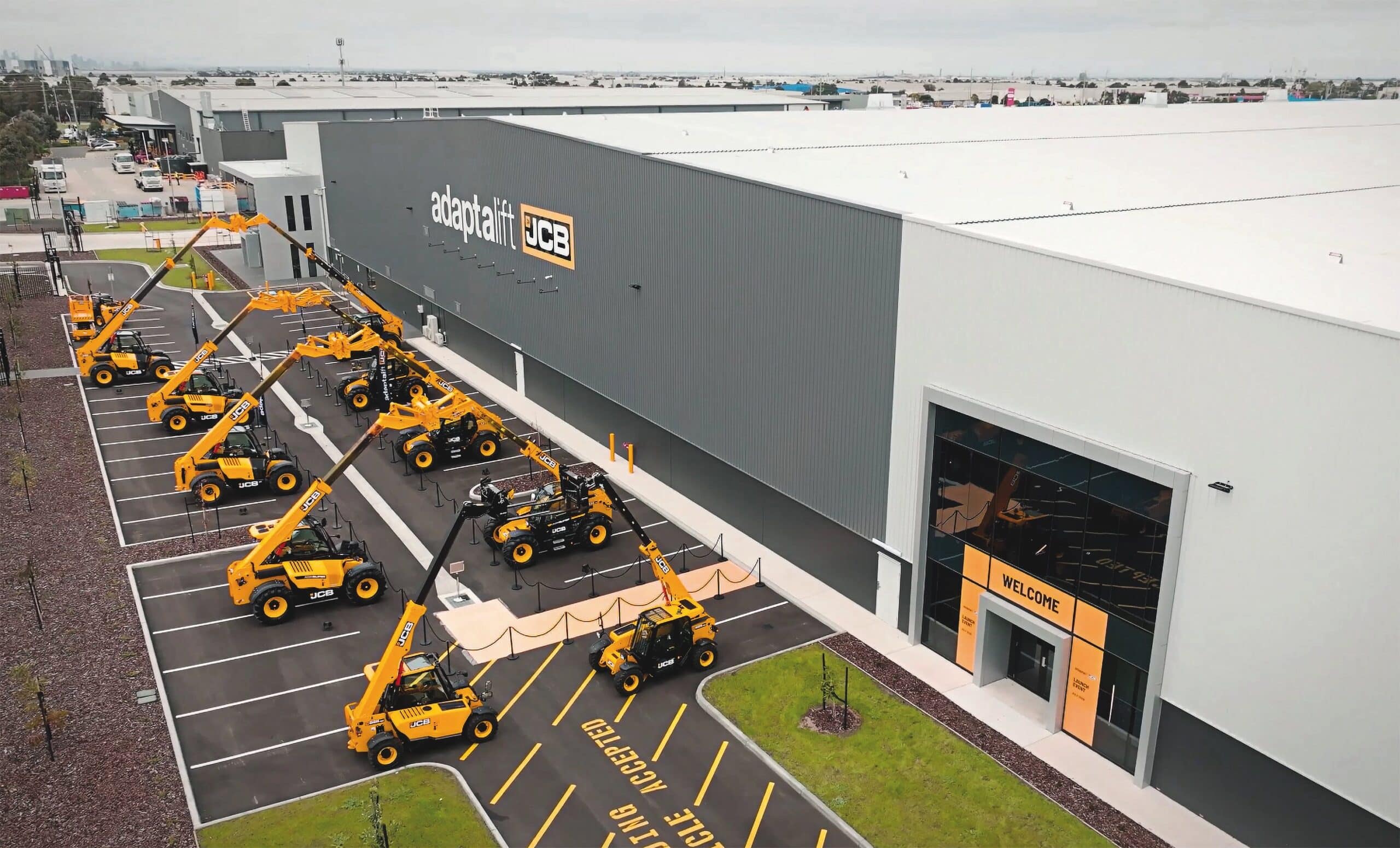
Adaptalift has been appointed the new dealer for JCB machinery across multiple rural, regional and metropolitan areas in key Australian states and territories, taking over sales and support for equipment ranging from backhoe loaders to telehandlers. The agreement links JCB’s 750-strong global dealer network with Adaptalift’s existing materials handling and access fleet support, including field service and parts logistics. Contractors can expect consolidated servicing for mixed fleets and potentially shorter downtime windows on JCB earthmoving and road construction plant in these regions.
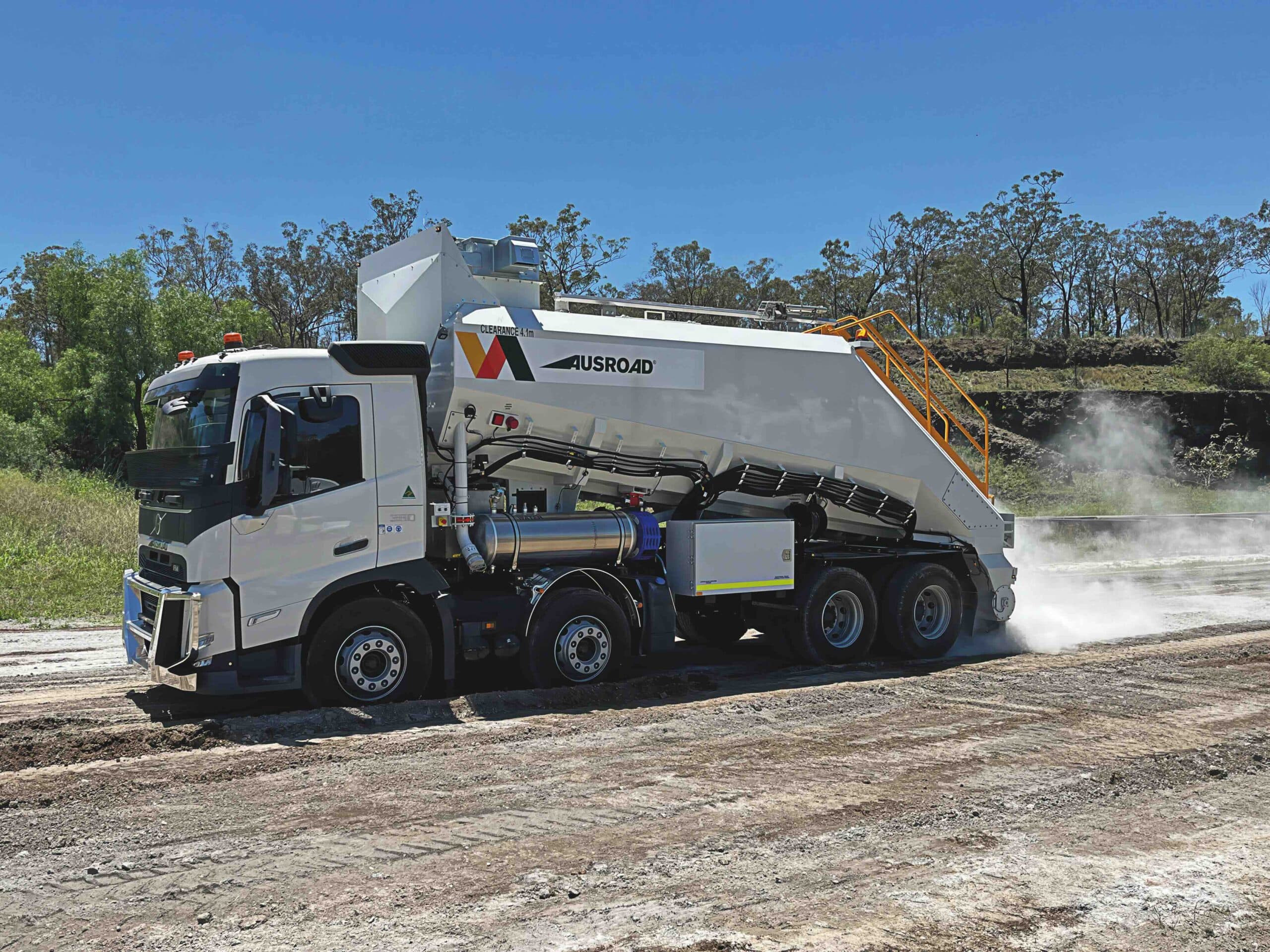
AUSROAD’s Powder Spreader introduces a purpose-built platform for spreading powdered stabilising agents such as cement and hydrated lime on road maintenance and pavement remediation works. The unit is engineered to improve application accuracy and consistency compared with conventional spreader trucks, while enclosing material handling to reduce dust exposure and manual intervention for operators. For contractors undertaking subgrade stabilisation or full-depth reclamation, the system offers tighter control over spread rate and coverage, supporting more uniform layer properties and safer on-site workflows.
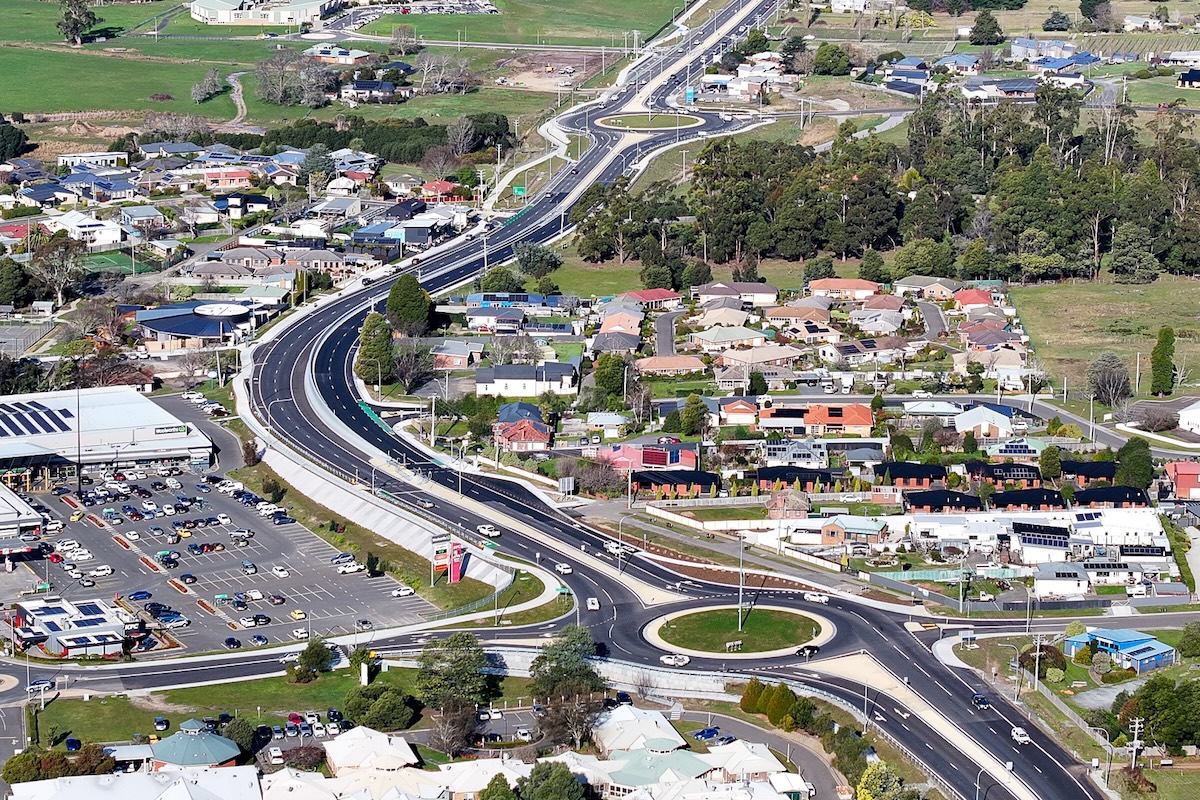
Duplication of the West Tamar Highway at Legana has been completed as part of Stage Two of the Northern Roads Package, a $420 million joint Federal–State investment targeting key northern Tasmanian corridors including the East and West Tamar routes. The project converts a previously single-carriageway section into dual lanes, removing a major bottleneck for commuter and freight traffic between Launceston and the Tamar Valley. For civil contractors and pavement designers, the scheme signals continued funding for staged capacity upgrades on constrained peri-urban corridors in Tasmania’s north.
Ashbrook’s £18m JCB fleet renewal has triggered the disposal of 35 low-hour machines at Euro Auctions’ Leeds sale from 19–22 August, including 3–9 tonne site dumpers, 15 CAT rollers, multiple Manitou/Skyjack/Genie manlifts, a late JCB 516-40 telehandler and a Faymonville MAX 100 tri-axle low loader. All units are manufacturer-maintained with below-average hours, signalling relatively low risk for contractors needing near-immediate deployment. Further Ashbrook consignments are expected as the fleet refresh continues, potentially softening prices for quality used plant in the short term.
Pick Everard has completed fire safety remediation on nine residential tower blocks in Salford for Together Housing Group, working with lead contractor Quaysquare Consult plus façade and fire specialists Buro Happold and Wintech. The programme focused on replacing non-compliant external wall systems and associated cavity barriers to meet current fire performance standards for multi-storey residential buildings. For engineers, the scheme signals continuing demand for multidisciplinary teams to assess legacy cladding, redesign façades and coordinate intrusive surveys, structural checks and phased resident access on occupied high-rise stock.
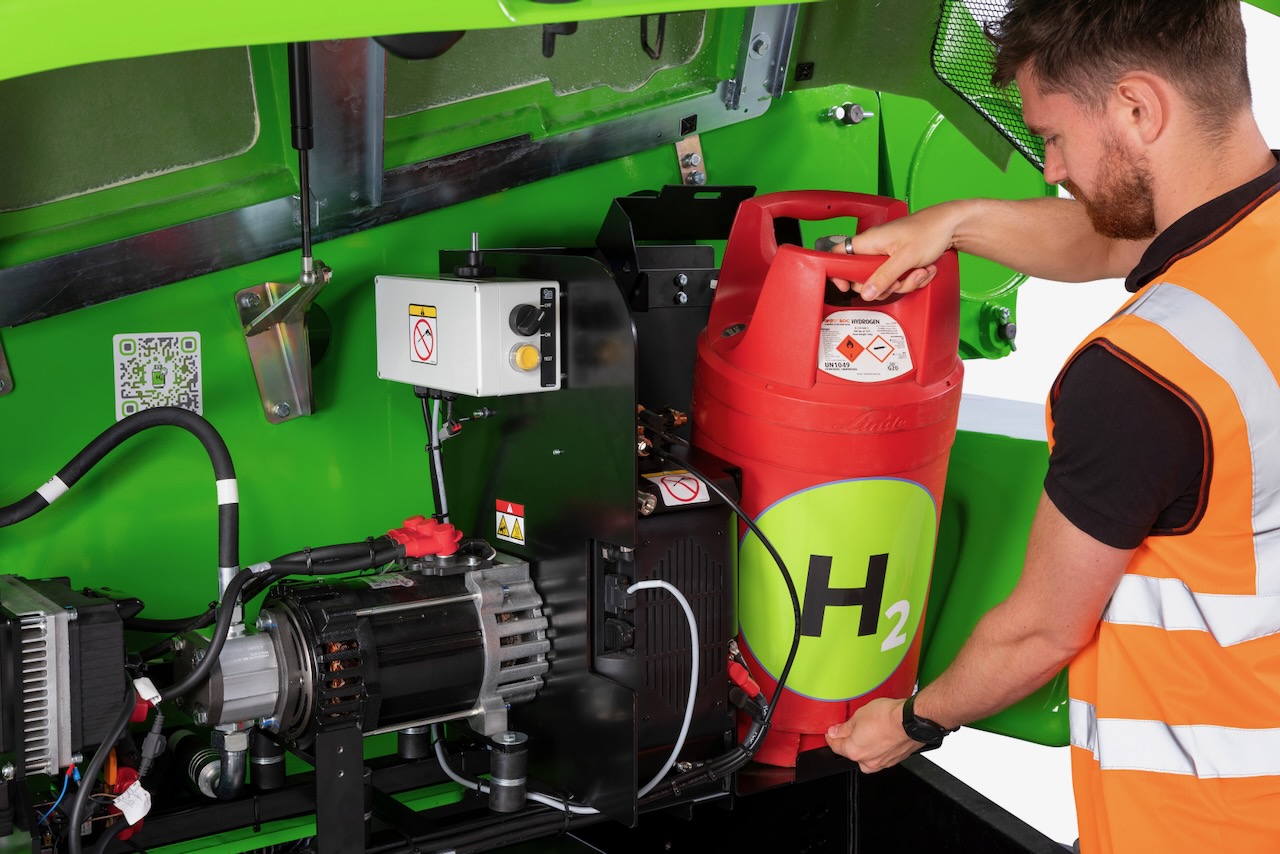
NiftyLift is introducing a fuel cell powered HR21 access platform at Vertikal Days, with a hydrogen electric powerpack that can also be retrofitted to existing HR21 and HR17 models to replace conventional combustion drives. The company is simultaneously adding a diesel electric hybrid option on larger booms, pairing a smaller diesel engine with battery storage to cut idling and fuel burn on high-duty cycles. For fleet owners, the retrofit path allows staged decarbonisation of access equipment without immediate wholesale replacement.
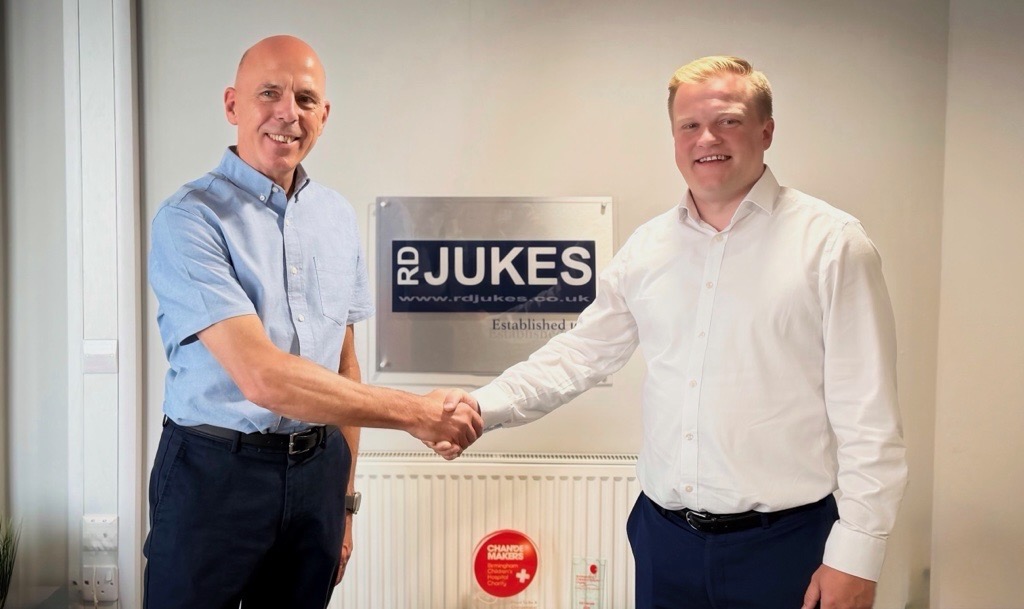
Building compliance specialist Ventro has acquired Walsall-based electrical engineering firm RD Jukes, a 29-employee, £6m-turnover business founded in 1968 and known for NHS and wider public-sector work. Ventro plans to retain RD Jukes’ existing staff and operations under current leader Julian Jukes, preserving long-term client relationships, some exceeding 20 years. The deal expands Ventro’s capacity to offer fully integrated, end-to-end building compliance packages, allowing asset owners to place electrical safety, testing and broader compliance services with a single provider.
Planning approvals for private housing sites in England fell to a 20‑year low in Q1, with only 1,220 sites granted permission, according to the Home Builders Federation. The slump in consents signals a tightening pipeline for new infrastructure such as estate roads, utilities corridors and local drainage networks typically delivered alongside volume housing. Civil and geotechnical contractors can expect increased competition for fewer greenfield and brownfield packages, and potentially more fragmented, smaller‑scale site releases.
HS2 has completed six 450m-long high speed rail platforms at Old Oak Common station, forming the core of what is planned to be the UK’s largest new rail hub. The platforms are designed to accommodate full-length HS2 trains and interface with a complex multi-level station box that will sit beneath existing Great Western Main Line infrastructure. For geotechnical and civil teams, the works signal the transition from heavy excavation and box construction to fit-out, track installation and integration with surrounding tunnelling and approach structures.
A Greater Anglia passenger train derailed near Wickford, Essex, on 14 August, the second derailment on England’s network in 48 hours after a separate incident at Lewes on 13 August. Both events occurred on conventional mixed-traffic routes, raising immediate questions over track condition, geometry control and inspection regimes on secondary lines. Investigators will focus on rail integrity, ballast condition and recent maintenance records, with potential implications for speed restrictions, tamping and renewal priorities across similar UK routes.
Great British Energy – Nuclear has spent £58,282.31 on a scoping study assessing potential Scottish sites for new nuclear projects, appointing AtkinsRéalis and Mott MacDonald as technical advisers. The work is expected to focus on site suitability constraints familiar from UK nuclear siting practice, including coastal flood risk, seismic hazard, grid connection capacity and proximity to cooling water. For civil and geotechnical teams, this signals early-stage demand for site characterisation, ground risk assessment and infrastructure interface studies around shortlisted locations.
East Midlands mayor Claire Ward is under fire from campaigners after urging prime minister Andy Burnham to step in over reports that the A38 expansion scheme may be cancelled to divert funding to UK defence. The contested project, which would upgrade key sections of the A38 trunk road in the region, is seen by local authorities as critical for capacity and journey time reliability, but opponents argue it will lock in higher traffic and emissions. For civil engineers, the row signals renewed political risk for major highway upgrades competing with defence and other national spending priorities.
$1.6 million in North East Community Fund grants has been awarded to 77 schools, sporting clubs, community groups and not‑for‑profits located around the North East Link corridor in Victoria. The $10 million fund, tied to the major freeway and tunnel project linking the M80 Ring Road to the Eastern Freeway, targets suburbs such as Bulleen that are directly impacted by construction works. For project teams, the programme formalises expectations around construction staging, traffic management and noise mitigation to reduce disruption to social and recreational infrastructure.
Planning has begun on freight rail upgrades in Perth’s south to service the future Westport container terminal at Kwinana, with Arup Australia Projects and WSP Australia appointed to form an integrated project team with Main Roads WA and the Public Transport Authority. The work will focus on rail capacity and alignment changes to shift more container movements from road to rail once Westport replaces Fremantle’s inner harbour. Early involvement of both road and rail agencies signals tight interface management around level crossings, corridor widening and future grade separations.
Geomechanics, Streamlined.
© 2026 Geomechanics.io. All rights reserved.