Troilus shallow West Rim gold: satellite pit value and scheduling notes for engineers
Reviewed by Joe Ashwell
First reported on MINING.com
30 Second Briefing
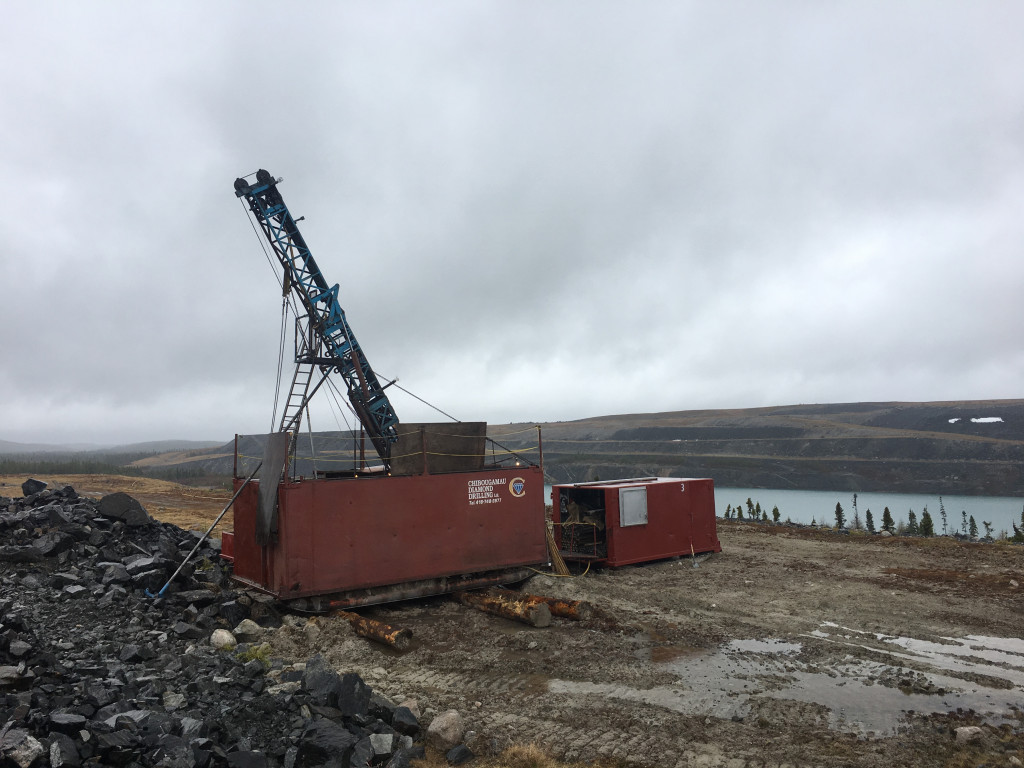
Troilus Mining has reported its best West Rim intercept to date at the past-producing Troilus copper-gold project in Quebec, with hole WR-26-013 cutting 18.5 m at 6.91 g/t gold and 0.97 g/t silver from 11.5 m, including 6.4 m at 19.03 g/t gold, within 200 m of the planned reserve pit. Additional drilling 100 m along strike in WR-26-014 returned 23.85 m at 1.75 g/t gold and 2.64 g/t silver from 19.25 m, helping define a continuous, near-surface corridor still open along strike and at depth. The emerging satellite zone could provide higher-grade early feed to the planned 50,000 t/d, 22-year open pit, for which feasibility work shows C$1.08 billion initial capex, 6 Moz gold reserves and average annual output of 244,600 oz gold.
Technical Brief
- West Rim mineralised corridor now traced at least 170 m north to WR-26-016.
- WR-26-016 returned 19 m at 2.69 g/t Au, 3.24 g/t Ag, 0.03% Cu from 99 m.
- High‑grade sub‑interval in WR-26-016: 5 m at 7.76 g/t Au, 3.66 g/t Ag, 0.01% Cu.
- True widths at West Rim interpreted as 75–90% of reported core lengths, supporting robust geometry.
- Troilus plans an expanded second drill phase along the 5 km West Rim structural corridor.
- West Rim remains entirely outside the existing resource, so any tonnage adds incremental to 380 Mt reserves.
- Feasibility metrics: initial capex C$1.08 billion, after‑tax NPV5 C$885 million, IRR 14%.
- Power and offtake de‑risking: 70 MW grid allocation plus concentrate contracts with Aurubis and Boliden.
- Project financing advanced with C$1.3 billion in letters of interest and mandates for up to C$1.2 billion senior debt.
Our Take
Troilus Mining’s 161% 12‑month share price gain and C$970 million market cap put it in the upper tier of single‑asset gold developers in our database, which may help when syndicating the US$1.2 billion in mandated senior debt for the Quebec copper‑gold project.
The combination of shallow high‑grade West Rim hits and a large, lower‑grade reserve base (6Moz gold, 484Mlb copper) suggests scope to re‑sequence the mine plan towards a higher‑margin early pit phase, a pattern seen in several Quebec gold projects in our recent 1187‑story mining corpus.
With letters of interest from export credit agencies and lenders already exceeding the US$1.08 billion initial construction cost, Troilus’ Quebec copper‑gold project sits in a relatively rare group of gold‑dominant projects in our coverage where indicated debt appetite matches or surpasses upfront capex before a final build decision.
Prepared by collating external sources, AI-assisted tools, and Geomechanics.io’s proprietary mining database, then reviewed for technical accuracy & edited by our geotechnical team.
Related Articles
Related Industries & Products
Mining
Geotechnical software solutions for mining operations including CMRR analysis, hydrogeological testing, and data management.
Construction
Quality control software for construction companies with material testing, batch tracking, and compliance management.
CMRR-io
Streamline coal mine roof stability assessments with our cloud-based CMRR software featuring automated calculations, multi-scenario analysis, and collaborative workflows.
HYDROGEO-io
Comprehensive hydrogeological testing platform for managing, analysing, and reporting on packer tests, lugeon values, and hydraulic conductivity assessments.
GEODB-io
Centralised geotechnical data management solution for storing, accessing, and analysing all your site investigation and material testing data.