Spill bunded pallets in mining: compliance and ground risk notes for engineers
Reviewed by Joe Ashwell
First reported on Australian Mining
30 Second Briefing
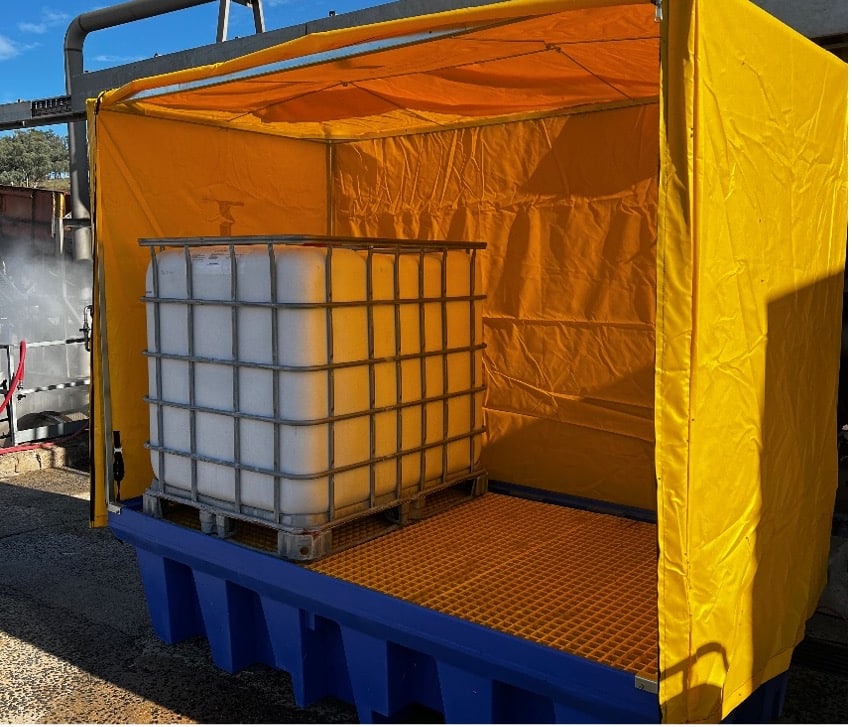
Mining operators are increasingly using spill bunded pallets to contain fuels, lubricants and other hazardous liquids stored in workshops, laydown yards and processing areas, reducing the risk of unplanned releases to soil and drainage systems. Eco Pallets’ moulded polyethylene bunded units, shown in use at Tanafloc Australia, integrate forklift pockets, removable grates and corrosion‑resistant sumps sized to capture typical drum and IBC failure volumes. For geotechnical and environmental teams, this simplifies compliance with bunding requirements, reduces contaminated run‑off, and limits the footprint of lined or remediated ground.
Technical Brief
- Moulded polyethylene construction eliminates corrosion risk from saline spray, acidic reagents and fertiliser-based flocculants.
- Fully sealed sumps avoid reliance on compacted soil bunds, reducing geotechnical verification and lining requirements.
- Integrated forklift tine pockets allow safe relocation of full pallets without temporary de-bunding of drums.
- Removable grates enable visual inspection of the sump floor for leaks, sludge build-up and structural damage.
- Smooth, non-porous internal surfaces simplify decontamination and segregation of incompatible liquid residues.
- Self-contained bunds reduce the footprint of concreted or HDPE-lined storage pads in constrained workshops and laydown yards.
- Wider adoption on mines encourages standardised spill response procedures and clearer demarcation of hazardous liquid storage zones.
Our Take
Eco Pallets already features in our Environmental coverage through its Eco-Bin NV product, suggesting the company is positioning itself as a broader mine-site logistics and containment supplier rather than a niche pallet vendor in Australia.
For operators in Australia, using third-party containment solutions from firms like Eco Pallets can streamline environmental audits and incident reporting, as regulators increasingly expect standardised, certifiable secondary containment rather than ad hoc site-built bunds.
Prepared by collating external sources, AI-assisted tools, and Geomechanics.io’s proprietary mining database, then reviewed for technical accuracy & edited by our geotechnical team.
Related Articles



Related Industries & Products
Mining
Geotechnical software solutions for mining operations including CMRR analysis, hydrogeological testing, and data management.
Construction
Quality control software for construction companies with material testing, batch tracking, and compliance management.
CMRR-io
Streamline coal mine roof stability assessments with our cloud-based CMRR software featuring automated calculations, multi-scenario analysis, and collaborative workflows.
HYDROGEO-io
Comprehensive hydrogeological testing platform for managing, analysing, and reporting on packer tests, lugeon values, and hydraulic conductivity assessments.
GEODB-io
Centralised geotechnical data management solution for storing, accessing, and analysing all your site investigation and material testing data.