Scottish nuclear feasibility study delay: siting implications for project teams
Reviewed by Joe Ashwell
First reported on New Civil Engineer
30 Second Briefing
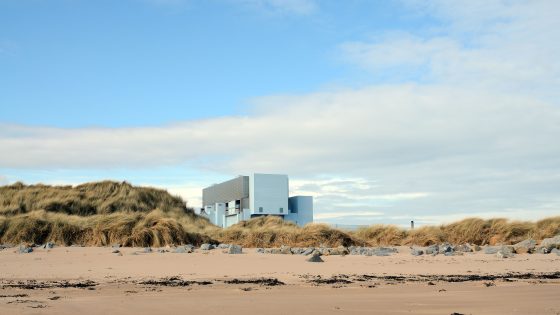
A UK Government-commissioned feasibility assessment on building new nuclear power plants at existing Scottish nuclear sites is now unlikely to be released before the Scottish Parliament elections on 7 May. The study is expected to focus on brownfield nuclear locations such as Hunterston and Torness, assessing grid connection capacity, cooling water availability and regulatory constraints under Scotland’s current anti-nuclear policy. The delay leaves developers and consultants without key data on potential reactor siting, licensing timelines and supporting civil works for any future large-scale or SMR projects.
Technical Brief
- Feasibility work is confined to existing licensed nuclear footprints, avoiding new greenfield site acquisition and EIA baselines.
- Legacy cooling water intake and outfall structures at coastal sites drive hydraulic capacity checks and marine works scope.
- Existing nuclear foundations and buried structures require detailed as-built records to assess reuse, demolition or load-sharing options.
- On-site radioactive waste stores and exclusion zones limit potential locations for new auxiliary buildings and construction compounds.
- Grid connection studies must reconcile historic export capacities with current network reinforcement needs and fault level constraints.
- For SMR concepts, modular transport logistics to remote Scottish coastal sites become a key design and programme driver.
Our Take
Within our 168 Policy stories, the UK Government most often appears in connection with decarbonisation funding and transport infrastructure (for example the ZEHID-backed HGV trial on 9 April 2026), so a delayed Scottish nuclear study would sit alongside a wider pattern of central government shaping low‑carbon pathways from Westminster rather than Holyrood.
For Scottish civil and nuclear engineers, the 7 May Scottish Parliament election date effectively becomes a hard stop for any formal policy steer on new nuclear, meaning project teams will need to scenario‑plan around multiple post‑election policy outcomes rather than rely on this study for near‑term investment decisions.
New Civil Engineer’s recurring role across our UK Policy coverage (from Heathrow’s innovation challenge to the British Construction & Infrastructure Awards) suggests this nuclear study debate will likely feed quickly into industry discourse on pipeline visibility and skills planning for major projects in Scotland.
Prepared by collating external sources, AI-assisted tools, and Geomechanics.io’s proprietary mining database, then reviewed for technical accuracy & edited by our geotechnical team.
Related Articles



Related Industries & Products
Construction
Quality control software for construction companies with material testing, batch tracking, and compliance management.
Mining
Geotechnical software solutions for mining operations including CMRR analysis, hydrogeological testing, and data management.
QCDB-io
Comprehensive quality control database for manufacturing, tunnelling, and civil construction with UCS testing, PSD analysis, and grout mix design management.