Sangdong tungsten mine restart: capacity, mine life and design notes for engineers
Reviewed by Tom Sullivan
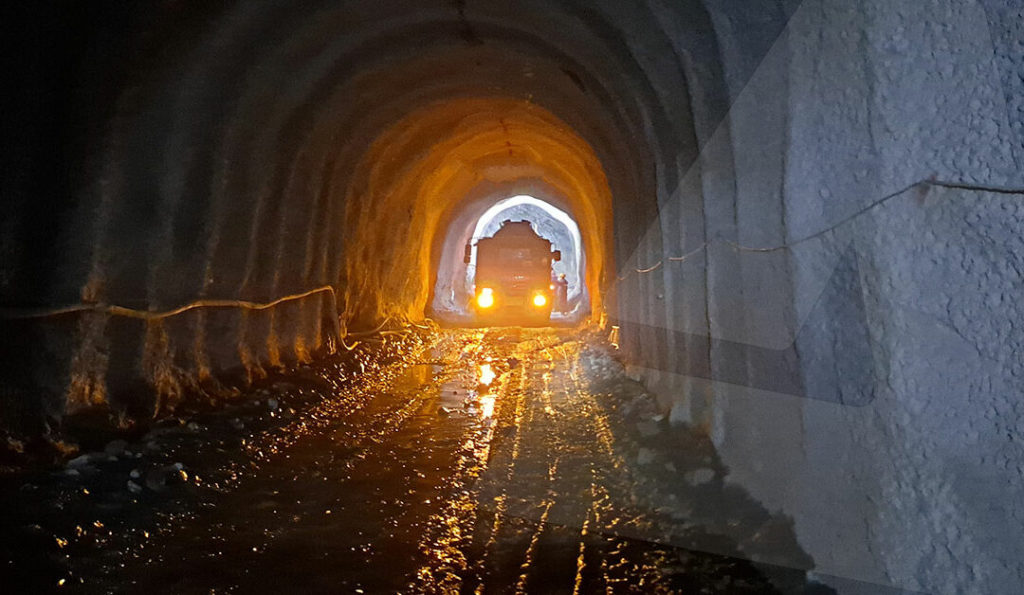
First reported on MINING.com
30 Second Briefing
Sangdong tungsten mine in Gangwon Province, South Korea, has restarted production after more than 30 years, with Phase 1 commissioning complete and a new plant processing about 640,000 tonnes of ore per year to produce roughly 2,300 tonnes of concentrate at an average grade of 0.51% WO₃. A Phase 2 expansion targeted for 2027 will lift capacity to around 1.2 million tonnes of ore and about 4,600 tonnes of concentrate annually, supported by 4 km of new underground development and Metso-supplied SAG and ball mills. With a mine life exceeding 45 years, Sangdong is projected to supply about 40% of tungsten demand outside China, directly feeding Almonty’s planned tungsten oxide facility and adjacent Sangdong molybdenum deposit.
Technical Brief
- Redevelopment includes ~4 km of new underground tunnel development to access and sequence ore bodies.
- The new mineral processing plant is fitted with Metso-supplied SAG and ball mills for grinding.
- Advanced operational monitoring systems have been installed to track plant performance and underground operations in real time.
- Almonty has invested over US$100 million at Sangdong since acquiring the project in 2015.
- Operations resume at a historically major tungsten producer, first suspended in the early 1990s after price downturns.
- China currently produces about 88% of global tungsten supply, framing Sangdong’s role in allied supply diversification.
- Tungsten’s key defence use is in high-density armour‑piercing “penetrator” projectiles under US Department of Defence contracts.
- US domestic tungsten mining ceased in 2015 due to low prices and Chinese competition, increasing reliance on imports.
Our Take
With China supplying about 88% of global tungsten and the US having ceased domestic production in 2015, Sangdong in South Korea effectively becomes one of the few non-Chinese, non-US-aligned hard‑rock sources that defence buyers such as the US Department of Defence can look to for diversification of strategic supply.
The expected 45‑year mine life at Sangdong, combined with more than a decade of redevelopment, positions Almonty’s tungsten portfolio at the long‑life end of the 362 keyword‑matched pieces in our database that involve tungsten or gold, which typically feature shorter project horizons and more price‑sensitive restart decisions.
Metso’s involvement at Sangdong links this restart to a cluster of recent Metso items in our coverage, where the company is supplying higher‑efficiency comminution and processing solutions (e.g. VRM dry grinding and SX‑EW at Florence Copper), signalling that Sangdong is likely to benefit from the same push towards lower energy and water intensity in new circuits.
Prepared by collating external sources, AI-assisted tools, and Geomechanics.io’s proprietary mining database, then reviewed for technical accuracy & edited by our geotechnical team.
Related Articles


Related Industries & Products
Mining
Geotechnical software solutions for mining operations including CMRR analysis, hydrogeological testing, and data management.
Tunnelling
Specialised solutions for tunnelling projects including grout mix design, hydrogeological analysis, and quality control.
CMRR-io
Streamline coal mine roof stability assessments with our cloud-based CMRR software featuring automated calculations, multi-scenario analysis, and collaborative workflows.
HYDROGEO-io
Comprehensive hydrogeological testing platform for managing, analysing, and reporting on packer tests, lugeon values, and hydraulic conductivity assessments.
GEODB-io
Centralised geotechnical data management solution for storing, accessing, and analysing all your site investigation and material testing data.