Recovering more metal from leach pads: irrigation design notes for mine engineers
Reviewed by Joe Ashwell
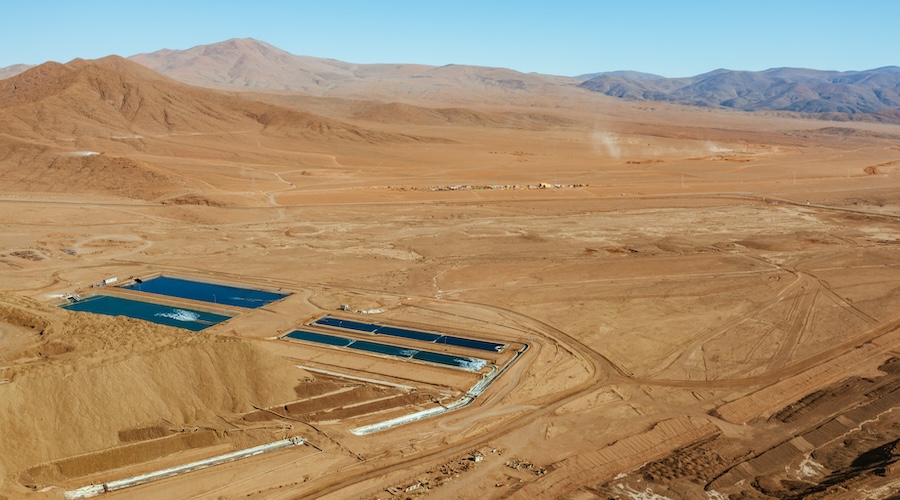
First reported on MINING.com
30 Second Briefing
Recovering more metal from existing heap leach pads, rather than building new mines, is presented as mining’s fastest production gain amid IEA-forecast supply gaps of 30% for copper and 40% for lithium by 2035. Tom Claridge, sales manager for Mining North at Netafim North America, argues that uneven solution distribution caused by slope, rock size, line spacing and pressure inconsistencies creates persistent wet–dry zones and permanent metal loss. He points to precision irrigation systems with controlled pressure and flow, plus automated monitoring, as key to improving percolation, water use and predictability on large pads.
Technical Brief
- Once preferential flow channels form in a heap, subsequent solution pulses re-use them, locking in bypassed zones.
- Under-leached regions from early lifts often never see adequate contact time, creating permanent unrecovered metal inventory.
- Recovery shortfalls are typically masked in headline KPIs, as operators assume “late” rather than “lost” extraction.
- Treating heap leaching as a tightly controlled process unit, not a background utility, is framed as essential.
- Mines investing in automated pressure and flow control reduce reliance on manual valve adjustments across large pad manifolds.
- Real-time monitoring of distribution behaviour enables faster correction of emerging dry zones before they become systemic.
- Labour constraints are acute, with over 50% of the US mining workforce projected to retire by 2029.
- For large copper and lithium operations, small percentage gains in pad recovery scale to substantial incremental metal output.
Our Take
In our mining database, copper and lithium are among the most frequently tagged commodities in sustainability pieces, signalling that any technology which boosts leach-pad recovery for these metals is likely to attract ESG-linked capital rather than pure greenfield funding.
The International Energy Agency’s projected 30–40% supply gaps for copper and lithium by 2035 mean that incremental recovery gains from existing pads in Chile’s Atacama and US operations could be strategically comparable to commissioning mid-sized new mines, but with far lower permitting and social-licence risk.
With more than half of the US mining workforce projected to retire by 2029, operators in North America will likely need leach-pad optimisation solutions that are automation-ready and low on manual intervention, otherwise recovery projects could be constrained by labour shortages rather than technology limits.
Prepared by collating external sources, AI-assisted tools, and Geomechanics.io’s proprietary mining database, then reviewed for technical accuracy & edited by our geotechnical team.
Related Articles

Related Industries & Products
Mining
Geotechnical software solutions for mining operations including CMRR analysis, hydrogeological testing, and data management.
Construction
Quality control software for construction companies with material testing, batch tracking, and compliance management.
CMRR-io
Streamline coal mine roof stability assessments with our cloud-based CMRR software featuring automated calculations, multi-scenario analysis, and collaborative workflows.
HYDROGEO-io
Comprehensive hydrogeological testing platform for managing, analysing, and reporting on packer tests, lugeon values, and hydraulic conductivity assessments.
GEODB-io
Centralised geotechnical data management solution for storing, accessing, and analysing all your site investigation and material testing data.