Omai Gold’s Wenot drilling: new high‑grade zone and PEA pit implications for engineers
Reviewed by Joe Ashwell
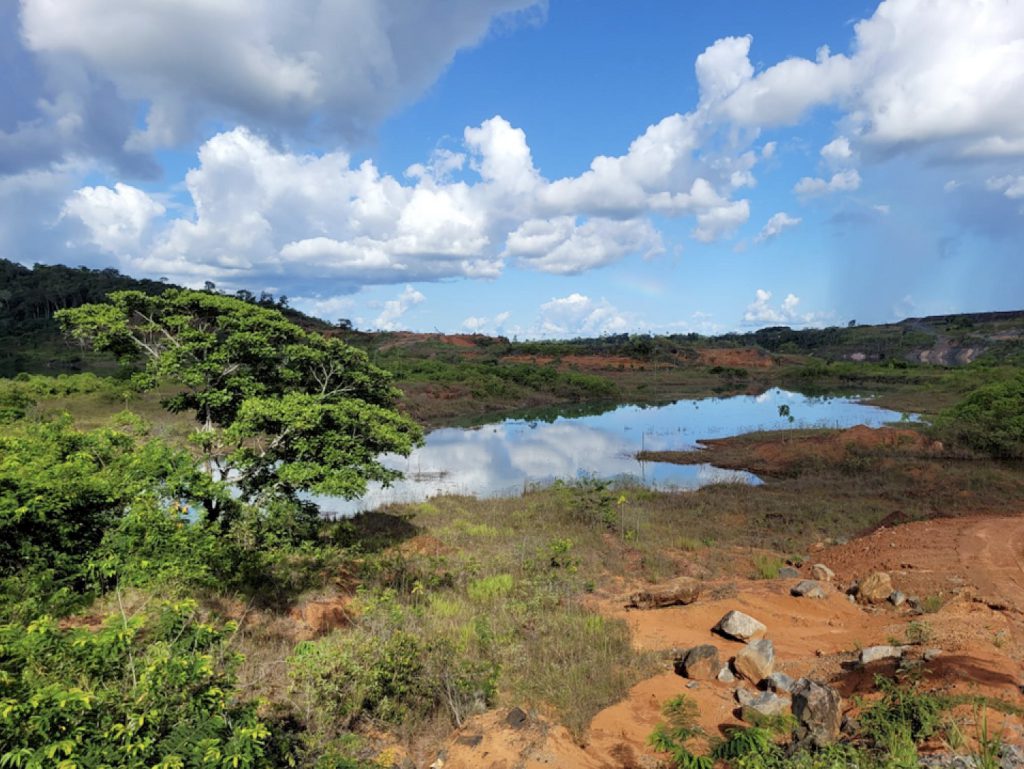
First reported on MINING.com
30 Second Briefing
Drilling at Omai Gold Mines’ Wenot deposit in Guyana has defined a new high‑grade zone east of the historical pit, with hole 25ODD‑142 cutting 14.7 metres at 11.07 g/t gold from 304 metres, including 4.3 metres at 34.31 g/t, and 25ODD‑145W in Central Wenot returning 13.3 metres at 13.54 g/t from 398 metres. The 35,300 metres of 2025 diamond drilling across 79 holes suggest the central contact and quartz feldspar porphyry may dip south in the east, with implications for pit geometry and strip ratio in the upcoming PEA. Omai, already hosting 2.12 million oz indicated at 2.07 g/t and 4.38 million oz inferred at 1.95 g/t, is targeting resource growth and conversion that could support a “very robust” open pit mine plan.
Technical Brief
- Central Wenot hole 25ODD-145W includes 6.2 metres grading 27.82 g/t within the high-grade interval.
- East Wenot hole 25ODD-144 intersected 31.6 metres at 1.11 g/t from 526 metres downhole.
- Within 25ODD-144, sub-intervals comprise 12 metres at 0.98 g/t and 13 metres at 0.99 g/t.
- East Wenot hole 25ODD-146 returned 16 metres at 1.02 g/t from 304 metres depth.
- Structural interpretation suggests the central contact and quartz feldspar porphyry dip southwards in the eastern sector.
- Current indicated resources are 2.12 Moz at 2.07 g/t within 31.9 million tonnes.
- Inferred resources stand at 4.38 Moz at 1.95 g/t contained in 69.6 million tonnes.
- The brownfield project overlies the former Omai mine, which produced over 3.7 Moz between 1993–2005.
Our Take
With 2.12 Moz indicated and 4.38 Moz inferred at the Omai gold project, the current resource already places Omai Gold Mines toward the upper end of single-asset gold stories in our Mining database, which may explain why a 3% share move followed what is essentially incremental drilling news.
Historic production of 3.7 Moz at the former Omai gold mine, combined with current grades around 2 g/t, suggests that any future restart could leverage existing geological understanding and potentially lower discovery risk compared with greenfield Guyanese gold projects also covered in our Latin America set.
The depth of the highlighted Wenot and Central Wenot intercepts (around 300–500 m) implies an emerging focus on underground or deeper open-pit potential, which in Guyana typically brings more complex geotechnical and dewatering requirements than the shallow saprolite-dominated deposits seen in some other regional gold items in our coverage.
Prepared by collating external sources, AI-assisted tools, and Geomechanics.io’s proprietary mining database, then reviewed for technical accuracy & edited by our geotechnical team.
Related Articles


Related Industries & Products
Mining
Geotechnical software solutions for mining operations including CMRR analysis, hydrogeological testing, and data management.
Tunnelling
Specialised solutions for tunnelling projects including grout mix design, hydrogeological analysis, and quality control.
CMRR-io
Streamline coal mine roof stability assessments with our cloud-based CMRR software featuring automated calculations, multi-scenario analysis, and collaborative workflows.
HYDROGEO-io
Comprehensive hydrogeological testing platform for managing, analysing, and reporting on packer tests, lugeon values, and hydraulic conductivity assessments.
GEODB-io
Centralised geotechnical data management solution for storing, accessing, and analysing all your site investigation and material testing data.