Geomechanics.io

  • Free Tools
Sign UpLog In

Geomechanics.io

Geomechanics, Streamlined.

© 2026 Geomechanics.io. All rights reserved.

Geomechanics.io

CMRR-ioGEODB-ioHYDROGEO-ioQCDB-ioFree Tools & CalculatorsBlogLatest Industry News

Industries

MiningConstructionTunnelling

Company

Terms of UsePrivacy PolicyLinkedIn
    Projects

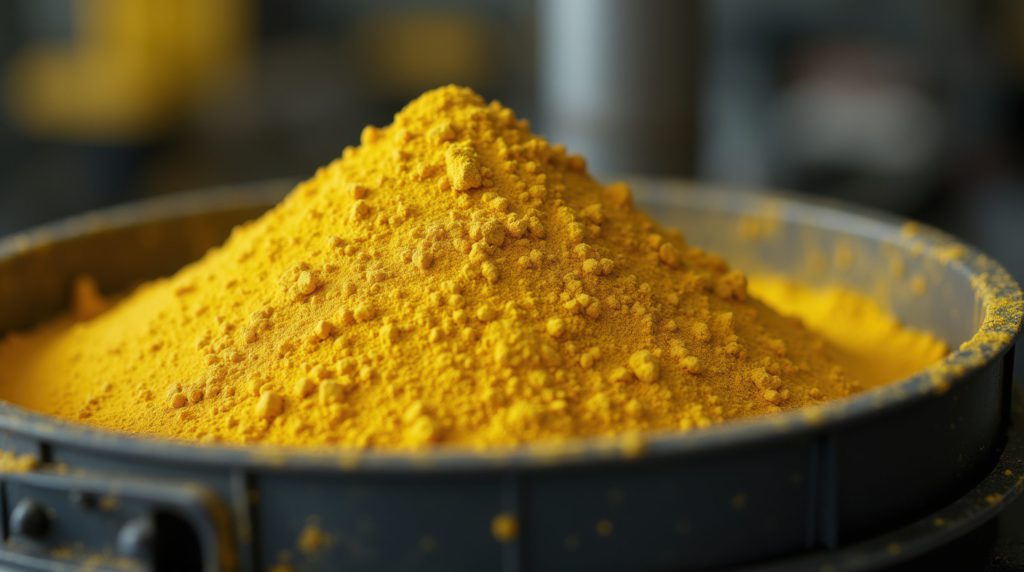
    Niger’s 1,000t yellowcake stockpile: security and supply risks for mine planners

    February 16, 2026|

    Reviewed by Tom Sullivan

    Niger’s 1,000t yellowcake stockpile: security and supply risks for mine planners

    First reported on MINING.com

    30 Second Briefing

    Niger’s junta has moved an estimated 1,000 tonnes of uranium concentrate from Orano’s seized Somaïr open-pit mine to Air Base 101 beside Niamey’s main airport, where it remains unsold despite talks with potential buyers from Russia, China, the US and the UAE. The stockpile is subject to an ICSID order prohibiting sale or transfer without Orano’s consent, while the French state-owned company threatens “any and all actions” to block third-party acquisition. Security analysts warn the base location is highly exposed after Islamic State-linked militants approached the capital in a recent attack.

    Technical Brief

    • Uranium concentrate originated from Orano’s Somaïr open-pit mine, previously 63.4% Orano and 36.6% Sopamin owned.
    • Russian agency TASS referenced discussions over roughly 2,000 tonnes of Somaïr-produced yellowcake, double the moved volume.
    • Military government’s forced takeover of Somaïr in late 2024 converted a foreign-operated mine into a state-controlled asset.
    • ICSID arbitration order explicitly prohibits sale or transfer of the mined uranium without Orano’s prior consent.
    • Orano has publicly committed to “any and all actions” to prevent third-party acquisition of the seized material.
    • Niger has reportedly indicated willingness to return about 95,000 tonnes of uranium concentrates to Orano, suggesting wider inventory entanglement.
    • Islamic State-linked militants mounted an attack on Niamey in January, coming “dangerously close” to the yellowcake stockpile.

    Our Take

    In our uranium- and yellowcake-tagged coverage, Niger is one of the few African suppliers where state entities like Sopamin have moved from minority positions (36.6% in Somaïr) towards tighter control, which typically complicates long-term offtake security for utilities reliant on legacy French-linked contracts.

    The Somaïr dispute going to ICSID puts Orano in a similar arbitration posture to several other European operators in Africa in our database, signalling that contract sanctity for uranium assets in the Sahel is now a material legal risk rather than just a political one for project financiers.

    The contrast between Niger’s uranium tensions and the long-life (25-year) Vicuna copper–gold–silver project in Argentina, which also appears in our projects-tagged set, underlines why some majors are reallocating growth capital from African uranium towards large-scale South American base and precious metals districts with more predictable permitting regimes.

    Geotechnical Software for Modern Teams

    Centralise site data, logs, and lab results with GEODB-io, CMRR-io, and HYDROGEO-io.

    No credit card required.

    • Save and export unlimited calculations
    • Advanced data visualisation
    • Generate professional PDF reports
    • Cloud storage for all your projects

    Prepared by collating external sources, AI-assisted tools, and Geomechanics.io’s proprietary mining database, then reviewed for technical accuracy & edited by our geotechnical team.

    Related Articles
    Global battery demand and Australian lithium: processing shift for mine engineers
    Mining
    about 2 hours ago

    Global battery demand and Australian lithium: processing shift for mine engineers

    Surging global demand for lithium-ion batteries for electric vehicles and grid storage is pushing Australia to move beyond spodumene concentrate exports into domestic refining and cathode‑grade chemical production. Industry proposals centre on converting hard‑rock feed into battery‑grade lithium hydroxide and carbonate in Western Australia, leveraging existing Tier‑1 deposits and port infrastructure but facing high energy costs, skills shortages and permitting timelines. For miners and process engineers, the shift implies greater focus on impurity control, reagent optimisation and integration of hydrometallurgical circuits with upstream mine planning.

    Bengalla growth for New Hope: strip mine sequencing and design notes for planners
    Mining
    about 3 hours ago

    Bengalla growth for New Hope: strip mine sequencing and design notes for planners

    New Hope Group has lifted coal output across its Australian assets and is advancing growth plans at the Bengalla thermal coal mine in the Hunter Valley, where it holds an 80 per cent interest alongside Mitsui, Taipower and J-Power. The open-cut operation, which typically produces export-quality thermal coal for Asian power utilities via the Port of Newcastle, is the company’s key near-term expansion focus. For mine planners and geotechs, any Bengalla growth path will centre on additional strip mining, dragline and truck–shovel sequencing, and associated waste dump and haul road reconfiguration.

    Mining smarter with AI and data: edge network design notes for engineers
    Mining
    about 3 hours ago

    Mining smarter with AI and data: edge network design notes for engineers

    Australian miners are hitting a data wall as high‑bandwidth sensors, autonomous fleets and video streams overwhelm traditional cloud links, pushing operations towards private LTE networks and on‑site edge computing. Vendors such as Vocus are pairing Starlink Business Rural satellite backhaul with 4G/5G private LTE to keep haul trucks, crushers and fixed plant connected in real time, even on remote pits and waste dumps. For engineers, this shift means designing networks and control systems around low‑latency, on‑site processing for fleet dispatch, collision avoidance and condition monitoring rather than centralised data centres.

    Related Industries & Products

    Mining

    Geotechnical software solutions for mining operations including CMRR analysis, hydrogeological testing, and data management.

    CMRR-io

    Streamline coal mine roof stability assessments with our cloud-based CMRR software featuring automated calculations, multi-scenario analysis, and collaborative workflows.

    HYDROGEO-io

    Comprehensive hydrogeological testing platform for managing, analysing, and reporting on packer tests, lugeon values, and hydraulic conductivity assessments.

    GEODB-io

    Centralised geotechnical data management solution for storing, accessing, and analysing all your site investigation and material testing data.

    AllGeotechnicalMiningInfrastructureMaterialsHazardsEnvironmentalSoftwarePolicy