Nepal floods and hydropower: design and risk lessons for dam engineers
Reviewed by Joe Ashwell
First reported on New Civil Engineer
30 Second Briefing
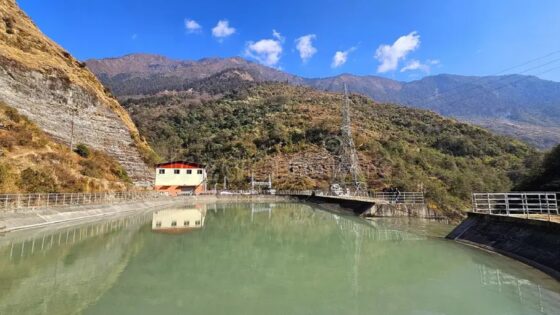
August’s glacial lake outburst flood on the Nepal–Tibet border destroyed multiple run-of-river hydropower schemes and downstream settlements, killing about 1,500 people and leaving thousands missing. Early reports point to dam overtopping, inadequate spillway capacity for extreme inflows, and limited real-time monitoring of upstream lakes and debris-laden surges. Designers and operators are now under pressure to revisit probable maximum flood assumptions, freeboard allowances, and emergency drawdown and warning protocols for high-altitude hydropower corridors.
Technical Brief
- Failure mechanism investigation will focus on hydraulic modelling of surge propagation, debris impact loads and progressive structural overtopping.
- Forensic teams are expected to combine satellite imagery, drone photogrammetry and post-event LiDAR to reconstruct breach timing and flow depths.
- Instrumentation gaps include absence of upstream lake level gauges, real‑time debris sensors and redundant communications along the river corridor.
- Monitoring upgrades under discussion involve automated lake-level radar, upstream camera networks and river-stage alarms linked to powerplant SCADA.
- Operators are reviewing sediment and boulder-transport assumptions, as observed bedload and impact forces exceeded typical run‑of‑river design envelopes.
- Emergency planning deficiencies include limited cascade-coordinated shutdown procedures, unclear evacuation trigger thresholds and non-standardised warning message formats.
- Remediation options being considered range from armouring vulnerable abutments and spillway chutes to relocating key switchyards and control rooms above mapped inundation zones.
- For similar high‑altitude corridors, regulators are likely to mandate periodic independent dam safety reviews explicitly covering glacial-lake outburst scenarios and cascading failure chains.
Our Take
Because New Civil Engineer is also promoting dedicated Floods & Water Awards, the Nepal floods piece signals that UK-based practitioners are increasingly treating hydropower safety in countries like Nepal as part of the same technical conversation as UK flood-resilience projects, especially around early-warning systems and asset design standards.
The cross-border nature of this incident, spanning Nepal, Tibet and China, highlights a recurring challenge in our Hazards coverage: operators must design hydropower projects to withstand upstream failures and data gaps outside their own jurisdiction, which often pushes them towards more conservative siting, spillway capacity and emergency-planning assumptions.
Prepared by collating external sources, AI-assisted tools, and Geomechanics.io’s proprietary mining database, then reviewed for technical accuracy & edited by our geotechnical team.
Related Articles

Related Industries & Products
Mining
Geotechnical software solutions for mining operations including CMRR analysis, hydrogeological testing, and data management.
Construction
Quality control software for construction companies with material testing, batch tracking, and compliance management.
CMRR-io
Streamline coal mine roof stability assessments with our cloud-based CMRR software featuring automated calculations, multi-scenario analysis, and collaborative workflows.
HYDROGEO-io
Comprehensive hydrogeological testing platform for managing, analysing, and reporting on packer tests, lugeon values, and hydraulic conductivity assessments.
GEODB-io
Centralised geotechnical data management solution for storing, accessing, and analysing all your site investigation and material testing data.