Geomechanics.io

  • Free Tools
Sign UpLog In

Geomechanics.io

Geomechanics, Streamlined.

© 2026 Geomechanics.io. All rights reserved.

Geomechanics.io

CMRR-ioGEODB-ioHYDROGEO-ioQCDB-ioFree Tools & CalculatorsBlogLatest Industry News

Industries

MiningConstructionTunnelling

Company

Terms of UsePrivacy PolicyLinkedIn
    AllGeotechnicalMiningInfrastructureMaterialsHazardsEnvironmentalSoftwarePolicy
    Projects

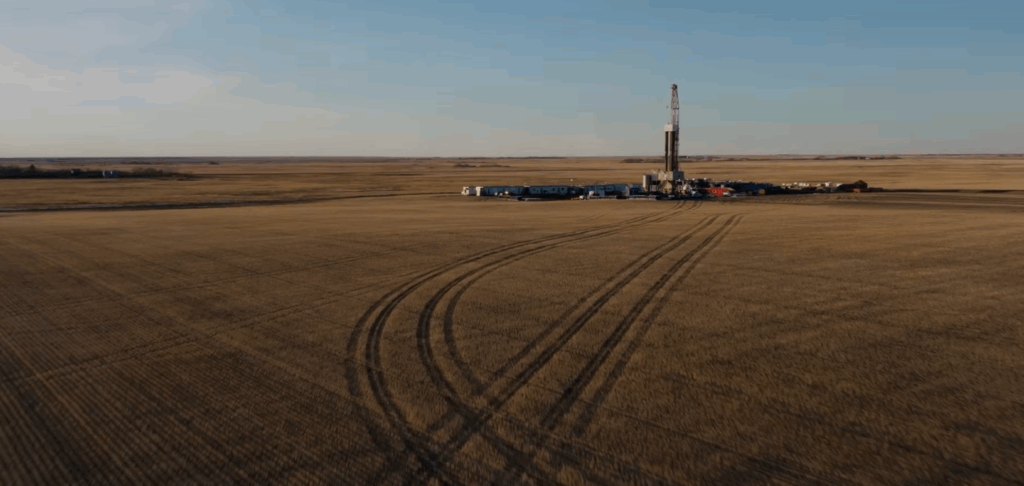
    MAX Power’s Saskatchewan hydrogen–helium trend: key project notes for engineers

    April 8, 2026|

    Reviewed by Tom Sullivan

    MAX Power’s Saskatchewan hydrogen–helium trend: key project notes for engineers

    First reported on MINING.com

    30 Second Briefing

    MAX Power Mining has drilled the Bracken Well, completed a high‑resolution 3D seismic survey over the Lawson Discovery and the wider 15‑19 discovery area, and identified a Lawson “look‑a‑like” target 12 km southwest using legacy 2D seismic, materially enlarging its natural hydrogen footprint along Saskatchewan’s 475‑km Genesis Trend. Core desorption tests from Cambrian Basal sands above the Basement Complex hydrogen zone returned helium up to 8.7% (average 4.4%), leveraging historically high helium prices. Backed by a C$20.5 million raise, MAX Power plans a Lawson follow‑up well, Bracken completion and further seismic across Genesis and Grasslands, with Bell Canada’s proposed mega data centre nearby adding potential baseload demand.

    Technical Brief

    • Core desorption testing used nine discrete samples from Cambrian Basal sands above the Basement Complex.
    • Genesis Trend extends ~475 km, giving large lateral continuity for basin‑scale hydrogen–helium system evaluation.
    • Bell Canada’s proposed mega data centre in the adjoining Industrial Corridor introduces potential local baseload offtake.
    • C$20.5 million equity raise underpins near‑term drilling, completions and additional seismic across Genesis and Grasslands.

    Our Take

    Natural hydrogen and helium appear in only a handful of keyword-matched pieces in our database, so MAX Power Mining’s Saskatchewan work sits in a relatively uncrowded exploration space compared with mainstream copper and gold projects.

    The 475 km Genesis Trend footprint, combined with helium grades up to 8.7% in core desorption tests, suggests MAX Power’s Natural Hydrogen portfolio could be positioned to attract specialist gas midstream or industrial gas partners rather than conventional mining offtakers.

    With a market capitalisation of about C$155.7 million and a recent C$20.5 million raise, MAX Power is relatively small compared with operators like Vale and Eldorado Gold mentioned in the piece, which likely means any Saskatchewan hub build-out will depend on staged de-risking or future farm-ins rather than balance-sheet funding alone.

    Geotechnical Software for Modern Teams

    Centralise site data, logs, and lab results with GEODB-io, CMRR-io, and HYDROGEO-io.

    No credit card required.

    • Save and export unlimited calculations
    • Advanced data visualisation
    • Generate professional PDF reports
    • Cloud storage for all your projects

    Prepared by collating external sources, AI-assisted tools, and Geomechanics.io’s proprietary mining database, then reviewed for technical accuracy & edited by our geotechnical team.

    Related Articles

    The Metals Royalty Nasdaq debut: deep-sea nodule economics for mine financiers
    Mining
    about 16 hours ago

    The Metals Royalty Nasdaq debut: deep-sea nodule economics for mine financiers

    The Metals Royalty Company has listed on Nasdaq under ticker TMCR, offering investors a royalty exposure to TMC’s NORI deep-sea polymetallic nodule project in the Pacific Ocean targeting nickel, cobalt and copper. Chief executive Brian Paes-Braga positions the structure as a conventional mining royalty model applied offshore, with returns linked to future production from nodules on the Clarion-Clipperton-type seabed rather than equity in TMC (NASDAQ: TMCWW). For mining financiers and project developers, the move signals growing capital-market appetite for seabed resource plays despite unresolved regulatory and production-risk questions.

    Uranium Energy’s Burke Hollow ISR start: production and wellfield notes for engineers
    Mining
    about 17 hours ago

    Uranium Energy’s Burke Hollow ISR start: production and wellfield notes for engineers

    Uranium Energy Corp has started production at its Burke Hollow project in Texas, the first new US in-situ recovery (ISR) uranium operation in more than a decade and now the country’s largest ISR wellfield, with measured and indicated resources above 6.15 million lb on a 20,000-acre property. The Vancouver-based miner now runs two active ISR operations, adding Burke Hollow to Christensen Ranch in Wyoming, with a third planned at Ludeman next year. ISR solutions from Burke Hollow will be piped to the Hobson Central Processing Plant, licensed for up to 4 million lb U₃O₈ per year.

    First Quantum–IFC Taca Taca deal: capex, standards and risks for mine planners
    Mining
    about 18 hours ago

    First Quantum–IFC Taca Taca deal: capex, standards and risks for mine planners

    First Quantum Minerals has partnered with the International Finance Corporation to align the Taca Taca copper project in Salta Province, Argentina, with IFC Performance Standards on Environmental and Social Sustainability, a move aimed at improving access to debt financing. The open-pit project is scoped for 40 Mtpa throughput with expansion potential to 60 Mtpa, requiring about $4.2–5.25 billion in capex and targeting roughly 291,000 tonnes of copper per year over the first decade of a 35‑year mine life. Construction is expected to create up to 4,000 jobs and 2,000 operational roles, with IFC emphasising local skills development and infrastructure build‑out.

    Related Industries & Products

    Mining

    Geotechnical software solutions for mining operations including CMRR analysis, hydrogeological testing, and data management.

    CMRR-io

    Streamline coal mine roof stability assessments with our cloud-based CMRR software featuring automated calculations, multi-scenario analysis, and collaborative workflows.

    HYDROGEO-io

    Comprehensive hydrogeological testing platform for managing, analysing, and reporting on packer tests, lugeon values, and hydraulic conductivity assessments.

    GEODB-io

    Centralised geotechnical data management solution for storing, accessing, and analysing all your site investigation and material testing data.