Siniat plasterboard carbon cuts: EPD data and design implications for engineers
Reviewed by Joe Ashwell
First reported on The Construction Index
30 Second Briefing
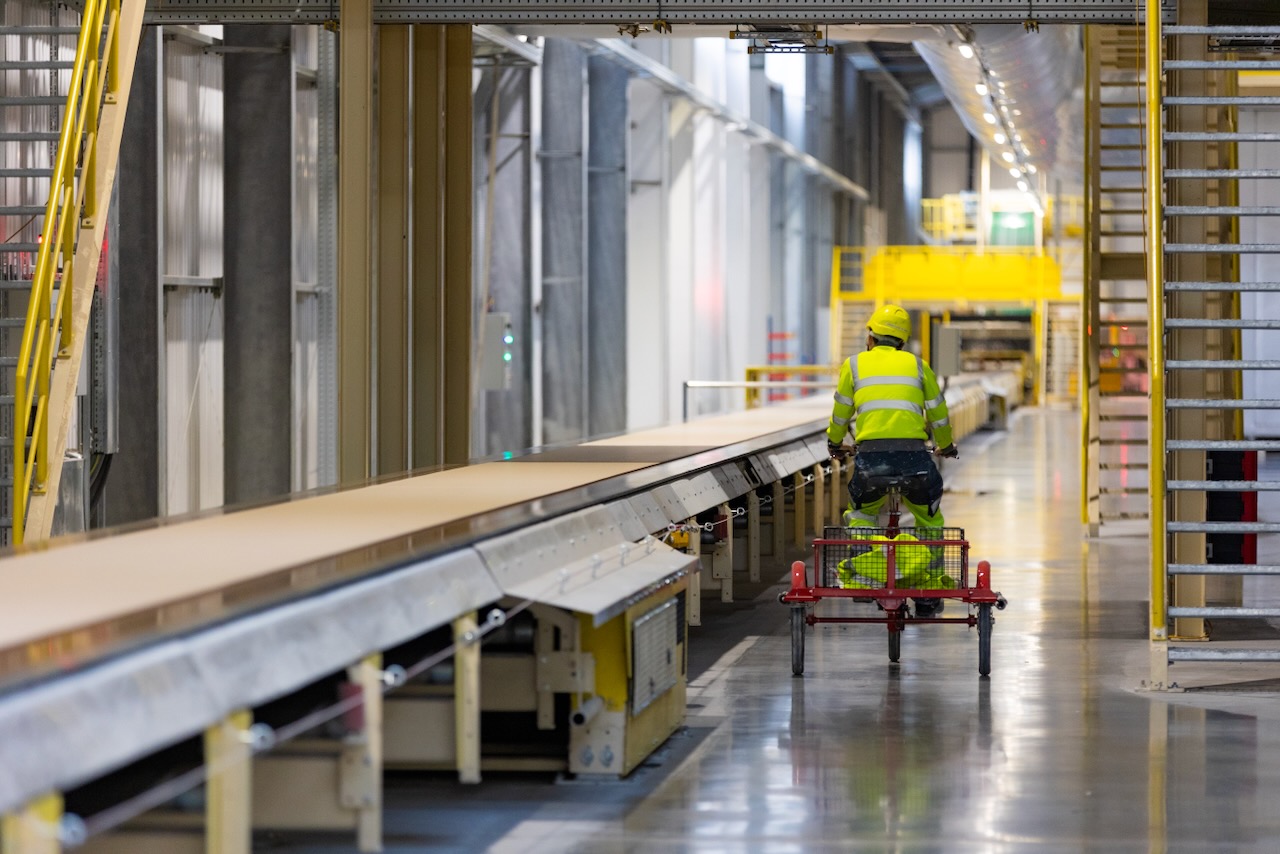
Drywall manufacturer Siniat has achieved a 5% reduction in carbon intensity across its plasterboard products following a £170m upgrade of its Bristol HQ production line (opened March 2025) and improvements at its Ferrybridge plant, enabling retirement of older, less energy‑efficient equipment. The programme forms part of parent company Etex’s target to cut Scope 1 and 2 emissions by 35% using higher recycled content, lower energy intensity per tonne and a zero‑waste‑to‑landfill approach. Verified Environmental Product Declarations now cover over 86% of Siniat products, giving designers and contractors project‑level carbon data aligned with UK Net Zero Carbon Building Standard reporting.
Technical Brief
- New Bristol HQ production line, commissioned March 2025, replaces legacy kit with higher‑efficiency thermal systems.
- Retired equipment at Bristol and Ferrybridge removes older, higher‑energy plant from the production mix.
- Etex programme couples recycled gypsum use with a formal zero‑waste‑to‑landfill operational commitment.
- Updated EPDs will explicitly show revised carbon intensity values, enabling like‑for‑like product substitution analysis.
- Designers can align Siniat EPD data with UK Net Zero Carbon Building Standard project‑level reporting templates.
- Greater product‑level transparency enables main contractors to evidence plasterboard package emissions in whole‑life carbon assessments.
Our Take
The £170 million committed to the Bristol and Ferrybridge facilities is at the upper end of capex figures seen in recent UK building-materials upgrades, signalling that Etex is effectively locking in these plants as long‑life hubs for lower‑carbon board supply into the UK and possibly near‑European markets.
A 5% cut in product carbon intensity, combined with Etex’s 35% Scope 1 and 2 reduction target, suggests that further gains at Siniat will likely have to come from process energy and logistics optimisation at the Bristol headquarters and Ferrybridge facility rather than incremental tweaks to board formulations alone.
Prepared by collating external sources, AI-assisted tools, and Geomechanics.io’s proprietary mining database, then reviewed for technical accuracy & edited by our geotechnical team.
Related Articles


Related Industries & Products
Construction
Quality control software for construction companies with material testing, batch tracking, and compliance management.
CMRR-io
Streamline coal mine roof stability assessments with our cloud-based CMRR software featuring automated calculations, multi-scenario analysis, and collaborative workflows.
HYDROGEO-io
Comprehensive hydrogeological testing platform for managing, analysing, and reporting on packer tests, lugeon values, and hydraulic conductivity assessments.
GEODB-io
Centralised geotechnical data management solution for storing, accessing, and analysing all your site investigation and material testing data.