Lucara’s Karowe expansion: NPV, schedule and ramp-up risks for mine planners
Reviewed by Joe Ashwell
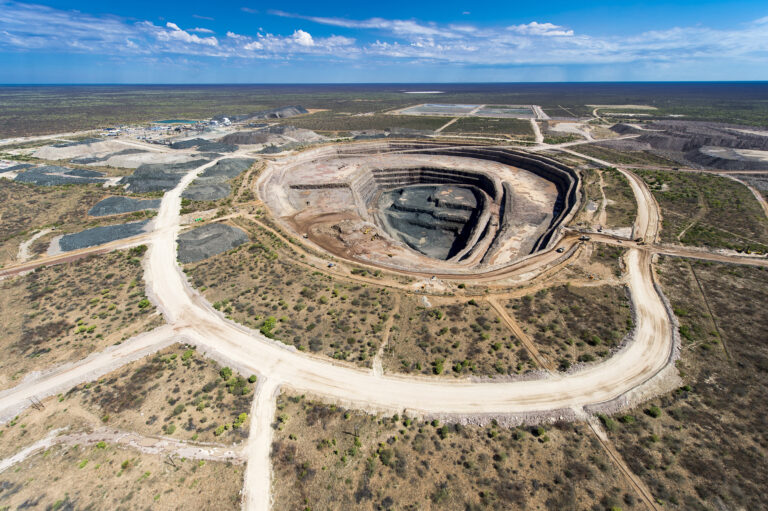
First reported on MINING.com
30 Second Briefing
Lucara Diamond is proceeding with the Karowe underground expansion in Botswana after an updated feasibility study projected recovery of 4.5 million carats over a 10‑year mine life and an after‑tax NPV of $432 million, despite a sharp downturn in natural diamond demand and competition from lab‑grown stones. Open‑pit mining will cease before June 2026, with stockpiles sustaining the 2.85‑million‑tonne‑per‑year plant while underground production ramps to commercial output in H1 2028. The $779 million project, already $436 million spent, targets the high‑value South Lobe of the AK6 kimberlite and is expected to generate over $1.3 billion in net income through 2038.
Technical Brief
- Pre-production capex for the Karowe underground is US$779 million, with US$436 million already deployed.
- Remaining US$343 million is planned from operating cash flow plus potential equity or debt with existing lenders.
- Mine planning focuses on the highest-value South Lobe domain of the AK6 kimberlite, continuing below the pit.
- Karowe has produced nine +1,000‑carat stones, including the 1,758‑carat Sewelô and 1,109‑carat Lesedi La Rona.
- The 813‑carat Constellation and the Boitumelo pink illustrate the orebody’s exceptional large-stone and fancy-colour potential.
- Historic output averages ~300,000 high-value carats per year, underpinning Karowe’s status as a high-margin operation.
- Underground mine and plant are configured to maintain a 2.85‑Mtpa processing rate as open-pit tonnage declines.
Our Take
With an after-tax NPV of $432 million against pre-production capex of $779 million at Karowe, the underground expansion sits in the mid-range of project economics in our Mining projects coverage, implying Lucara Diamond is prioritising strategic resource access and mine-life extension over headline financial returns.
The 10-year underground mine life through 2038 effectively commits Lucara Diamond to the natural diamond market well beyond the current slump highlighted in our December 2025 De Beers coverage, signalling a bet that high-value stones from the South Lobe of the AK6 kimberlite will retain pricing power against lab-grown stones.
Plant throughput of 2.85 million tonnes per year for Karowe’s underground phase is modest compared with large African open-pit diamond operations in our database, which likely reflects a strategy of targeting fewer, higher-value carats rather than bulk, lower-margin production.
Prepared by collating external sources, AI-assisted tools, and Geomechanics.io’s proprietary mining database, then reviewed for technical accuracy & edited by our geotechnical team.
Related Articles


Related Industries & Products
Mining
Geotechnical software solutions for mining operations including CMRR analysis, hydrogeological testing, and data management.
Tunnelling
Specialised solutions for tunnelling projects including grout mix design, hydrogeological analysis, and quality control.
CMRR-io
Streamline coal mine roof stability assessments with our cloud-based CMRR software featuring automated calculations, multi-scenario analysis, and collaborative workflows.
HYDROGEO-io
Comprehensive hydrogeological testing platform for managing, analysing, and reporting on packer tests, lugeon values, and hydraulic conductivity assessments.
GEODB-io
Centralised geotechnical data management solution for storing, accessing, and analysing all your site investigation and material testing data.