Geomechanics.io

  • Free Tools
Sign UpLog In

Geomechanics.io

Geomechanics, Streamlined.

© 2026 Geomechanics.io. All rights reserved.

Geomechanics.io

CMRR-ioGEODB-ioHYDROGEO-ioQCDB-ioFree Tools & CalculatorsBlogLatest Industry News

Industries

MiningConstructionTunnelling

Company

Terms of UsePrivacy PolicyLinkedIn
    AllGeotechnicalMiningInfrastructureMaterialsHazardsEnvironmentalSoftwarePolicy
    Projects

    London skyscraper costs up 40%: design and viability lessons for project teams

    March 24, 2026|

    Reviewed by Joe Ashwell

    London skyscraper costs up 40%: design and viability lessons for project teams

    First reported on The Construction Index

    30 Second Briefing

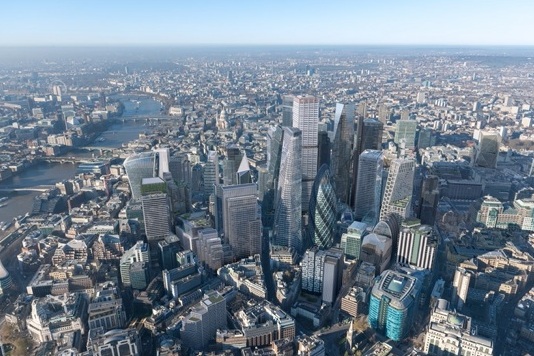
    Construction costs for new high‑rise office towers in London have risen by up to 40% since 2020, making schemes more than three times as expensive as in Seoul and around 10 times Mumbai, according to Turner & Townsend’s Global Tall Buildings report. The firm notes that tower massing and form can create up to a 25% cost difference between ambitious landmark designs such as The Shard and more efficient blocks like 22 Bishopsgate. London is now in a fifth “doing more with less” wave, forcing early‑stage viability testing, tighter detailing, and closer supply‑chain engagement.

    Technical Brief

    • Turner & Townsend’s Global Tall Buildings report benchmarks tall office towers across London, New York, Seoul, Tokyo, Mumbai and Dubai.
    • London’s cost base is attributed to post‑Brexit trading frictions, regulatory tightening and conflict‑driven materials inflation.
    • Report stresses tower massing: landmark forms like The Shard incur markedly higher structural and façade complexity than efficient blocks.
    • First “making a splash” wave included Salesforce Tower (Heron Tower) and The Shard, prioritising skyline impact over cost efficiency.
    • Second “focus on financials” wave produced forms like 22 Bishopsgate, optimising floorplates while diverting spend to amenities and infrastructure.
    • Third “embracing sustainability” phase, exemplified by The Dovetail Building, targets both embodied and operational carbon reductions plus user wellbeing.
    • Fourth “opening up to the community” wave, including 99 Bishopsgate, integrates public lower levels, mixed amenities and viewing galleries.

    Our Take

    Turner & Townsend’s role in Heathrow’s long‑term expansion and the STEP fusion prototype suggests that the London skyscraper cost data are being interpreted by a consultant with live exposure to both complex aviation and nuclear programmes, which typically sharpen cost‑risk allowances for tall commercial schemes in the City of London.

    The same Turner & Townsend market intelligence that forecasts UK tender price growth through 2026–27 underpins this 40% high‑rise cost jump, implying that developers banking on a near‑term easing of London construction inflation for projects like 22 Bishopsgate‑scale towers may be mis‑pricing contingencies.

    Within our 724‑item Infrastructure corpus, London appears more often in airport, rail and energy work than in tall‑office coverage, so this quantified 10x cost gap versus Mumbai gives investors a rare benchmark when comparing City of London skyline projects against high‑rise pipelines in lower‑cost Asian markets such as Seoul or Tokyo.

    Geotechnical Software for Modern Teams

    Centralise site data, logs, and lab results with GEODB-io, CMRR-io, and HYDROGEO-io.

    No credit card required.

    • Save and export unlimited calculations
    • Advanced data visualisation
    • Generate professional PDF reports
    • Cloud storage for all your projects

    Prepared by collating external sources, AI-assisted tools, and Geomechanics.io’s proprietary mining database, then reviewed for technical accuracy & edited by our geotechnical team.

    Related Articles

    National Grid TBM under the Thames: tunnelling design and risk notes for engineers
    Infrastructure
    in 8 months

    National Grid TBM under the Thames: tunnelling design and risk notes for engineers

    A 271.5‑tonne Herrenknecht Mixshield TBM, Caroline, has started driving a 2.2km electricity cable tunnel with a 4m internal diameter beneath the River Thames in Essex for National Grid’s Grain to Tilbury project, delivered by the Ferrovial BEMO joint venture. The drive will pass through variable Thames estuary ground conditions between 35m‑deep launch and reception shafts of 15m and 12m diameter, with tunnelling continuing into 2026 and overall scheme completion targeted for 2029. The new tunnel will replace the 1969 Thames Cable Tunnel and carry new high‑voltage circuits between Grain and Tilbury substations.

    Panama Canal Mixshield undercrossing: design and tunnelling lessons for engineers
    Infrastructure
    in 8 months

    Panama Canal Mixshield undercrossing: design and tunnelling lessons for engineers

    A 13.46m diameter Herrenknecht Mixshield TBM has broken through into the future Balboa station on Panama Metro Line 3 after completing the first-ever TBM undercrossing of the Panama Canal at depths exceeding 60m below sea level. The 5,600kW, 26,616kNm machine, fitted with an accessible cutterhead and more than 4,500 sensors linked via the Herrenknecht.Connected platform, has achieved peak advance of 150 segment rings (about 300m) per month through mixed sandstone, tuff, breccias and basalt. Around 1.5km of the 4.5km twin-track tunnel remains to final breakthrough.

    Hudson Tunnel funding deadline: schedule and risk takeaways for project teams
    Infrastructure
    in 7 months

    Hudson Tunnel funding deadline: schedule and risk takeaways for project teams

    Federal funding for New York’s US$16bn Hudson Tunnel Project has been frozen, forcing the Gateway Development Commission to suspend works from 6 February after spending over US$1bn and employing about 1,000 site workers. A Manhattan federal judge has issued a temporary restraining order, giving the administration until 5 p.m. on 12 February to restore reimbursements or appeal, while contractors warn that demobilisation, resequencing and remobilisation will add cost and delay. Sites are now in “safe-pause” mode, with dewatering, ground support and environmental monitoring maintained, and assembly of two Herrenknecht TBMs in New Jersey likely to slip beyond the planned spring 2026 launch without funding certainty.

    Related Industries & Products

    Construction

    Quality control software for construction companies with material testing, batch tracking, and compliance management.

    Mining

    Geotechnical software solutions for mining operations including CMRR analysis, hydrogeological testing, and data management.

    QCDB-io

    Comprehensive quality control database for manufacturing, tunnelling, and civil construction with UCS testing, PSD analysis, and grout mix design management.