Hydrogen‑baked bricks at Wienerberger Denton: process and retrofit notes for engineers
Reviewed by Joe Ashwell
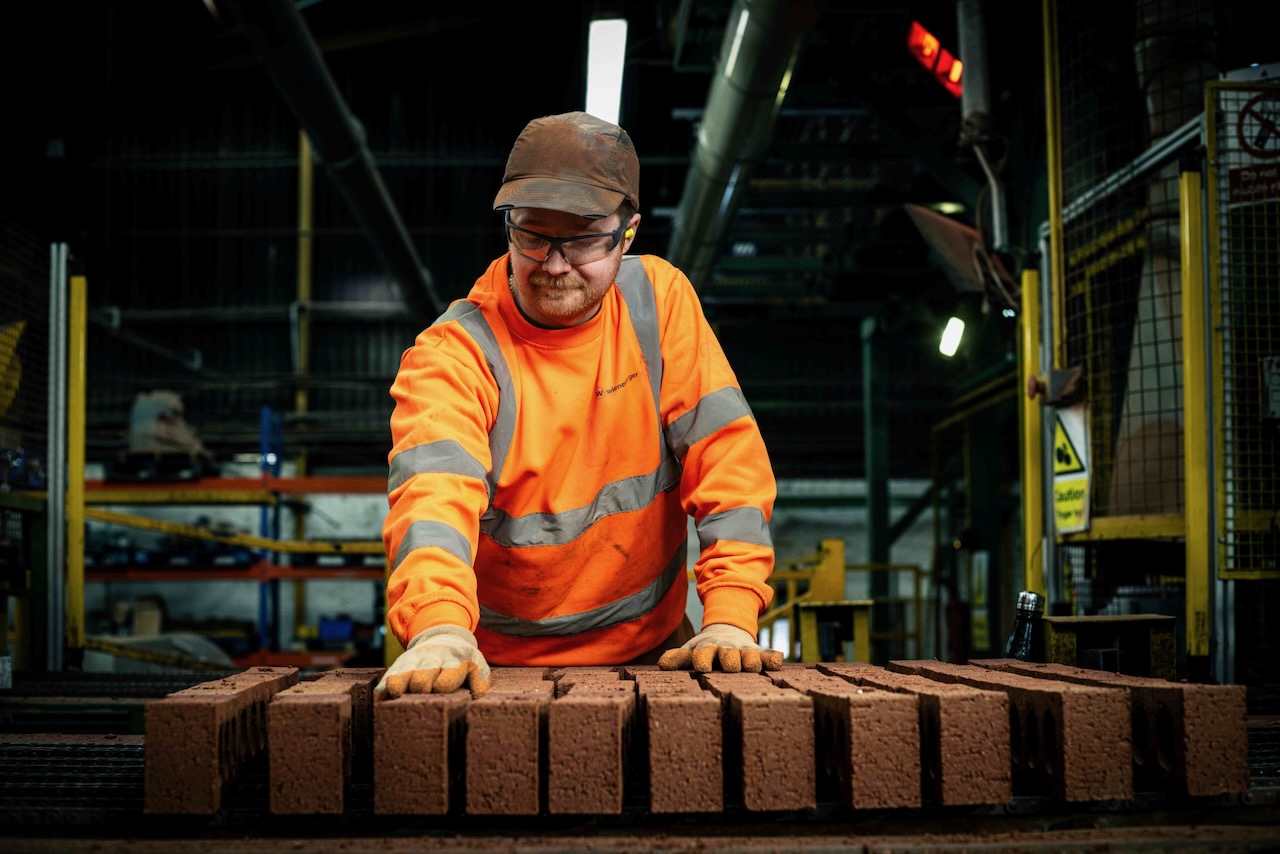
First reported on The Construction Index
30 Second Briefing
Wienerberger’s Denton brickworks will become the world’s first commercial‑scale hydrogen‑fired brick plant after securing UK Industrial Energy Transformation Fund backing for a £6m retrofit of two tunnel kilns from natural gas to 100% green hydrogen. The project will replace 224 gas burners, add dedicated hydrogen offloading and pressure‑reduction infrastructure supplied for 15 years by Trafford Green Hydrogen via tube trailers, and upgrade electrical and control systems without altering kiln structures. One fully converted kiln, or two partially converted, is targeted by autumn 2027, with full hydrogen firing from 2028 cutting CO₂ by over 11,600 tonnes per year (around 9% of Wienerberger Limited’s Scope 1 and 2 emissions).
Technical Brief
- Retrofit scope explicitly excludes any modification to kiln structural integrity or refractory envelope.
- Hydrogen supply is tied to UK Hydrogen Allocation Rounds (HAR) support mechanisms for low‑carbon production.
- Trafford Green Hydrogen, developed by Carlton Power and Schroders Greencoat, will be the dedicated hydrogen supplier.
- Fuel will arrive in tube trailers, requiring on‑site offloading bays and high‑to‑low pressure reduction skid.
- Conversion programme is partially funded by the UK Industrial Energy Transformation Fund, de‑risking capex for process change.
- Denton is positioned as a ceramics‑sector demonstrator, intended as a standardised retrofit template for other Wienerberger plants.
- Previous UK kiln hydrogen trials include Tarmac’s Tunstead lime kilns under a BEIS‑backed scheme using up to 100% H₂.
- Heidelberg’s Criggion quarry asphalt plant hydrogen firing trial provides a parallel high‑temperature process reference for performance and control.
- National roll‑out hinges on future decisions over repurposing gas networks for hydrogen versus full electrification of domestic heating.
- Co‑location of hydrogen production with materials plants is constrained by geological siting of clay, limestone and aggregate resources.
Our Take
A £6M kiln conversion at Wienerberger’s Denton brickworks sits at the smaller end of UK Government-backed industrial decarbonisation support in our database, but the 9% cut in Scope 1 and 2 emissions suggests hydrogen switching is being targeted first at relatively concentrated, high-temperature loads where impact per pound of capex is highest.
Linking Denton’s hydrogen-fired bricks to Trafford Green Hydrogen and the Hydrogen Allocation Rounds implies brick and lime assets such as Tunstead and Criggion quarry could become anchor offtakers for regional hydrogen hubs, which in turn de-risks upstream projects like Carlton Power and Schroders Greencoat’s Trafford scheme.
Prepared by collating external sources, AI-assisted tools, and Geomechanics.io’s proprietary mining database, then reviewed for technical accuracy & edited by our geotechnical team.
Related Articles


Related Industries & Products
Mining
Geotechnical software solutions for mining operations including CMRR analysis, hydrogeological testing, and data management.
Construction
Quality control software for construction companies with material testing, batch tracking, and compliance management.
CMRR-io
Streamline coal mine roof stability assessments with our cloud-based CMRR software featuring automated calculations, multi-scenario analysis, and collaborative workflows.
HYDROGEO-io
Comprehensive hydrogeological testing platform for managing, analysing, and reporting on packer tests, lugeon values, and hydraulic conductivity assessments.
GEODB-io
Centralised geotechnical data management solution for storing, accessing, and analysing all your site investigation and material testing data.