Geomechanics.io

  • Free Tools
Sign UpLog In

Geomechanics.io

Geomechanics, Streamlined.

© 2026 Geomechanics.io. All rights reserved.

Geomechanics.io

CMRR-ioGEODB-ioHYDROGEO-ioQCDB-ioFree Tools & CalculatorsBlogLatest Industry News

Industries

MiningConstructionTunnelling

Company

Terms of UsePrivacy PolicyLinkedIn
    Projects
    Product

    HTI acquires Seik: what the ropeway merger means for mine haulage design

    May 5, 2026|

    Reviewed by Tom Sullivan

    First reported on International Mining – News

    30 Second Briefing

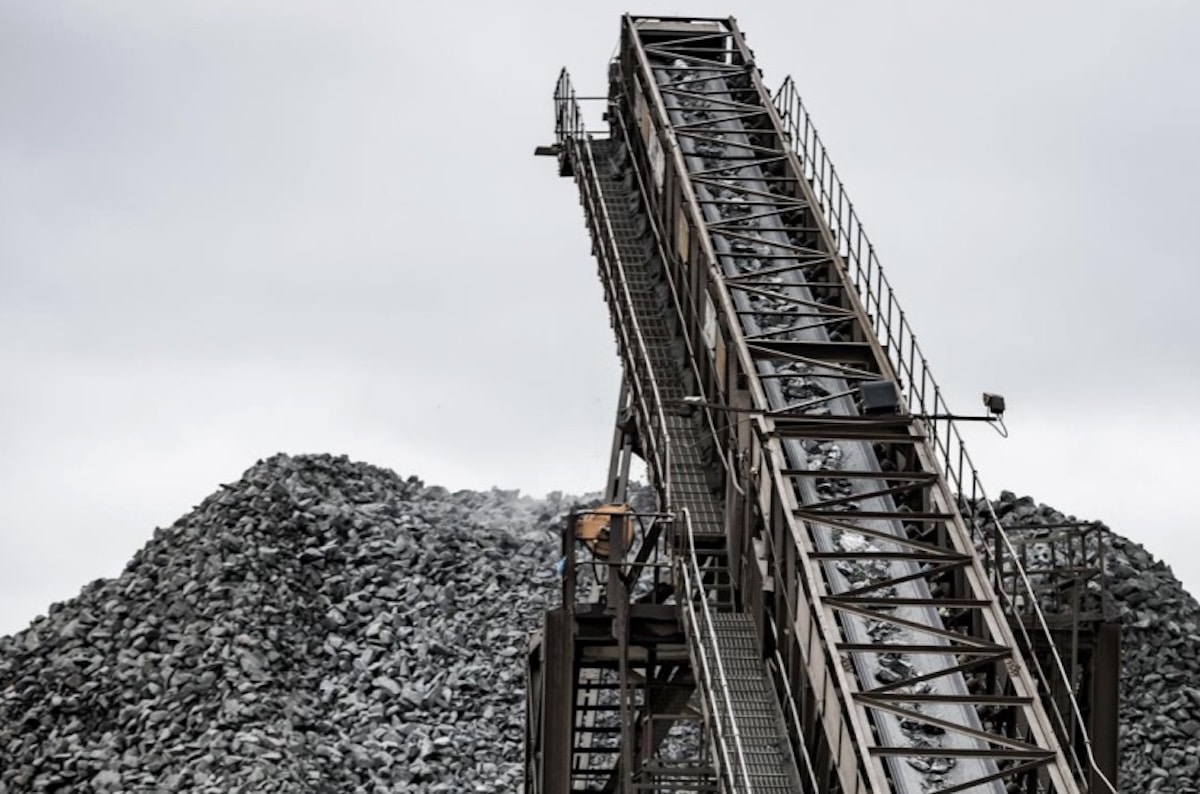
    HTI Group – owner of Leitner and its Agudio Flyingbelt, cableway and ropeway bulk haulage systems – is acquiring a majority stake in South Tyrol-based Seik to expand its materials handling portfolio. The deal consolidates design and supply of suspended conveyor and ropeway solutions for bulk materials and single-load transport under one industrial group, targeting mine sites and quarries with difficult topography or long overland haul distances.

    Technical Brief

    • HTI becomes majority shareholder in Seik, integrating ropeway and conveyor engineering under one ownership structure.
    • Leitner’s existing ropeway expertise combines with Seik’s materials handling know-how for complex terrain alignments.
    • Agudio’s Flyingbelt technology can now be paired with Seik’s conventional conveyors in hybrid haulage layouts.
    • Single-load ropeway systems and bulk suspended conveyors can be engineered as one coordinated materials handling package.

    Our Take

    For projects relying on ropeways, aerial tramways or steep-incline haulage, the combination of Leitner, Agudio and Seik under High Technology Industries SpA likely means more integrated design-and-supply packages, which can reduce interface risk at the feasibility and EPCM stages.

    Geotechnical Software for Modern Teams

    Centralise site data, logs, and lab results with GEODB-io, CMRR-io, and HYDROGEO-io.

    No credit card required.

    • Save and export unlimited calculations
    • Advanced data visualisation
    • Generate professional PDF reports
    • Cloud storage for all your projects

    Prepared by collating external sources, AI-assisted tools, and Geomechanics.io’s proprietary mining database, then reviewed for technical accuracy & edited by our geotechnical team.

    Related Articles
    Alemlube Dingo pumps: maintenance and contamination control notes for mine fleets
    Mining
    about 3 hours ago

    Alemlube Dingo pumps: maintenance and contamination control notes for mine fleets

    Alemlube is supplying its Dingo series transfer pumps to mine sites to streamline handling of multiple fluids such as diesel, oils and coolants through a single, modular system. The electric and air-operated Dingo units are offered in multiple sizes to match different flow and viscosity requirements, enabling centralised storage and distribution rather than scattered drum pumps. For maintenance teams, the focus is on fast swap-out of pumps and components, reducing fluid cross-contamination risk and cutting unplanned downtime on large mobile fleets.

    Geopolitical shocks build copper’s bull case: supply–demand lens for mine planners
    Mining
    about 9 hours ago

    Geopolitical shocks build copper’s bull case: supply–demand lens for mine planners

    Geopolitical shocks from the US–Iran conflict are strengthening copper’s bull case, with Sprott analyst Jacob White forecasting that electrification, data centres and grid upgrades could lift these “strategic” uses from 32% of demand in 2024 to 45% by 2040, and noting this demand is less price-sensitive than construction. On the supply side, closure of the Strait of Hormuz has nearly doubled sulfuric acid prices, threatening SX-EW output that supplies about 4.8 Mt of copper and depends on sulfur flows from countries providing 49% of global sulfur trade. Despite higher sulfuric acid and diesel costs, Sprott says almost all copper mines remain profitable at the current US$13,000/t spot price, with copper equities already up 7.98% in April.

    Tía María’s whiplash year: regulatory risk lessons for mine project teams
    Mining
    about 10 hours ago

    Tía María’s whiplash year: regulatory risk lessons for mine project teams

    Peru’s $1.8 billion Tía María copper project saw its exploitation permit voided on 19 March 2026 and reissued on 20 April, despite being 23% built and targeting 120,000 tonnes of copper per year by early 2027, exposing acute regulatory volatility. Minem cited incomplete waste-dump design and inadequate scheduling, yet the rapid reversal amid a fragmented presidential race with 35 candidates shows how technical findings are weaponised by shifting political forces and local opposition in the Tambo Valley. With 200–400 permits, ~30 authorities and 5–15 year timelines now typical in Peru, operators must price in abrupt legal reversals even after construction approval.

    Related Industries & Products

    Mining

    Geotechnical software solutions for mining operations including CMRR analysis, hydrogeological testing, and data management.

    CMRR-io

    Streamline coal mine roof stability assessments with our cloud-based CMRR software featuring automated calculations, multi-scenario analysis, and collaborative workflows.

    HYDROGEO-io

    Comprehensive hydrogeological testing platform for managing, analysing, and reporting on packer tests, lugeon values, and hydraulic conductivity assessments.

    GEODB-io

    Centralised geotechnical data management solution for storing, accessing, and analysing all your site investigation and material testing data.

    AllGeotechnicalInfrastructureHazardsEnvironmental