Tía María’s whiplash year: regulatory risk lessons for mine project teams
Reviewed by Joe Ashwell
First reported on MINING.com
30 Second Briefing
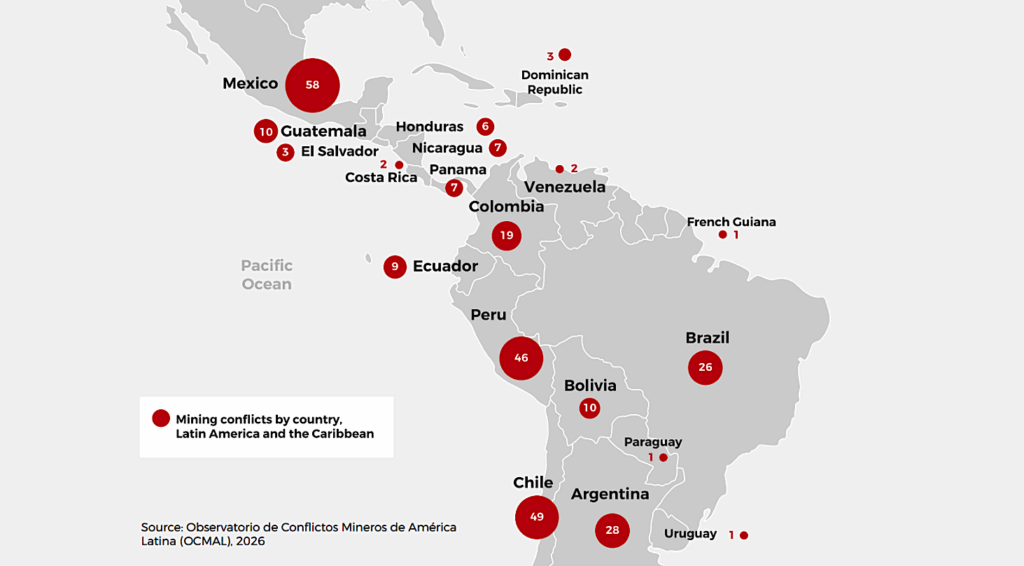
Peru’s $1.8 billion Tía María copper project saw its exploitation permit voided on 19 March 2026 and reissued on 20 April, despite being 23% built and targeting 120,000 tonnes of copper per year by early 2027, exposing acute regulatory volatility. Minem cited incomplete waste-dump design and inadequate scheduling, yet the rapid reversal amid a fragmented presidential race with 35 candidates shows how technical findings are weaponised by shifting political forces and local opposition in the Tambo Valley. With 200–400 permits, ~30 authorities and 5–15 year timelines now typical in Peru, operators must price in abrupt legal reversals even after construction approval.
Technical Brief
- Minem’s revocation cited an “incomplete waste-dump design” and “inadequate project scheduling” in the file.
- The exploitation permit was first granted by resolution in October 2025, then annulled on 19 March 2026.
- Reauthorisation on 20 April 2026 followed only after Southern Copper resubmitted corrected technical documentation.
- Tía María’s EIA has been repeatedly redesigned over more than a decade to address Tambo Valley water concerns.
- The 2019 construction approval was explicitly conditioned on “restoration of social stability” in the project area.
- Six protest-related deaths between 2011 and 2015 frame the project’s current social and political sensitivity.
- AMI estimates mine development in Peru now needs 200–400 permits and ~30 separate authorities.
- Across Latin America, AMI reports permitting timelines of 5–15 years versus 2–3 years in Australia.
- Peru’s economics institute attributes roughly $7 billion in copper projects stalled to illegal mining interference.
- Tía María is one of 12 projects totalling ~$11.3 billion expected to start construction in 2025–26, now reassessing regulatory risk.
Our Take
Southern Copper and Grupo México feature repeatedly in our recent copper coverage, and the rapid revoke–reauthorise cycle at Tía María contrasts with the more straightforward permitting paths seen for peers like Chinalco in Peru in the 20 April 2026 item, underscoring how asset-specific social risk can override national policy signals.
The estimate that over 25% of global copper supply is constrained by ESG roadblocks aligns with several other copper-tagged pieces in our database, suggesting that long-lead projects in Latin America such as Tía María are increasingly being treated by investors as optionality rather than base-case supply in medium-term market balances.
Peru’s need for 200–400 permits across roughly 30 authorities, versus the 2–3 year timelines cited for Australia in the article facts, helps explain why Latin American copper projects dominate our ‘Projects’ tag: operators are now routinely building multi-year regulatory and community engagement teams into upfront capex for assets like Tía María, Corani and Tantahuatay.
Prepared by collating external sources, AI-assisted tools, and Geomechanics.io’s proprietary mining database, then reviewed for technical accuracy & edited by our geotechnical team.
Related Articles

Related Industries & Products
Mining
Geotechnical software solutions for mining operations including CMRR analysis, hydrogeological testing, and data management.
Construction
Quality control software for construction companies with material testing, batch tracking, and compliance management.
CMRR-io
Streamline coal mine roof stability assessments with our cloud-based CMRR software featuring automated calculations, multi-scenario analysis, and collaborative workflows.
HYDROGEO-io
Comprehensive hydrogeological testing platform for managing, analysing, and reporting on packer tests, lugeon values, and hydraulic conductivity assessments.
GEODB-io
Centralised geotechnical data management solution for storing, accessing, and analysing all your site investigation and material testing data.