Great British Railways regulation: risks to freight capacity and investment explained
Reviewed by Tom Sullivan
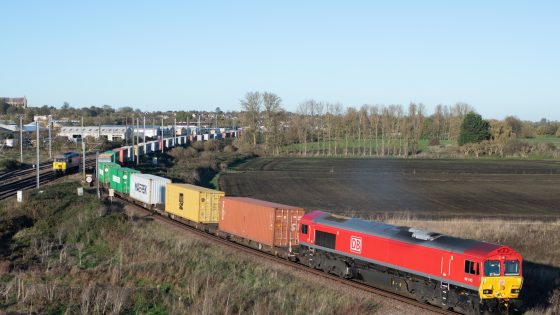
First reported on New Civil Engineer
30 Second Briefing
Rail freight and passenger operators warn that the proposed Great British Railways (GBR) structure could “mark its own homework”, with the infrastructure manager, system operator and contracting authority concentrated in a single body rather than separated between Network Rail, ORR and DfT. Stakeholders fear this blurring of roles will weaken independent economic regulation of track access charges and capacity allocation on key freight corridors such as Felixstowe–Nuneaton. Concerns also centre on deterring international investment in rolling stock and terminals, where long-term concessions and predictable regulatory frameworks are critical.
Technical Brief
- For future rail and intermodal projects, stable, independent track access regimes remain a key bankability condition.
Prepared by collating external sources, AI-assisted tools, and Geomechanics.io’s proprietary mining database, then reviewed for technical accuracy & edited by our geotechnical team.
Related Articles


Related Industries & Products
Construction
Quality control software for construction companies with material testing, batch tracking, and compliance management.
CMRR-io
Streamline coal mine roof stability assessments with our cloud-based CMRR software featuring automated calculations, multi-scenario analysis, and collaborative workflows.
HYDROGEO-io
Comprehensive hydrogeological testing platform for managing, analysing, and reporting on packer tests, lugeon values, and hydraulic conductivity assessments.
GEODB-io
Centralised geotechnical data management solution for storing, accessing, and analysing all your site investigation and material testing data.