Geomechanics.io

  • Free Tools
Sign UpLog In

Geomechanics.io

Geomechanics, Simplified.

© 2026 Geomechanics.io. All rights reserved.

Geomechanics.io

CMRR-ioGEODB-ioHYDROGEO-ioQCDB-ioFree Tools & CalculatorsBlogLatest Industry News

Industries

MiningConstructionTunnelling

Company

Terms of UsePrivacy PolicyLinkedIn
    AllGeotechnicalMiningInfrastructureMaterialsHazardsEnvironmentalSoftwarePolicy
    Standard/Guideline
    Safety

    Government control of building professions: regulatory shift for UK engineers

    December 17, 2025|

    Reviewed by Tom Sullivan

    Government control of building professions: regulatory shift for UK engineers

    First reported on The Construction Index

    30 Second Briefing

    Government plans to create a Single Construction Regulator to take central control of built environment professions, arguing that current self-regulation by bodies such as building control and architects’ institutions is too fragmented and inconsistent. A call for evidence is scheduled for spring 2026, with a full strategy and detailed regulatory framework for competence, oversight and enforcement due in spring 2027. The model will draw on safety regimes in aviation, energy and healthcare, and explicitly link regulation of people, products and buildings, signalling tighter accountability for designers, inspectors and contractors.

    Technical Brief

    • Government explicitly criticises historic professional institutions’ self-regulation as failing to ensure consistent public protection.
    • Current regime described as “too complex and fragmented”, with no body holding a complete system-wide view.
    • Many built environment roles are either entirely self-regulated or not regulated at all in statute.
    • Oversight by existing professional bodies varies in legal status, governance structure and public-interest obligations.
    • Government notes absence of consistent competence definitions, enforcement mechanisms and public accountability standards across professions.
    • Present arrangements create “limited consequences” for poor practice and weak incentives for consistently compliant dutyholders.
    • Aviation, energy and healthcare safety regimes will be used as explicit comparators for construction competence oversight.

    Our Take

    Among the 50 Policy stories in our coverage, the United Kingdom features frequently in pieces tagged Standard/Guideline and Safety, signalling that UK regulators are moving faster than many peers on codifying responsibilities in the built environment.

    A formal call for evidence by spring 2026 followed by a strategy in 2027 gives UK building and engineering professions a relatively short window to influence scope and avoid overly prescriptive competency rules that could constrain specialist geotechnical and structural roles.

    For practitioners in the UK, this timeline also means that any internal competence frameworks, CPD schemes, and safety management systems aligned early to likely government expectations may later be leveraged as proof of compliance once the built environment strategy is finalised.

    Geotechnical Software for Modern Teams

    Centralise site data, logs, and lab results with GEODB-io, CMRR-io, and HYDROGEO-io.

    No credit card required.

    • Save and export unlimited calculations
    • Advanced data visualisation
    • Generate professional PDF reports
    • Cloud storage for all your projects

    Prepared by collating external sources, AI-assisted tools, and Geomechanics.io’s proprietary mining database, then reviewed for technical accuracy & edited by our geotechnical team.

    Related Articles

    ISA seabed mining rules: benefit-sharing deadlock explained for project teams
    Policy
    3 days ago

    ISA seabed mining rules: benefit-sharing deadlock explained for project teams

    Deep seabed mining remains legally blocked after legal scholars Aline Jaeckel and Erik van Doorn argued that the International Seabed Authority cannot approve exploitation in areas like the Clarion-Clipperton Zone until separate benefit-sharing regulations, controlled by the ISA Assembly, are adopted. The ISA’s Finance Committee only produced a first draft benefit-sharing framework in 2024, centred on a Common Heritage Fund, while about 40 countries now support a moratorium and African states oppose using shared funds for remediation. Companies including The Metals Company, Impossible Metals and Lockheed Martin are advancing CCZ plans despite this regulatory deadlock.

    UK boom lifts anti-dumping probe: procurement and safety notes for engineers
    Policy
    11 days ago

    UK boom lifts anti-dumping probe: procurement and safety notes for engineers

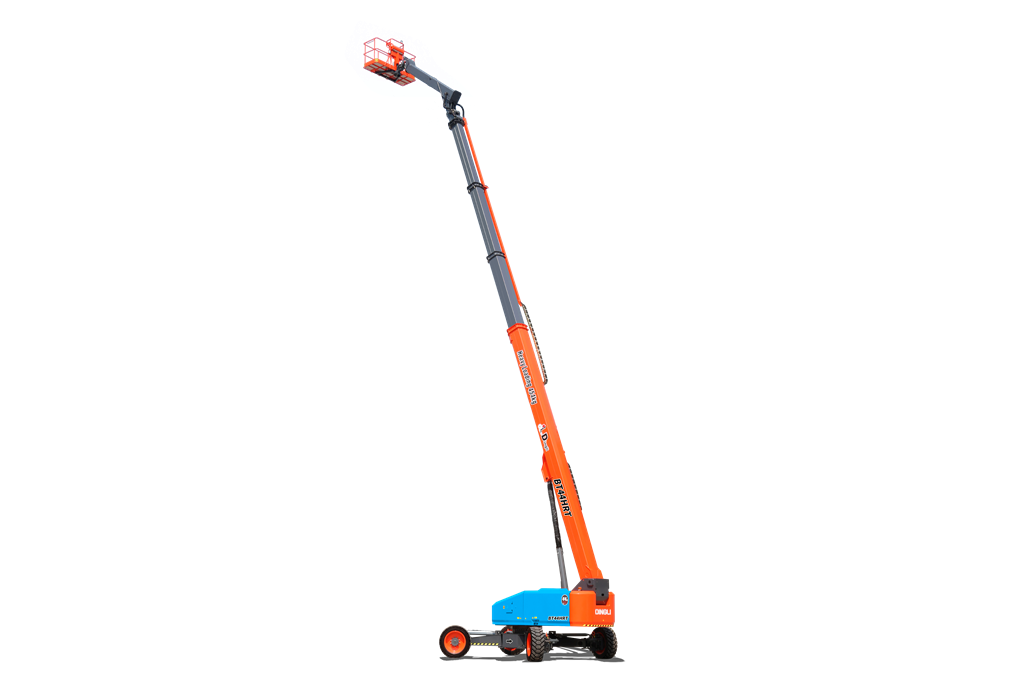
    An anti-dumping and anti-subsidy investigation has been opened by the UK Trade Remedies Authority into Chinese-made boom lifts, following a complaint from UK manufacturer Niftylift. The probe covers telescopic and articulated boom lifts, including sub-assemblies, with working heights of 6 m and above, such as models like the Dingli BT44HRT now entering the UK market. Scissor lifts, forklifts, vertical mast lifts, mobile self-propelled cranes and motor vehicles with integrated boom or scissor assemblies are explicitly excluded, so procurement teams must check machine classifications carefully.

    Engineers Against Poverty chair: governance, carbon and cost lessons for project teams
    Policy
    11 days ago

    Engineers Against Poverty chair: governance, carbon and cost lessons for project teams

    Engineers Against Poverty chair Richard Threlfall calls for the engineering, infrastructure and construction profession to lead on cutting whole‑life emissions and controlling capital cost overruns in major civils programmes. He argues that effective infrastructure governance must move beyond compliance to active stewardship of carbon, cost and social outcomes, with engineers shaping procurement models and performance metrics rather than leaving them to financiers and policymakers. For practitioners, this signals greater responsibility for transparent cost baselines, carbon accounting and value-for-money evidence on large public works.

    Related Industries & Products

    Construction

    Quality control software for construction companies with material testing, batch tracking, and compliance management.

    QCDB-io

    Comprehensive quality control database for manufacturing, tunnelling, and civil construction with UCS testing, PSD analysis, and grout mix design management.