GoldMining’s São Jorge PEA: economics, capex and mine plan notes for engineers
Reviewed by Tom Sullivan
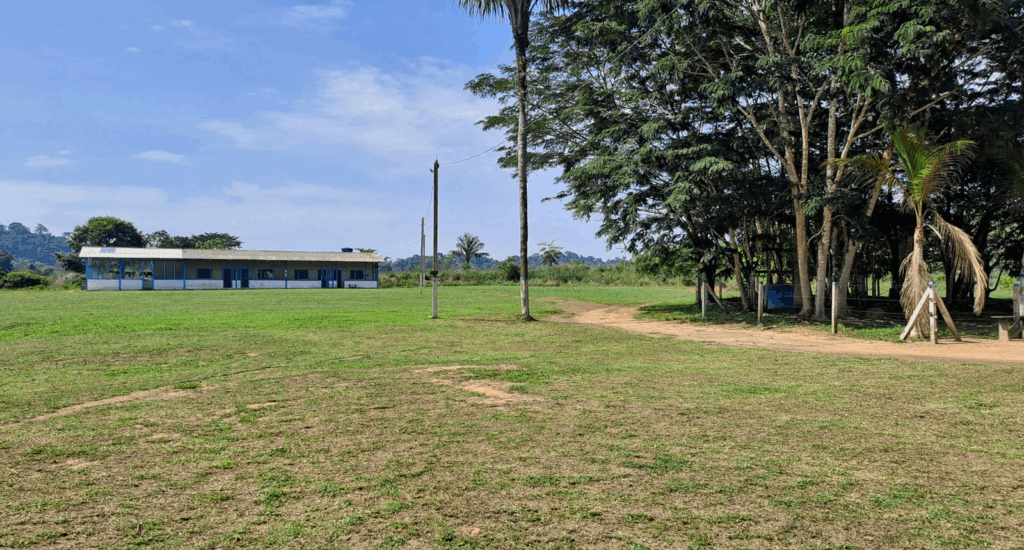
First reported on MINING.com
30 Second Briefing
GoldMining’s São Jorge project in Pará, northern Brazil, has a new PEA outlining a 10.6-year open-pit operation with post-tax NPV (5%) of US$532 million, 42.4% IRR and initial capex of US$202.2 million at a US$3,500/oz gold price. The study envisages average output of 51,250 oz/y, peaking at 57,200 oz/y in years two to four, with all-in sustaining costs of US$1,164/oz. Resources stand at 19.4 Mt indicated at 1.0 g/t (624,000 oz) and 5.5 Mt inferred at 0.72 g/t (129,000 oz), supported by nearby grid power, paved highways and the town of Novo Progresso.
Technical Brief
- PEA assumes a long-term gold price of US$3,500/oz, materially driving project economics.
- Existing grid power lines and paved highways near Novo Progresso reduce reliance on greenfield infrastructure builds.
- Local skilled workforce availability at Novo Progresso is expected to limit labour import and camp scale.
- GoldMining has nine development projects across the Americas, with São Jorge being its third with an economic study.
- Market reaction: GoldMining’s share price rose ~1% to C$1.23 following release of the PEA.
- Company market capitalisation sits at about C$258.9 million, below São Jorge’s stated post-tax NPV, indicating portfolio optionality.
- Higher gold price assumptions are increasingly enabling smaller open-pit projects like São Jorge to clear investment hurdles.
Our Take
With a post-tax NPV of $532 million against a C$258.9 million market value, São Jorge in Brazil effectively gives GoldMining embedded leverage similar to what our database shows for US GoldMining’s Whistler PEA in Alaska, signalling that both vehicles are being used as optionality plays on gold rather than fully valued development stories.
The indicated and inferred grades at São Jorge are modest, so the strong 42.4% IRR implies that project economics in northern Brazil hinge on scale and cost control; this contrasts with many higher-grade but higher-capex gold projects in the 1188 Mining stories, where capital intensity rather than grade is the main constraint.
GoldMining’s presence in Latin America alongside USA Rare Earth’s Brazil-linked rare earths activity in recent coverage suggests that permitting and environmental scrutiny in Brazil—already flagged by the ‘Environmental’ incident tag here—will be a key risk variable for both precious and critical mineral projects in that jurisdiction.
Prepared by collating external sources, AI-assisted tools, and Geomechanics.io’s proprietary mining database, then reviewed for technical accuracy & edited by our geotechnical team.
Related Articles
Related Industries & Products
Mining
Geotechnical software solutions for mining operations including CMRR analysis, hydrogeological testing, and data management.
Construction
Quality control software for construction companies with material testing, batch tracking, and compliance management.
CMRR-io
Streamline coal mine roof stability assessments with our cloud-based CMRR software featuring automated calculations, multi-scenario analysis, and collaborative workflows.
HYDROGEO-io
Comprehensive hydrogeological testing platform for managing, analysing, and reporting on packer tests, lugeon values, and hydraulic conductivity assessments.
GEODB-io
Centralised geotechnical data management solution for storing, accessing, and analysing all your site investigation and material testing data.