Finland’s longest and tallest bridge: cable-stayed design notes for engineers
Reviewed by Tom Sullivan
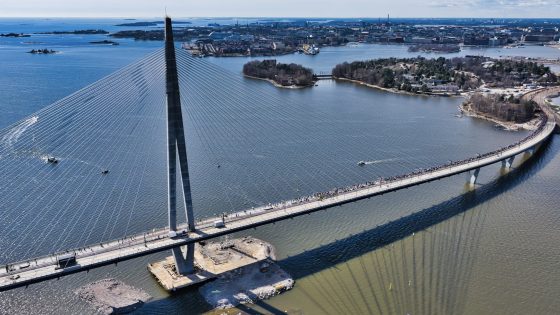
First reported on New Civil Engineer
30 Second Briefing
Finland has opened its longest and tallest bridge, a new cable-stayed structure in Helsinki designed as a major urban landmark and key transport link. The bridge uses stay cables to carry long main spans with a minimal pier footprint, improving navigation clearance and reducing foundation works in the water. For designers and contractors, the project signals continued demand for complex cable-stayed solutions in Nordic climates, with associated challenges in ice loading, wind behaviour and long-term cable maintenance.
Technical Brief
- Cable-stayed configuration concentrates vertical loads into a limited number of pylons, reducing in-water foundation count.
- Location within Helsinki’s harbour setting implies navigation channel constraints and ice-induced lateral loading on piers.
- Long main span length demands careful stay-cable fatigue detailing and inspection access for Nordic de-icing regimes.
- Urban landmark intent suggests integrated architectural lighting and maintenance gantries, influencing dead load and cable anchorage design.
- Proximity to dense city fabric likely required staged construction and temporary works minimising disruption to existing transport corridors.
- Finnish climate implies allowance for thermal gradients across the deck, bearings and expansion joints over the extended span.
Prepared by collating external sources, AI-assisted tools, and Geomechanics.io’s proprietary mining database, then reviewed for technical accuracy & edited by our geotechnical team.


