DRC revives $29B Minefor iron ore export plan: scale and logistics lens for engineers
Reviewed by Joe Ashwell
First reported on MINING.com
30 Second Briefing
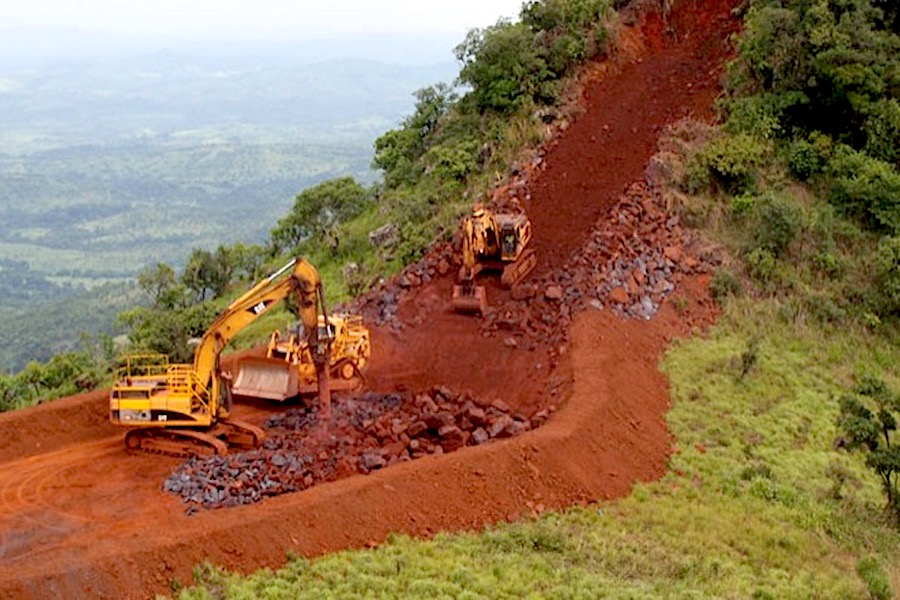
The Democratic Republic of Congo is reviving the Mines de fer de la Grande Orientale (Minefor) plan, a $29 billion iron ore export scheme targeting 15–20 billion tonnes of >60% Fe resources and an initial 50 Mt/y operation scalable to 300 Mt/y, about 2.5 times Simandou’s planned 120 Mt/y. The concept hinges on a greenfield bulk rail corridor and new Atlantic deep-water port to move ore from deposits likely including Banalia in Tshopo province, previously tied to Dan Gertler–linked Oriental Iron Company. Kinshasa has formed an inter-ministerial commission and is pitching Minefor, with total investment needs floated at “a little more than $50 billion”, to the US as part of a wider security and strategic minerals partnership, but no binding funding or defined orebody has yet been disclosed.
Technical Brief
- Analysts link the concept to Banalia in Tshopo province, previously licensed to Oriental Iron Company, sanctioned in 2018.
- Kinshasa intends to include Minefor on a funding “wish‑list” to the US, tied to security cooperation in the east.
- Project is being pitched within a US–DRC strategic minerals partnership and a DRC–Rwanda peace framework promoted by Washington.
- Government notes interest from international institutional investors but confirms there are no legal or funding commitments yet.
- Analysts stress bankability depends on identifying a specific anchor orebody and financing entirely greenfield rail and Atlantic port infrastructure.
Our Take
If the Mines de fer de la Grande Orientale complex in the Democratic Republic of Congo were to approach its indicated potential production capacity, it would more than double the targeted nameplate output of Guinea’s Simandou iron ore project, signalling possible long-term pressure on higher-cost iron ore producers if logistics and governance risks can be managed.
The 60%-plus iron grade reported for the Minefor area positions this iron ore in the same quality bracket as premium seaborne fines, which in our database typically secure pricing uplifts and make rail and port infrastructure investments more bankable over multi-decade horizons.
With the Oriental Iron Company sanctions dating from 2018 and the project now being revived, operators and financiers such as BMO Capital Markets will likely scrutinise compliance and ownership chains more heavily than in earlier Central African iron ore ventures, especially given U.S. Treasury involvement in past actions.
Prepared by collating external sources, AI-assisted tools, and Geomechanics.io’s proprietary mining database, then reviewed for technical accuracy & edited by our geotechnical team.
Related Articles
Related Industries & Products
Mining
Geotechnical software solutions for mining operations including CMRR analysis, hydrogeological testing, and data management.
Construction
Quality control software for construction companies with material testing, batch tracking, and compliance management.
CMRR-io
Streamline coal mine roof stability assessments with our cloud-based CMRR software featuring automated calculations, multi-scenario analysis, and collaborative workflows.
HYDROGEO-io
Comprehensive hydrogeological testing platform for managing, analysing, and reporting on packer tests, lugeon values, and hydraulic conductivity assessments.
GEODB-io
Centralised geotechnical data management solution for storing, accessing, and analysing all your site investigation and material testing data.