Geomechanics.io

  • Free Tools
Sign UpLog In

Geomechanics.io

Geomechanics, Streamlined.

© 2026 Geomechanics.io. All rights reserved.

Geomechanics.io

CMRR-ioGEODB-ioHYDROGEO-ioQCDB-ioFree Tools & CalculatorsBlogLatest Industry News

Industries

MiningConstructionTunnelling

Company

Terms of UsePrivacy PolicyLinkedIn
    Standard/Guideline
    Sustainability

    Defra land use framework and quarry sector omission: planning risks for engineers

    March 19, 2026|

    Reviewed by Tom Sullivan

    Defra land use framework and quarry sector omission: planning risks for engineers

    First reported on The Construction Index

    30 Second Briefing

    Defra’s new land use framework for England prioritises safeguarding the most productive agricultural land and reallocating lower‑grade farmland for natural flood management, but omits any reference to quarrying or construction minerals. The Mineral Products Association, whose members supply sand, gravel, masonry aggregates and agricultural lime and contribute £6.7bn GVA, says its 2025 consultation response was ignored and warns that mineral extraction’s role in rural economies and biodiversity net gain is being sidelined. The omission raises planning risks for long‑term aggregates supply to housing, infrastructure and farm productivity.

    Technical Brief

    • Defra’s framework explicitly covers housing, agriculture, nature recovery and “other land uses”, but omits mineral extraction.
    • Fragmented land-use decision-making is blamed for three of the five worst harvests occurring in the last five years.
    • A third of English farmland is reported as now at high risk of flooding, driving natural flood management priorities.
    • Quarry outputs cited include sand, gravel, masonry aggregates and agricultural lime, all tied directly to rural land parcels.
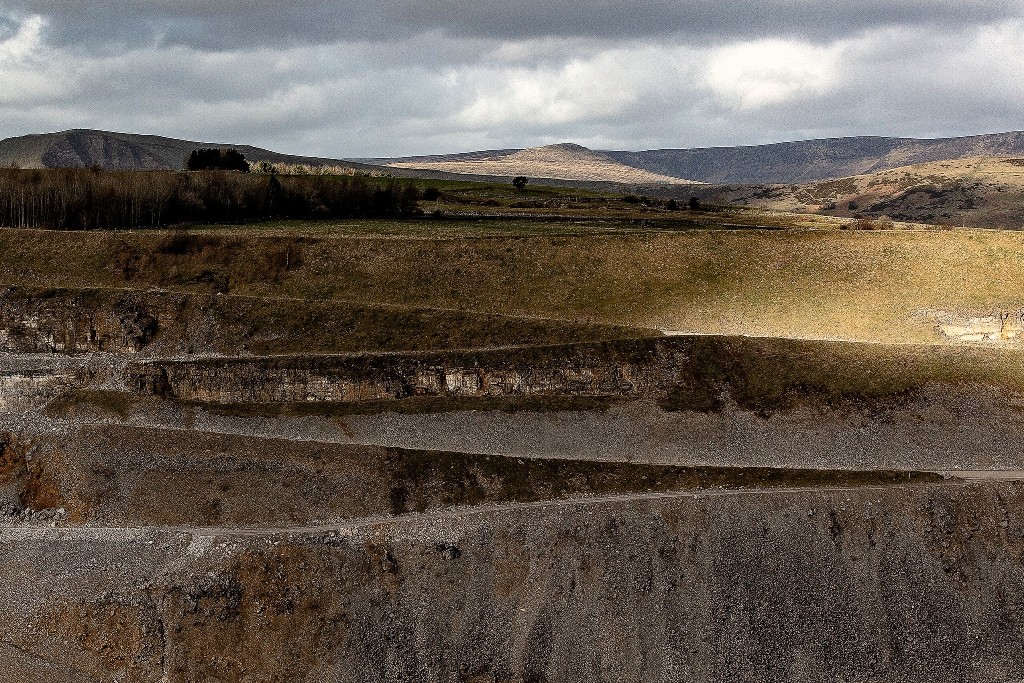
    • MPA notes quarry sites occupy a relatively modest land area yet deliver post-extraction restoration and habitats.
    • Biodiversity net gain is identified by MPA as a specific outcome of quarry restoration that Defra has overlooked.
    • Environment Agency stresses using lower‑grade agricultural land for natural flood management to cut flood risk and boost biodiversity.

    Our Take

    Defra’s role in this sand and gravel debate sits alongside mounting scrutiny of its environmental performance: a recent item in our database covers the Office for Environmental Protection issuing formal notices to Defra and the Environment Agency over suspected failures on the EU Water Framework Directive, which may make regulators more cautious about granting extraction‑related permits in England.

    Three of the five worst harvests on record occurring in the last five years, combined with CPRE’s involvement, suggests that future policy on agricultural lime in England is likely to be framed through a food‑security and soil‑health lens, giving farming and rural‑land advocates additional leverage in any revisions to mineral planning guidance.

    Geotechnical Software for Modern Teams

    Centralise site data, logs, and lab results with GEODB-io, CMRR-io, and HYDROGEO-io.

    No credit card required.

    • Save and export unlimited calculations
    • Advanced data visualisation
    • Generate professional PDF reports
    • Cloud storage for all your projects

    Prepared by collating external sources, AI-assisted tools, and Geomechanics.io’s proprietary mining database, then reviewed for technical accuracy & edited by our geotechnical team.

    Related Articles

    North Sea drilling vs green grid: capex reallocation insights for UK engineers
    Policy
    1 day ago

    North Sea drilling vs green grid: capex reallocation insights for UK engineers

    Continuing North Sea oil and gas extraction will cost the UK more than building a fully decarbonised electricity grid, according to new analysis comparing long-term offshore drilling expenditure with system-wide renewables and grid upgrade investment. RenewableUK chief executive Dan McGrail nonetheless calls for a balanced approach, arguing that offshore wind, grid-scale storage and interconnectors must grow alongside a managed decline in North Sea production. For civil and grid engineers, the findings point to major capital reallocation towards transmission reinforcement, subsea cabling and flexible generation assets rather than new offshore hydrocarbon infrastructure.

    Scotland infrastructure 2050 strategy: delivery and risk takeaways for engineers
    Policy
    1 day ago

    Scotland infrastructure 2050 strategy: delivery and risk takeaways for engineers

    Scotland is being urged by the Association for Consultancy and Engineering to adopt a long-term “Infrastructure 2050” strategy to speed up project delivery, attract private finance and tackle a widening engineering skills gap ahead of the next Holyrood election. Ace wants a clear pipeline for major assets such as transport corridors, energy networks and water infrastructure to give contractors and designers confidence to invest in capacity and digital delivery tools. For geotechnical and civil firms, a stable 25-year framework would shape ground investigation demand, risk allocation and procurement models across Scottish projects.

    Santos–Traditional Owner deal in Cooper Basin: access and closure lessons for engineers
    Policy
    3 days ago

    Santos–Traditional Owner deal in Cooper Basin: access and closure lessons for engineers

    Santos has launched the first stage of a “first-of-its-kind” agreement in the Cooper Basin that gives Traditional Owners formal responsibility to manage Country across its oil and gas tenements. The program establishes a Traditional Owner–led land management framework alongside Santos’ existing exploration and production activities, rather than relying solely on company-run heritage surveys. For mining and energy operators, this signals a shift towards co-designed access, monitoring and rehabilitation regimes that may materially affect project approvals, fieldwork scheduling and long-term closure planning in similar onshore basins.

    Related Industries & Products

    Mining

    Geotechnical software solutions for mining operations including CMRR analysis, hydrogeological testing, and data management.

    Construction

    Quality control software for construction companies with material testing, batch tracking, and compliance management.

    QCDB-io

    Comprehensive quality control database for manufacturing, tunnelling, and civil construction with UCS testing, PSD analysis, and grout mix design management.

    AllGeotechnicalMiningInfrastructureMaterialsHazardsEnvironmentalSoftwarePolicy