Geomechanics.io

  • Free Tools
Sign UpLog In
Built byBoxcut Studio

Geomechanics.io

Geomechanics, Streamlined.

© 2026 Geomechanics.io. All rights reserved.

Geomechanics.io

CMRR-ioGEODB-ioHYDROGEO-ioQCDB-ioFree Tools & CalculatorsBlogLatest Industry News

Industries

MiningConstructionTunnelling

Company

Terms of UsePrivacy PolicyLinkedIn
    Product
    Sustainability
    Projects

    Concretene’s £4.5m graphene admixture: mix design and carbon notes for engineers

    October 26, 2026|

    Reviewed by Tom Sullivan

    Concretene’s £4.5m graphene admixture: mix design and carbon notes for engineers

    First reported on The Construction Index

    30 Second Briefing

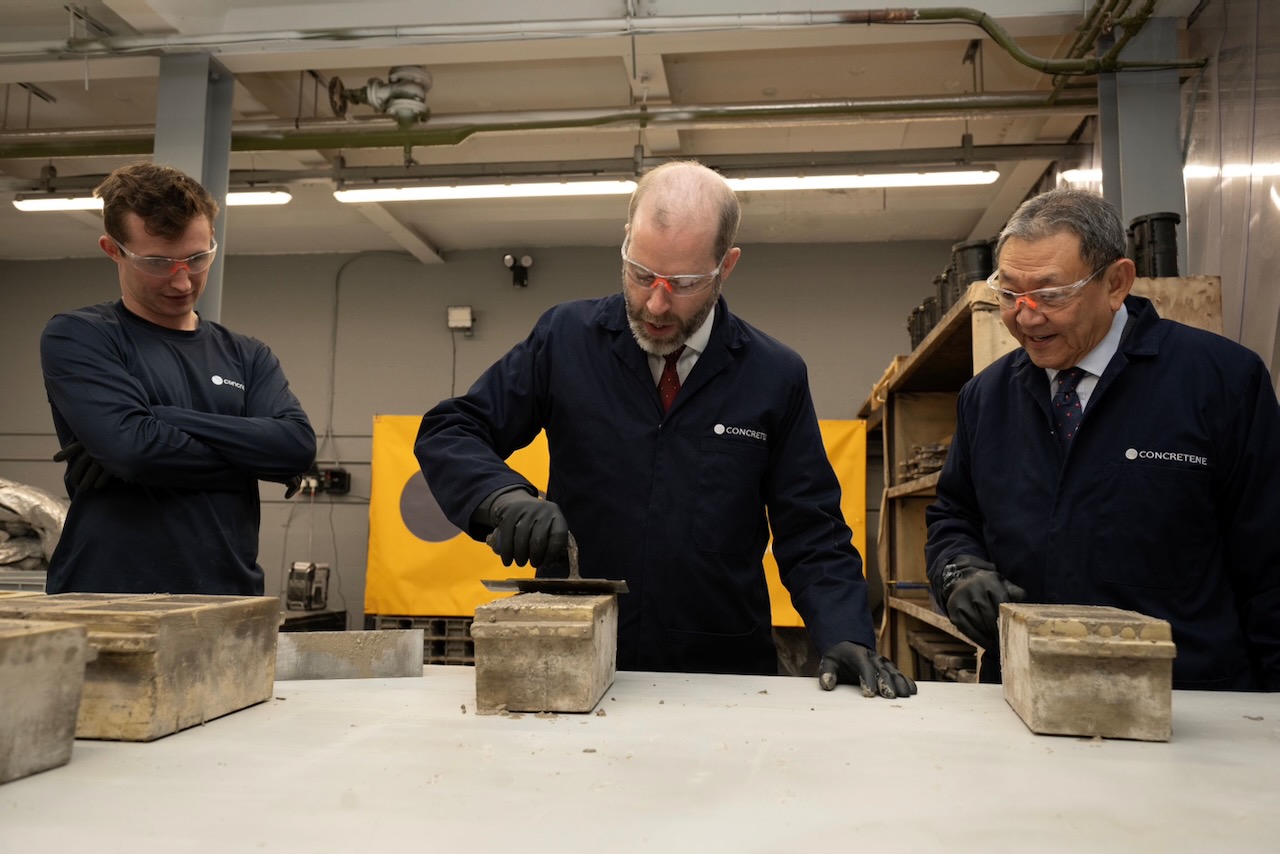
    Concretene has secured £4.5m to scale production of its biogas-derived graphene admixture, designed to cut cement content in standard mixes by 10–20% with no loss of strength, durability or changes to batching and placement. The University of Manchester spin-out will use wastewater biogas from United Utilities to manufacture carbon-negative graphene at multi-tonne scale in Manchester under a circular production model. Backed with £2m from NPIF II – PXN Equity Finance plus follow-on investment from LocalGlobe and Molten Ventures, the funding will support industrial-scale admixture manufacture and large concrete trials with partners including Arup.

    Technical Brief

    • Biogas feedstock is sourced from United Utilities’ local wastewater operations for graphene manufacture in Manchester.
    • Production is being engineered for “multiple-tonne” graphene output, targeting industrial rather than lab-scale volumes.
    • Concretene’s graphene admixture is formulated for concrete, cementitious materials and other construction products, not just ready-mix.
    • Arup is directly supporting technical development and industry adoption, indicating focus on design-in and specification pathways.
    • The admixture is positioned to reduce total raw material demand in built assets, not only cement tonnage.
    • Cost-neutrality at scale is an explicit design constraint, avoiding any premium over standard concrete pricing.
    • Funding includes £2m from NPIF II – PXN Equity Finance, managed by PXN Ventures under Northern Powerhouse Investment Fund II.

    Our Take

    With the University of Manchester already central to large schemes like the £530m Passivhaus Fallowfield campus redevelopment, having Concretene’s graphene–cement work anchored in the same city increases the chances of early, full-scale trials on live projects rather than just lab or pilot pours.

    A 10–20% cement reduction window is significant in the context of our Materials coverage, where most low-clinker or SCM-based mixes struggle to maintain standard batching and placement practices; this positions graphene as a potential drop-in optimisation rather than a wholesale mix redesign for UK contractors.

    The presence of infrastructure owner United Utilities alongside investors such as NPIF II and LocalGlobe suggests Concretene’s graphene admixture could be steered early towards water and wastewater assets in the United Kingdom, where long design lives make embodied carbon savings in cement particularly valuable over asset portfolios.

    Geotechnical Software for Modern Teams

    Centralise site data, logs, and lab results with GEODB-io, CMRR-io, and HYDROGEO-io.

    No credit card required.

    • Save and export unlimited calculations
    • Advanced data visualisation
    • Generate professional PDF reports
    • Cloud storage for all your projects

    Prepared by collating external sources, AI-assisted tools, and Geomechanics.io’s proprietary mining database, then reviewed for technical accuracy & edited by our geotechnical team.

    Related Articles
    Royal Engineers’ low‑resource concrete: durability and design notes for field engineers
    Materials
    3 days ago

    Royal Engineers’ low‑resource concrete: durability and design notes for field engineers

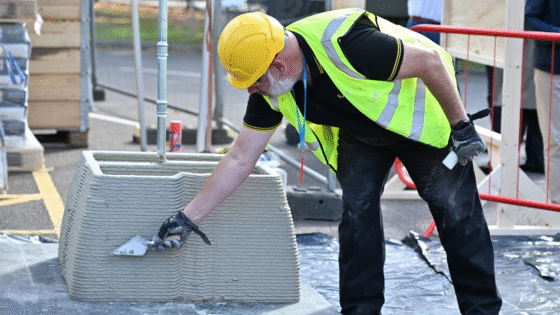
    Royal Engineers have trialled low-resource concrete mixes using crushed recycled brick as aggregate, salt water as mix water and on-site 3D printing to build structures in conflict and disaster zones where fresh water and conventional materials are scarce. The work focuses on rapidly deployable field production, aiming to print blast walls, shelters and foundations without fixed batching plants or potable water supplies. For civil and military engineers, the approach raises design questions around chloride-induced reinforcement corrosion, variable brick aggregate grading and verifying strength without standard laboratory testing.

    US critical materials $389M plan: quartz and fusion chips explained for engineers
    Materials
    4 days ago

    US critical materials $389M plan: quartz and fusion chips explained for engineers

    The US Commerce Department plans up to $389 million in semiconductor and power technology funding, including $56 million for Sibelco to develop next‑generation ultra‑high‑purity quartz purification, a key bottleneck material for chip fabrication. Helion and Commonwealth Fusion Systems could receive $175 million and $85 million respectively for high‑voltage power semiconductors, RF plasma‑heating chips and radiation‑hardened electronics for fusion generators operating under extreme electrical and radiation loads, while Vertical Semiconductor may get $73 million for vertical gallium nitride devices for AI data centre racks. All awards are preliminary and tied to minority, non‑voting federal equity stakes.

    Reduced carbon footprint calcined clay cement: design notes for UK ground engineers
    Materials
    6 days ago

    Reduced carbon footprint calcined clay cement: design notes for UK ground engineers

    A British-made calcined clay cement designed to cut the embodied carbon of concrete will be launched to the wider construction industry on Thursday 22 October. The supplementary cementitious material partially replaces Portland clinker in standard mixes, targeting substantial CO₂ reductions compared with CEM I while remaining compatible with existing batching plants and placement methods. Structural and geotechnical designers can use the material to lower whole-life carbon on foundations, retaining structures and slabs without major changes to mix design workflows or site practice.

    Related Industries & Products

    Construction

    Quality control software for construction companies with material testing, batch tracking, and compliance management.

    Mining

    Geotechnical software solutions for mining operations including CMRR analysis, hydrogeological testing, and data management.

    QCDB-io

    Comprehensive quality control database for manufacturing, tunnelling, and civil construction with UCS testing, PSD analysis, and grout mix design management.

    AllGeotechnicalInfrastructureHazardsEnvironmental