Geomechanics.io

  • Free Tools
Sign UpLog In

Geomechanics.io

Geomechanics, Streamlined.

© 2026 Geomechanics.io. All rights reserved.

Geomechanics.io

CMRR-ioGEODB-ioHYDROGEO-ioQCDB-ioFree Tools & CalculatorsBlogLatest Industry News

Industries

MiningConstructionTunnelling

Company

Terms of UsePrivacy PolicyLinkedIn
    AllGeotechnicalMiningInfrastructureMaterialsHazardsEnvironmentalSoftwarePolicy
    Projects

    Botswana diamond slump: diversification and exploration notes for mine planners

    February 10, 2026|

    Reviewed by Tom Sullivan

    Botswana diamond slump: diversification and exploration notes for mine planners

    First reported on MINING.com

    30 Second Briefing

    Diamond prices in prolonged slump, soft demand in the US and rising lab-grown supply are pushing Botswana, which supplies about 70% of De Beers’ rough diamonds and derives roughly one-third of national revenue and 75% of foreign exchange from the stones, to accelerate diversification. Mines minister Bogolo Joy Kenewendo told Indaba that only about 30% of Botswana’s territory has been explored, prompting the launch of a state-owned exploration company to generate geological data and de-risk copper and critical mineral projects. Namibia, Lesotho and South Africa are pursuing similar shifts towards base metals, PGMs, manganese and rare earths as US–China competition for energy-transition minerals intensifies.

    Technical Brief

    • Kenewendo explicitly links investor hesitation to high probability of “not hitting anything” in greenfield exploration.
    • Lesotho’s response includes building a broader mineral plus manufacturing base to buffer diamond revenue volatility.
    • South Africa is prioritising manganese, PGMs and rare earths to align with EV and renewable‑energy supply chains.

    Our Take

    Botswana’s push into copper and other energy transition minerals lines up with our wider coverage showing copper and gold dominating recent price-driven investment decisions, suggesting the country could attract explorers repositioning away from crowded Latin American and North American jurisdictions.

    With roughly 70% of Botswana’s territory still unexplored, the country is unusually under-drilled compared with many African peers in our database that are already heavily pegged for critical minerals, which gives early entrants more scope to secure district-scale land positions.

    The inclusion of US-based Black Pine’s low‑grade but large‑tonnage gold metrics in the same data stream underscores that investors are currently comfortable backing bulk-tonnage, lower-grade systems; that may be relevant if Botswana’s diversification strategy leans on large, open-pittable base metal or gold systems rather than only high-grade vein targets.

    Geotechnical Software for Modern Teams

    Centralise site data, logs, and lab results with GEODB-io, CMRR-io, and HYDROGEO-io.

    No credit card required.

    • Save and export unlimited calculations
    • Advanced data visualisation
    • Generate professional PDF reports
    • Cloud storage for all your projects

    Prepared by collating external sources, AI-assisted tools, and Geomechanics.io’s proprietary mining database, then reviewed for technical accuracy & edited by our geotechnical team.

    Related Articles
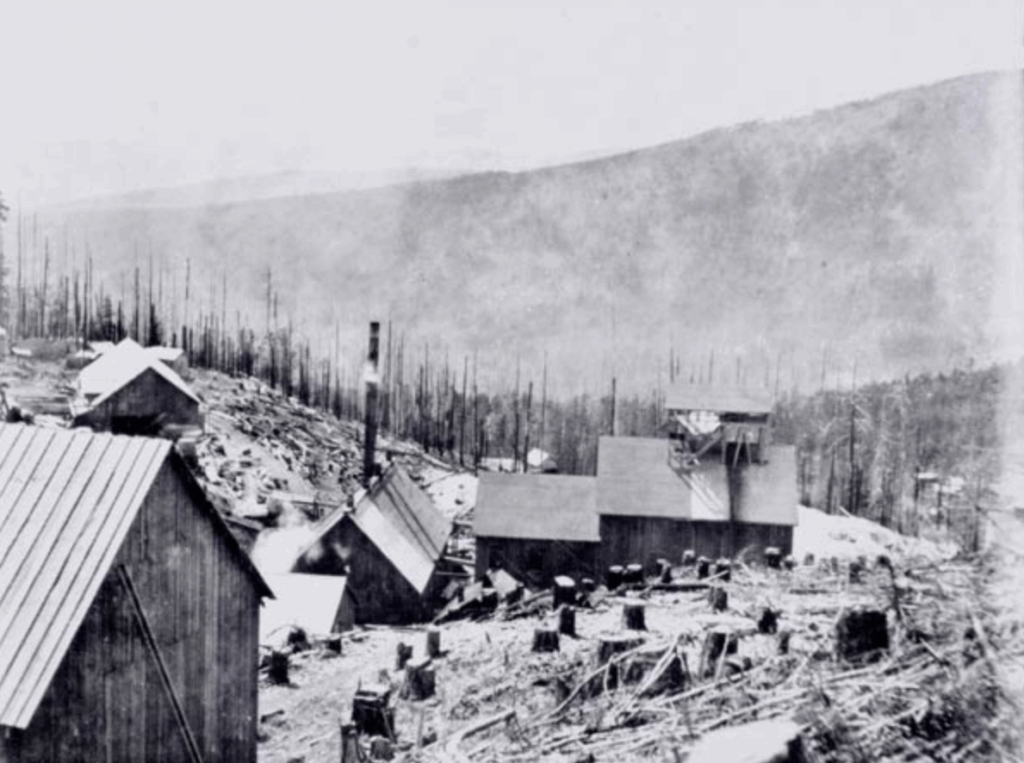
    Sasquatch Resources’ Mount Sicker waste rock: design and risk notes for mine engineers
    Mining
    about 8 hours ago

    Sasquatch Resources’ Mount Sicker waste rock: design and risk notes for mine engineers

    Sasquatch Resources is targeting roughly 300,000 tonnes of sulphide-bearing waste rock at the historic Mount Sicker copper-gold district on Vancouver Island, where legacy piles with a neutralisation potential of 0.2 and open shafts up to 200 feet deep continue to generate acid runoff and physical hazards. Modern sampling of the surface waste has returned average grades of about 2 g/t gold plus copper, silver and zinc, and the company plans to crush and process the material using density and X-ray fluorescence (XRF) ore-sorting in a closed-loop, reagent-free circuit. Because the project involves large-scale reprocessing without new mining, Sasquatch is working with regulators to craft a bespoke permitting pathway that could be replicated across an estimated 2,000 legacy mine sites in British Columbia.

    Mining companies’ new technology roadmaps: ERP design lessons for project teams
    Mining
    about 9 hours ago

    Mining companies’ new technology roadmaps: ERP design lessons for project teams

    Mining companies are redrawing 2026 technology roadmaps around cloud ERP platforms such as SAP, shifting from legacy spreadsheets and siloed systems to a single financial and operational backbone spanning finance, capital management, procurement, supply chain and maintenance. Clean-core architectures with extensibility and open interfaces are being used to plug in geology asset management, environmental monitoring and safety applications without heavy customisation, cutting technical debt and easing upgrades. With harmonised master data and automated consolidations delivering near real-time views of cash, capex and asset performance, miners can support AI-driven predictive maintenance and tighter working-capital control across multi-jurisdictional portfolios.

    Mining
    about 12 hours ago

    Echion XNO® battery launch with GUS: implications for mine electrification

    Echion has launched a commercial range of fast-charging, high‑power lithium‑ion batteries using its niobium‑based XNO® anode technology, produced in partnership with GUS Technology at GUS’s Zhongli manufacturing facility in Taiwan. The XNO® chemistry targets applications needing very high charge rates and power density, such as mining haul trucks, drills and underground fleets where current graphite‑anode packs struggle with rapid cycling and peak load demands. For mine electrification projects, the move signals growing availability of alternative anode chemistries that can better tolerate high C‑rates and harsh duty cycles.

    Related Industries & Products

    Mining

    Geotechnical software solutions for mining operations including CMRR analysis, hydrogeological testing, and data management.

    Construction

    Quality control software for construction companies with material testing, batch tracking, and compliance management.

    CMRR-io

    Streamline coal mine roof stability assessments with our cloud-based CMRR software featuring automated calculations, multi-scenario analysis, and collaborative workflows.

    QCDB-io

    Comprehensive quality control database for manufacturing, tunnelling, and civil construction with UCS testing, PSD analysis, and grout mix design management.

    HYDROGEO-io

    Comprehensive hydrogeological testing platform for managing, analysing, and reporting on packer tests, lugeon values, and hydraulic conductivity assessments.