BHP strike threat and iron ore rally: supply and pricing notes for mine planners
Reviewed by Joe Ashwell
First reported on MINING.com
30 Second Briefing
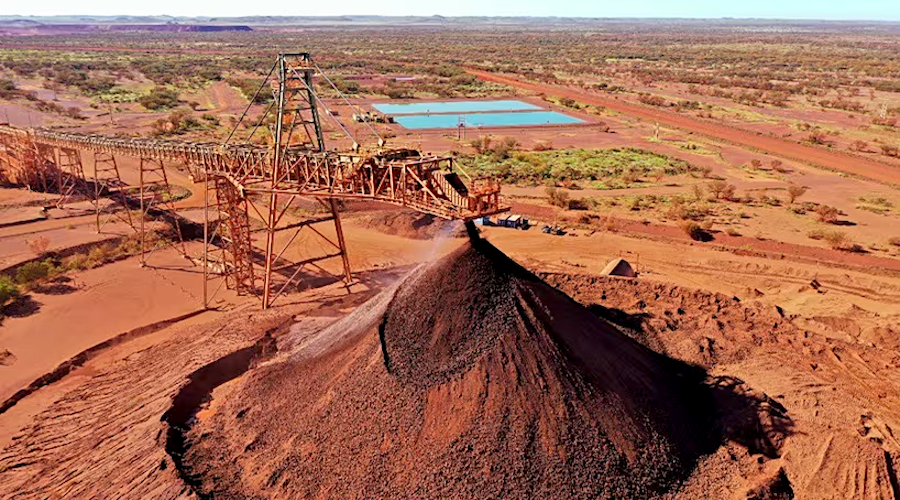
Iron ore prices are heading for their strongest week since early May, with Singapore Exchange futures up 0.6% to $99.35/t after clearing the $99 mark, driven by a looming strike at BHP’s Port Hedland export terminal in Western Australia. Unions plan an eight-hour stoppage on 16 July at the world’s largest iron ore shipping hub, threatening short-term export flows after three weak weeks tied to soft seasonal demand and elevated Chinese port stocks. Market focus is also on China’s unresolved restrictions on Fortescue’s Super Special Fines and guidance from China Mineral Resources Group to avoid new US dollar cargoes.
Technical Brief
- Price move occurred against a backdrop of narrowing steel mill margins and increased seaborne iron ore supply.
- Chinese port inventories remained elevated through June, indicating no immediate physical shortage despite price strength.
- The threatened BHP Port Hedland stoppage would be the first strike at the terminal in decades.
- Port Hedland is described as the world’s largest iron ore shipping hub, magnifying any short-duration disruption risk.
- China’s restrictions specifically target Fortescue’s Super Special Fines product, constraining one lower‑grade feedstock option.
- State‑backed China Mineral Resources Group has instructed several mills and traders to shun new US‑dollar cargoes.
- For other bulk export terminals, the episode underlines how even brief labour actions can re‑price seaborne supply risk.
Our Take
With iron ore futures on the Singapore Exchange hovering just under $100/t, any disruption at BHP’s Jimblebar and Port Hedland operations in Western Australia tightens margins for higher‑cost suppliers in India and the United States that our database already flags as more price‑sensitive than Pilbara producers.
The planned 16 July Port Hedland strike covered in the 8 July piece on BHP’s port workers suggests that even short, eight‑hour stoppages at this export terminal can have an outsized signalling effect on iron ore and steel pricing, compared with similar labour actions at non‑Pilbara ports.
Russian aluminium’s 95% share of available LME stocks, noted alongside iron ore and steel, underlines how metals buyers in China and elsewhere may increasingly arbitrage between ferrous (iron ore/steel) and non‑ferrous (aluminium) inputs, potentially dampening or amplifying price moves triggered by BHP or Fortescue supply news.
Prepared by collating external sources, AI-assisted tools, and Geomechanics.io’s proprietary mining database, then reviewed for technical accuracy & edited by our geotechnical team.
Related Articles

Related Industries & Products
Mining
Geotechnical software solutions for mining operations including CMRR analysis, hydrogeological testing, and data management.
CMRR-io
Streamline coal mine roof stability assessments with our cloud-based CMRR software featuring automated calculations, multi-scenario analysis, and collaborative workflows.
HYDROGEO-io
Comprehensive hydrogeological testing platform for managing, analysing, and reporting on packer tests, lugeon values, and hydraulic conductivity assessments.
GEODB-io
Centralised geotechnical data management solution for storing, accessing, and analysing all your site investigation and material testing data.