Allied Gold’s Sadiola expansion: throughput and circuit design notes for mine planners
Reviewed by Joe Ashwell
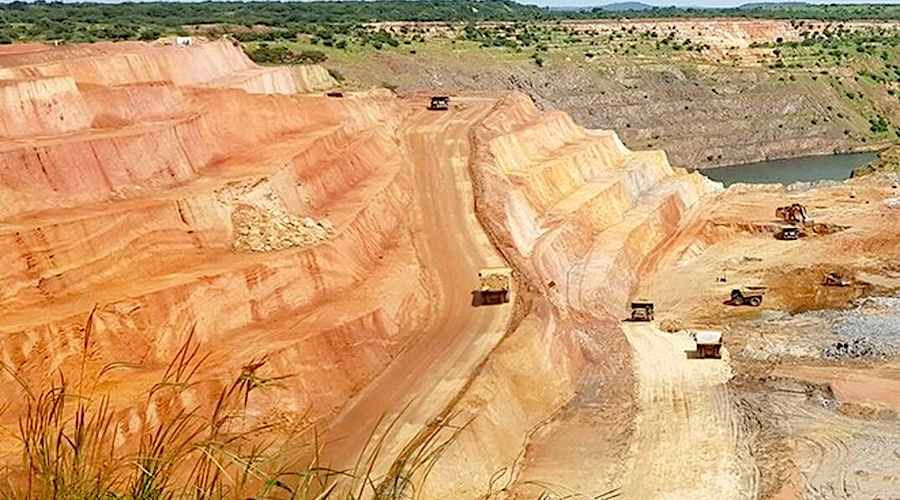
First reported on MINING.com
30 Second Briefing
Allied Gold has started Phase 1 expansion at the Sadiola mine in Mali, bringing a new fresh ore comminution circuit online to lift annual output to 200,000–230,000 oz, up 17–30% on 2023. The upgrade increases higher-grade fresh ore in mill feed from about 20% to as much as 60% at an expected throughput of 5.7 Mt/y, with the first full quarter of higher fresh-ore volumes due in Q1 2026. Engineering is advancing for a 2026 pre-leach thickener and plant-wide control system upgrade, underpinning a Phase 2 build-out through 2029 and supporting group guidance above 375,000 oz in 2025.
Technical Brief
- Phase 1 fresh-ore comminution circuit is now operational at Sadiola, processing ore through a new line.
- Allied targets about 60,000 oz from Sadiola in Q4 2025, ~40% above earlier 2025 quarterly averages.
- Company-wide Q4 2025 production is forecast above 113,000 oz, a 13% year-on-year increase.
- Pre-leach thickener installation is scheduled for 2026, adding fresh and transitional ore processing capacity.
- A plant-wide control system upgrade is being engineered to tighten process control and reduce operating costs.
- Phase 2 expansion is planned to start late 2026 and extend through to 2029 at Sadiola.
- Output growth also depends on strong contributions from Côte d’Ivoire operations, particularly the Bonikro mine.
- Allied maintains 2025 guidance above 375,000 oz, signalling confidence in ramp-up and integration of both phases.
Our Take
Shifting the Sadiola mill feed from about 20% to 60% fresh ore while lifting throughput to 5.7 Mt/y signals a move towards a higher-grade, harder-ore regime where comminution power and liner wear management will become more critical for Allied Gold’s operating costs.
The projected 17–30% production uplift versus 2023, with a 40% step-up in Q4 2025 and 13% year-on-year company-wide growth, suggests Allied Gold is positioning Sadiola and Bonikro to compete with mid-tier African gold producers that our database shows are also chasing multi-year, staged debottlenecking rather than single-step expansions.
With Phase 2 at Sadiola running through to 2029 in Mali and Bonikro in Côte d’Ivoire, Allied Gold is concentrating growth in West Africa, a region that in our recent gold coverage has combined relatively supportive mining codes with elevated security and political risk that can affect scheduling and contractor availability.
Prepared by collating external sources, AI-assisted tools, and Geomechanics.io’s proprietary mining database, then reviewed for technical accuracy & edited by our geotechnical team.
Related Articles

Related Industries & Products
Mining
Geotechnical software solutions for mining operations including CMRR analysis, hydrogeological testing, and data management.
CMRR-io
Streamline coal mine roof stability assessments with our cloud-based CMRR software featuring automated calculations, multi-scenario analysis, and collaborative workflows.
HYDROGEO-io
Comprehensive hydrogeological testing platform for managing, analysing, and reporting on packer tests, lugeon values, and hydraulic conductivity assessments.
GEODB-io
Centralised geotechnical data management solution for storing, accessing, and analysing all your site investigation and material testing data.