A47 Wansford–Sutton DCO revocation: design and risk takeaways for engineers
Reviewed by Tom Sullivan
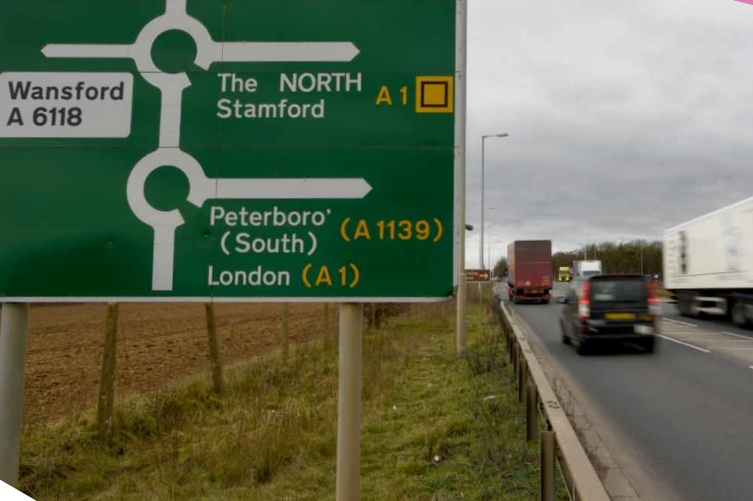
First reported on New Civil Engineer
30 Second Briefing
Government plans to revoke the Development Consent Order for dualling the A47 between Wansford and Sutton after cancelling scheme funding, halting a key upgrade on this single-carriageway section of the strategic east–west route. The scheme, previously promoted by National Highways, would have delivered a continuous two-lane dual carriageway with grade‑separated junctions to remove at‑grade right turns and improve junction spacing. Designers, geotechnical teams and contractors now face sunk design and ground investigation costs, with uncertainty over future corridor capacity and safety interventions.
Technical Brief
- Revocation of the Development Consent Order (DCO) removes the statutory planning basis for any safeguarded dualling alignment.
- Land acquisition, temporary possession powers and side‑road stopping‑up tied to the DCO will lapse once revoked.
- Any future capacity or safety scheme will require a fresh DCO application, environmental statement and consultation cycle.
- Ground investigation, topographical survey and utilities diversion design already completed now become abortive sunk costs.
- Existing at‑grade junctions and direct accesses remain, constraining options for interim low‑cost safety treatments.
- Local authority route strategies and development plans that assumed the consented alignment will need re‑modelling.
- For other Nationally Significant Infrastructure Projects, the case illustrates funding risk even after DCO consent is secured.
Our Take
Within our 731 Infrastructure stories, UK road schemes feature heavily in planning and consent disputes, so revocation of a Development Consent Order on the A47 is likely to be cited in future examinations as a precedent on how National Highways schemes are assessed and potentially unpicked.
For England’s strategic road network, losing a DCO at this stage typically forces promoters either to re-scope alignments or to re-prioritise other corridors, which can divert design and contractor capacity away from similar dualling projects in the United Kingdom pipeline.
Among the 1,993 project-tagged pieces in our database, UK highway schemes that stall at the consent stage often see cost inflation and design standard changes when re-bid, so any eventual resurrection of this A47 section would almost certainly face a higher cost base and updated design requirements.
Prepared by collating external sources, AI-assisted tools, and Geomechanics.io’s proprietary mining database, then reviewed for technical accuracy & edited by our geotechnical team.
Related Articles


Related Industries & Products
Construction
Quality control software for construction companies with material testing, batch tracking, and compliance management.
CMRR-io
Streamline coal mine roof stability assessments with our cloud-based CMRR software featuring automated calculations, multi-scenario analysis, and collaborative workflows.
HYDROGEO-io
Comprehensive hydrogeological testing platform for managing, analysing, and reporting on packer tests, lugeon values, and hydraulic conductivity assessments.
GEODB-io
Centralised geotechnical data management solution for storing, accessing, and analysing all your site investigation and material testing data.