Geomechanics, Streamlined.
© 2026 Geomechanics.io. All rights reserved.
Willmott Dixon has promoted Adam Worrall to managing director of its fit-out arm, Willmott Dixon Interiors, creating the MD role after he spent 18 months as deputy managing director and 25 years with the group. The business, previously led operationally by chief operating officer Roger Forsdyke without a formal MD position, now has Worrall focused on performance culture, clear accountability and team capability. He reports a strong project pipeline and says the division is already building a substantial order book for 2027–2028, signalling sustained demand for interior fit-out works.
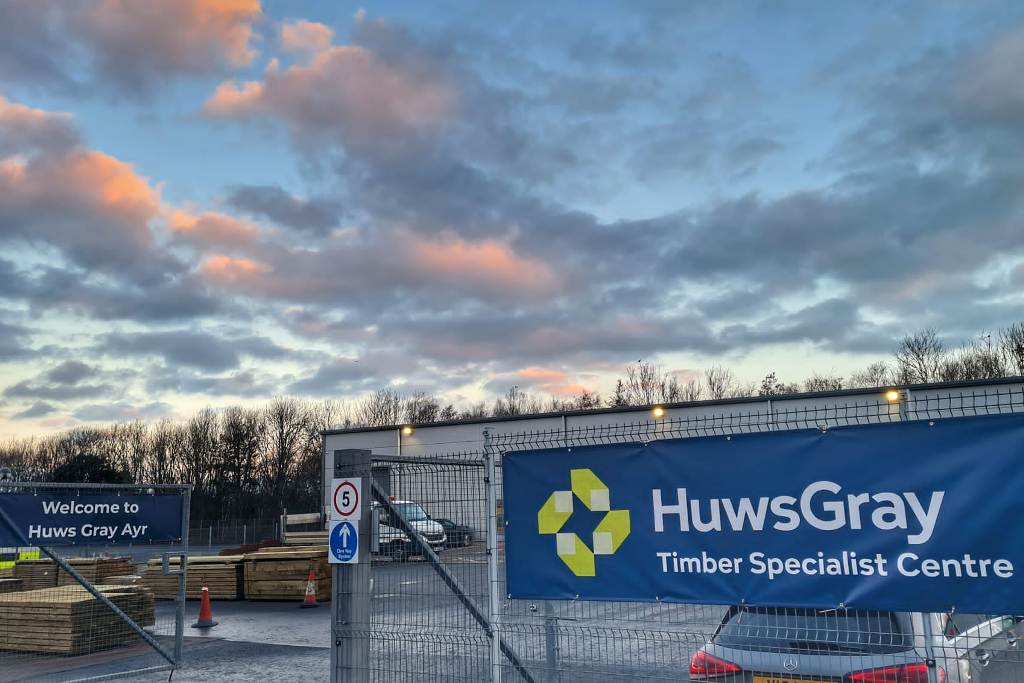
Huws Gray has taken over the former Thornbridge timber merchant site in Ayr from the administrators of National Timber Group, relaunching it as a dedicated timber merchanting branch and securing the existing jobs. The move follows recent investment in Huws Gray’s flagship timber mill in Grangemouth and is part of a strategy to expand timber capabilities across Scotland, with further recruitment planned. The Ayr branch, still managed by Lynne Douglas, will retain local supply relationships while progressively widening its timber and related product range over the coming months.
29Metals is launching a $150 million equity raising to keep its copper development pipeline on schedule despite near-term production disruption from seismic activity at its assets. The funding move comes as the company manages operational constraints and remediation costs while seeking to maintain progress on key growth projects rather than cutting back capital programmes. For geotechnical and mining teams, the raise signals continued investment in ground control, seismic monitoring and mine design adjustments rather than prolonged curtailment of underground activity.
Vault Minerals has entered the December 2025 quarter largely unhedged, leaving its gold production fully exposed to prevailing Australian dollar gold prices rather than locked into forward sales. The move gives the company direct leverage to current spot prices above historical averages, but also increases cash flow volatility compared with typical producer hedging strategies. Mine planners, treasury teams and contractors linked to Vault’s operations should expect greater sensitivity of budgets and project timing to short-term price swings over the quarter.
Evolution Mining reports record December-quarter cash flow, with disciplined operations at assets such as the Cowal gold mine and Mungari underpinning a stronger balance sheet heading into FY26. Higher realised gold prices and stable all-in sustaining costs are feeding directly into free cash generation, giving the company more headroom for capital projects and mine-life extensions across its Australian portfolio. For contractors and suppliers, the improved cash position signals continued spend on underground development, processing upgrades and resource definition drilling rather than aggressive cost-cutting.
Fenner’s grid and gear couplings from Motion are engineered for mining drives exposed to high shock loads, shaft misalignment and abrasive, contaminated environments, targeting applications such as crushers, conveyors and slurry pumps. The metallic grid and gear elements are designed to accommodate angular, parallel and axial misalignment while damping torsional vibration, reducing stress on gearboxes and motors in heavy-duty start–stop duty. For engineers, the key value is longer service intervals and fewer unplanned stoppages on critical rotating equipment in remote sites.
Lynas Rare Earths posted solid revenue growth for the December 2025 quarter, driven by stronger rare earth prices and continued output from its Mt Weld mine and Malaysian processing plant, despite operational disruption at the new Kalgoorlie cracking and leaching facility. The Kalgoorlie plant, designed to handle Mt Weld concentrate domestically before export, faced commissioning and ramp-up issues that constrained throughput and temporarily altered product flows. For mine planners and process engineers, the result shows revenue resilience to short-term processing bottlenecks but underlines commissioning risk around new hydrometallurgical circuits.
Disaster recovery has started on the Bruxner Highway at Mallanganee, where Transport for NSW is repairing and stabilising two failed downslopes damaged by a landslip between Willock Street and Bulmers Road, about 40 kilometres west of Casino. Works include installing soil nails to reinforce the slope mass and control further movement, alongside reconstruction of the affected pavement and drainage. Geotechnical teams will need to manage access and traffic staging on this constrained highway section while drilling and grouting operations are underway.
Safety upgrades are now complete at the Stud Road–McFees Road intersection in Dandenong North, with new signalised traffic lights and rebuilt pedestrian crossings serving flows to and from Dandenong Stadium. The works formalise crossing movements for pedestrians and cyclists on this high-volume arterial, replacing unsignalised movements that previously relied on driver gap acceptance. For designers and road safety engineers, the project signals continued federal–state funding support for low-cost intersection treatments that separate vulnerable users from turning traffic in suburban activity corridors.
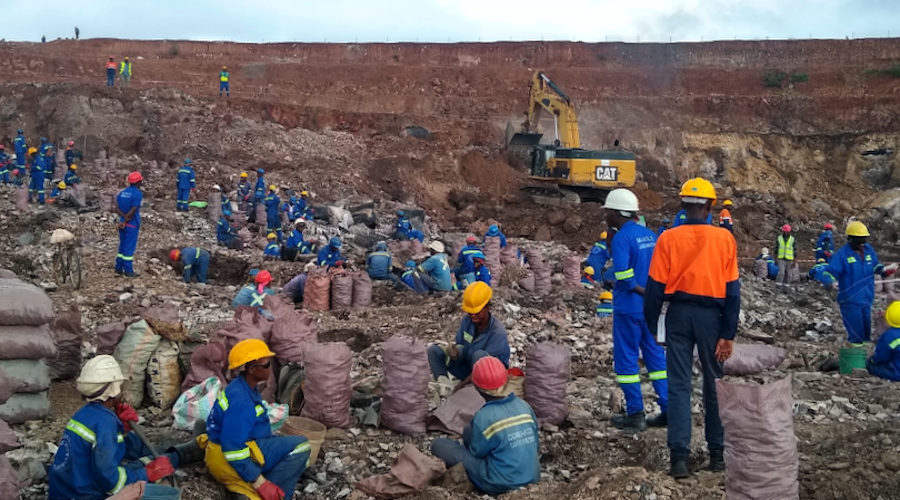
The Democratic Republic of Congo has delivered Washington a vetted shortlist of mining and processing assets for US investment, including Kisenge manganese and cassiterite licences, Gecamines’ Mutoshi copper‑cobalt project, Cominiere lithium permits and Sakima coltan, gold and wolframite operations, under a Dec. 4 accord granting US firms privileged access to its copper, cobalt, lithium and tantalum. The move directly challenges Chinese operators CMOC, Zijin and Huayou, which control about 80% of Congo’s output including Tenke Fungurume, the world’s second‑largest cobalt source. BMO analysts warn that how and when the US releases its recently built copper, platinum and palladium inventories—potentially to Cold War‑scale levels—has become the key variable for metals prices and project economics.
Geopolitical tension, China’s 15th Five-Year Plan pivoting from infrastructure to consumption, and US mid-term election uncertainty are set to make 2026 a volatile year for metals demand and pricing, with Wood Mackenzie lifting its base-case warming outlook to 2.6°C as decarbonisation slows. Copper is singled out for tight supply and tariff risk while most other metals remain oversupplied, pressuring prices even as solid-state battery progress and AI-driven data centre loads reshape power and metals demand. Capital discipline will keep miners favouring buybacks and M&A over greenfield projects, amplifying substitution battles such as copper versus aluminium and extending timelines in resource-nationalist jurisdictions.
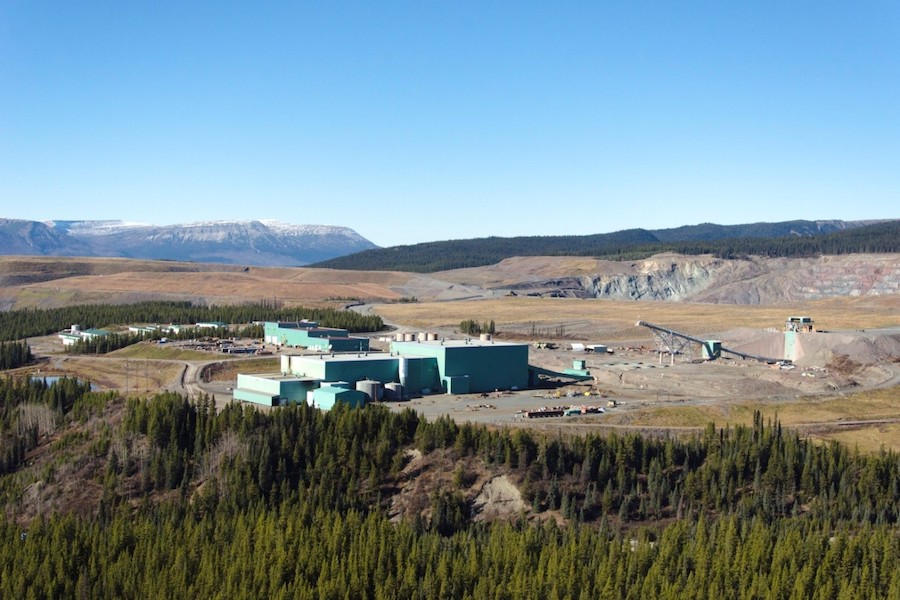
Centerra Gold’s Kemess copper-gold project in British Columbia has returned a base case post-tax NPV of $1.1 billion (5% discount) and 16.4% IRR in a new PEA, with initial capital of $771 million for a 15-year conventional open pit and longhole open stoping operation. The study lifts indicated resources to 244.4 million tonnes at 0.42 g/t gold and 0.21% copper, and inferred resources to 299.6 million tonnes at 0.37 g/t gold and 0.19% copper, leveraging existing Kemess infrastructure. Using spot prices of $4,500/oz gold and $6/lb copper, NPV rises to $2.7 billion and IRR to 29%, prompting BMO to raise its target price for Centerra to C$32/share.
USA Rare Earth will build a 3,750 tpa rare earth metal and alloy plant in Lacq, France, co-located with Carester’s 1,600 tpa Caremag oxide processing facility due for commissioning in late 2026, creating an integrated European processing platform. The French government will part-fund the project with equipment credits covering up to 45% of eligible kit and up to €130 million for real estate. The plant extends USAR’s mine-to-magnet chain anchored by the Round Top deposit in Texas and its 28,800 m² magnet plant in Stillwater, Oklahoma.
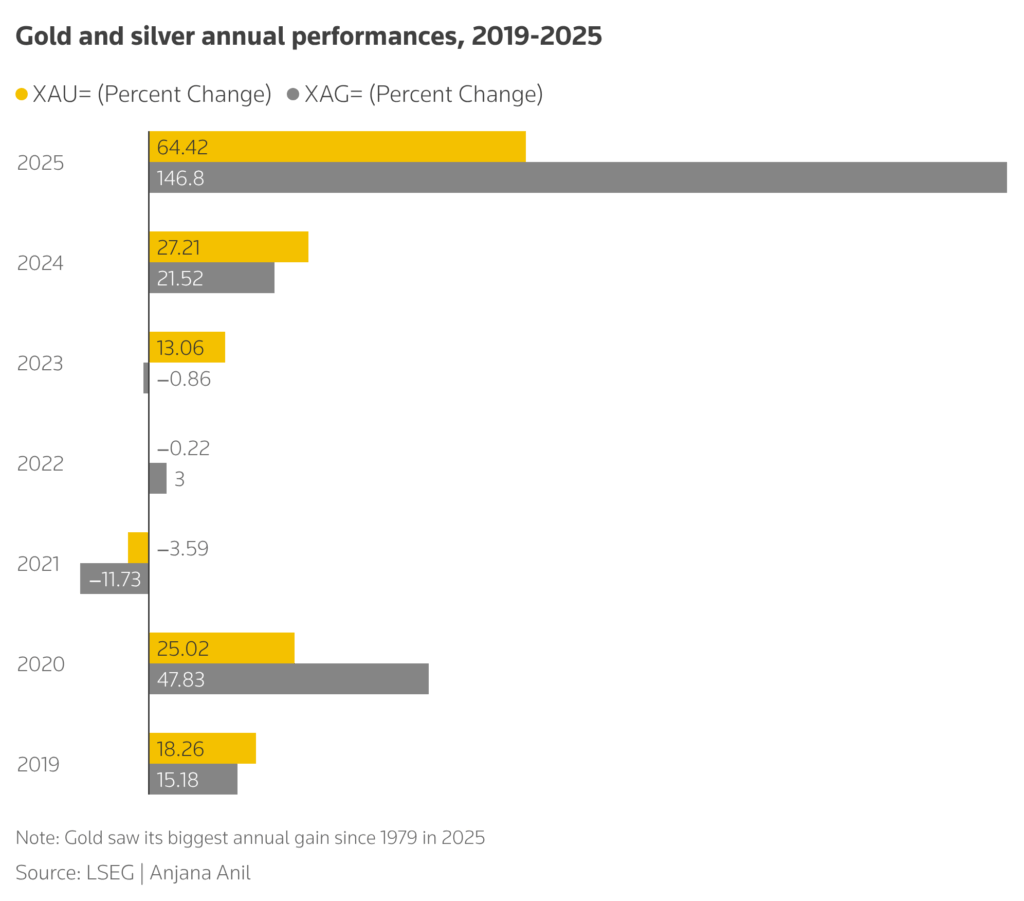
Gold surged to a record $4,749.84/oz on Tuesday, up nearly 8% year-to-date, while silver hit an all-time high of $95.89/oz after tripling over the past year, as investors moved into safe havens amid US–Europe tensions over President Trump’s push to take control of Greenland and threats of tariffs on eight opposing European nations. The rally builds on gold’s strongest annual performance since 1979, supported by falling US interest rates, central bank buying and expectations of two 25 bps Federal Reserve cuts from mid‑2026. Major banks now see gold reaching $4,800–$5,000/oz by mid‑year, but a Bank of America survey finds fund managers calling it the “most crowded trade”, signalling growing caution on further upside.
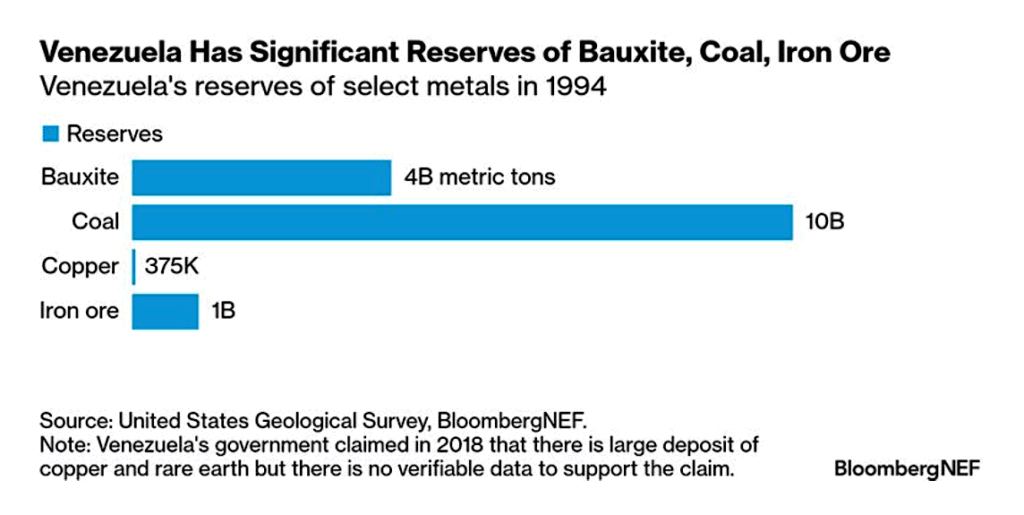
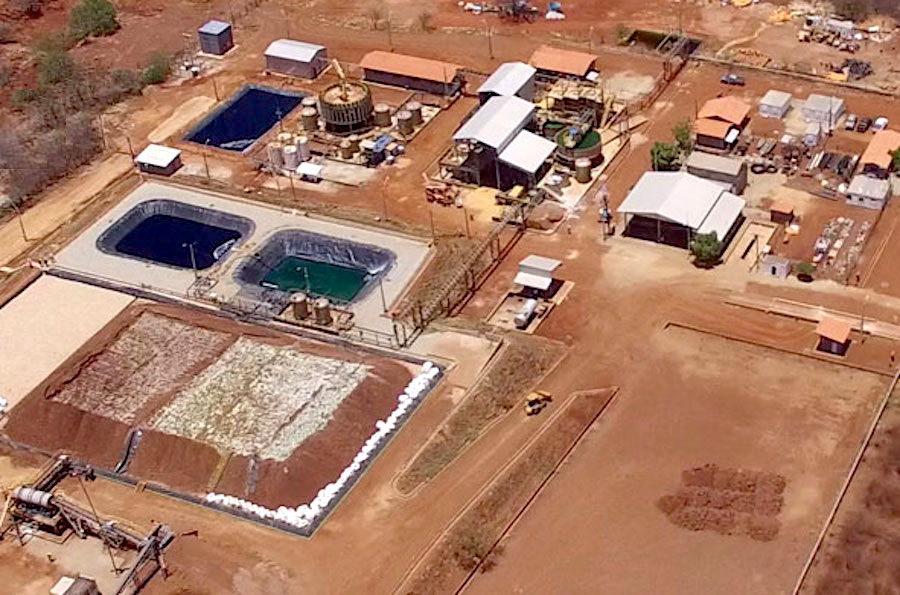
Reviving Venezuela’s vertically integrated aluminium chain would cost up to $2.3 billion, with Wood Mackenzie estimating $100–$200 million to restart the Los Pijiguaos bauxite mine to around 2 Mtpa, $500–$600 million to rehabilitate the Interalumina refinery to roughly 1 Mtpa, and $1–$1.5 billion to bring the 460,000 tpa Venalum smelter back online. BMI and BNEF stress that metal output has fallen over 90% since 2004, citing degraded infrastructure, chronic power instability at the Guri hydro complex, security risks and opaque regulation. Analysts warn that, despite 300 Mt of proved bauxite reserves and extensive inferred resources, political risk, sanctions exposure and faster, cheaper oil developments are likely to keep large-scale mining capital sidelined for at least a decade.
US lawmakers have introduced the bipartisan SECURE Minerals Act to create a $2.5 billion Strategic Resilience Reserve (SRR) for critical minerals, directly targeting China’s control of over 60% of mined rare earths and about 90% of processing. The SRR would be run as an independent government corporation with a seven-member presidentially appointed board, prioritising US domestic projects, recycling and unconventional feedstocks, and materials where US import dependence is near 100%. Lawmakers are pushing to attach the measure to the US National Defense Authorization Act, signalling long-term policy backing for non-Chinese rare earth, lithium, graphite and cobalt supply chains.
Brazilian Nickel has signed a non-binding offtake MOU with US-based Westwin Elements to supply up to 10,000 tpa of nickel and 240–400 tpa of cobalt in Mixed Hydroxide Precipitate from the Piauí laterite heap leach project in Brazil, produced via its low-CO2 process. Westwin plans to refine the MHP into class 1 nickel powder and briquettes within the United States for advanced manufacturing and defence applications, supporting US refining capacity. The deal also underpins funding for Brazilian Nickel’s Piauí development alongside existing European offtake agreements with Electro Mobility Materials Europe and Königswarter & Ebell.
Chance Instant Foundations marks 50 years since Dayton Power and Light’s 1976 field trial of screw-type streetlight foundations using 8-inch helical anchors for 30'6" aluminium poles on a four-lane connector and 6-inch anchors for 23' poles in a residential plat. Crews, initially untrained, installed 16 foundations in 12 working hours, later averaging 17 minutes per site including adapter plate setup, drilling to ground level and removal. The hollow-shaft anchors doubled as cable-ways, were fully retrievable, eliminated concrete supply and curing delays, and gained Standards Committee approval for one- to five-pole installations where soil conditions allow.
Morgan Sindall Construction has started a £68.7m refurbishment of Hackney’s Grade II-listed Kings Hall Leisure Centre, originally opened in 1897, under the Southern Construction Framework. Works include retaining the existing large pool while adding a second full-size pool and a smaller teaching pool, plus a double-height sports hall, extended gym and studio spaces, and a fully accessible new entrance from Clapton Square. FaulknerBrowns Architects and Alan Baxter Civil & Structural Engineering are leading design, with completion targeted for autumn 2028 and careful retention of the historic façade, glazed brickwork and balustrades.
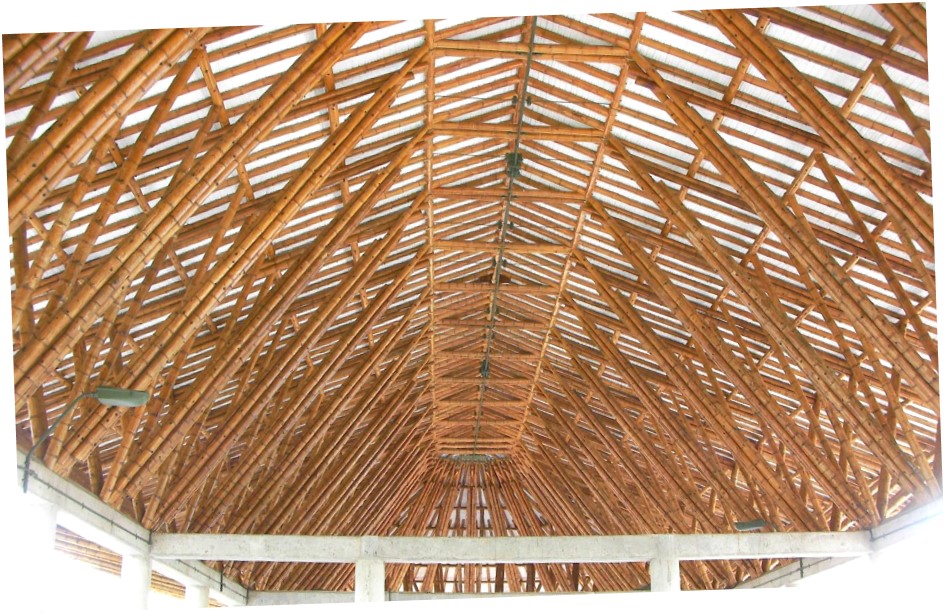
IStructE has released the Manual for the design of bamboo structures to ISO 22156:2021, a 10‑chapter structural engineering guide covering grading and mechanical properties, seismic and wind design, shear walls, durability and connection design for permanent bamboo buildings up to two storeys. Authored by INBAR Bamboo Construction Task Force members David Trujillo, Kent Harries, Sebastian Kaminski and Luis Felipe Lopez, the manual addresses bamboo supply chains and project management from sourcing through to detailed design. The publication formalises design provisions including fire considerations, aiming to make engineered bamboo a credible low‑carbon option in mainstream practice.
Caddick Construction Group has appointed former Tilbury Douglas Yorkshire and northeast regional director Paul Ellenor as managing director of Caddick Civil Engineering, tasking him with leading work-winning, operational delivery, commercial performance, and health and safety. Ellenor, who spent nearly 39 years at Tilbury Douglas before his departure in October, replaces Simon Martin, now business development director at Strabag UK. Based between Caddick’s Wakefield head office and its new Durham office opened last year, he is expected to drive expansion of the civils model from Yorkshire into the northeast, northwest and Midlands.
Balfour Beatty has appointed solicitor Kay Slade as managing director of its UK Regional Civils business from February 2026, succeeding interim MD Mark Arrandale, who returns to his finance director role. Slade joined the company as managing counsel in April 2022 and became northwest area director two years later, where she reshaped the regional civils portfolio by consolidating its footprint and improving performance. Her promotion signals Balfour Beatty’s intent to pair commercial and legal acumen with operational leadership as it targets a “strong pipeline” of regional infrastructure work.
Strabag UK has acquired the assets of Gunning Transmission & Distribution Services (GTDS) from Ethical Power Group to accelerate its move into regulated high-voltage transmission and commissioning work in the UK and Ireland. GTDS, which will continue operating from its Stafford offices, has grown turnover from £16m in 2022 to £96m in the year to August 2024, bringing an established client base and specialist HV installation capability. The deal gives Strabag in-house expertise for power infrastructure programmes linked to upgrading and modernising the UK electricity network.
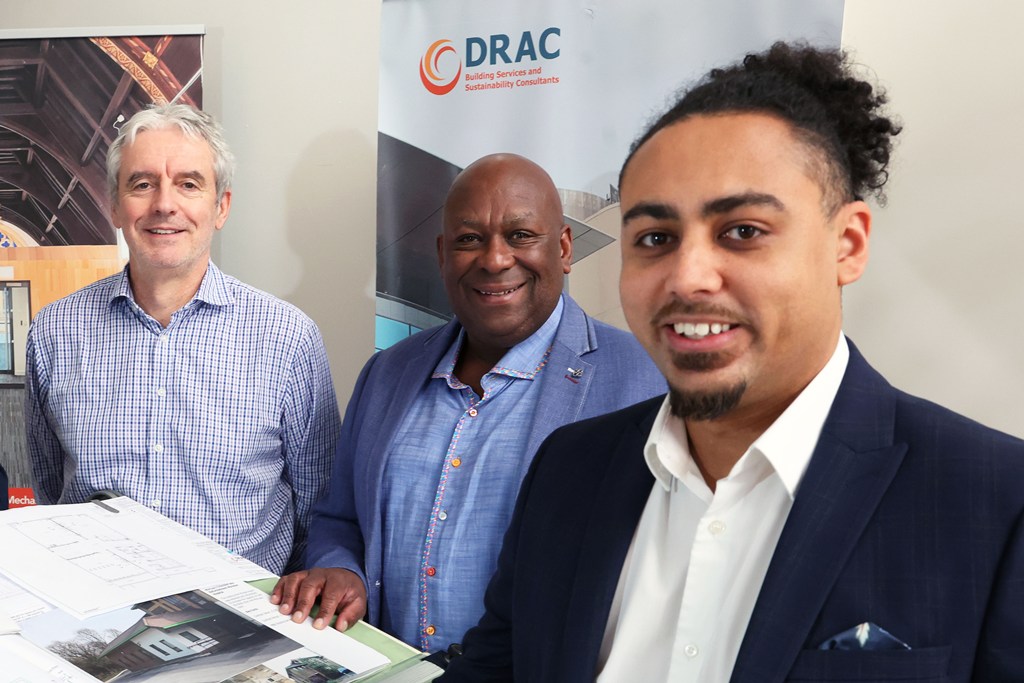
A seven-figure equity injection from the Development Bank of Wales’ Wales Business Succession Fund has financed a management buy-out of Cardiff-based DRAC Consulting, securing 20 building services engineering jobs. The deal transfers ownership to 34-year-old managing director Lewis Doherty, a former junior electrical engineer and son of co-founder Carl Bassett, with SME Finance Partners’ Chris Thomas becoming non-executive chair. Founded in 2009, DRAC delivers mechanical, electrical and public health (MEP) design and supervision for local authorities, housing associations, health boards and private developers.