Geomechanics.io

  • Free Tools
Sign UpLog In

Geomechanics.io

Geomechanics, Streamlined.

© 2026 Geomechanics.io. All rights reserved.

Geomechanics.io

CMRR-ioGEODB-ioHYDROGEO-ioQCDB-ioFree Tools & CalculatorsBlogLatest Industry News

Industries

MiningConstructionTunnelling

Company

Terms of UsePrivacy PolicyLinkedIn
    AllGeotechnicalMiningInfrastructureMaterialsHazardsEnvironmentalSoftwarePolicy
    Projects
    Failure
    Safety

    Bruxner Highway disaster recovery: slope stabilisation lessons for engineers

    January 21, 2026|

    Reviewed by Joe Ashwell

    Bruxner Highway disaster recovery: slope stabilisation lessons for engineers

    First reported on Roads & Infrastructure (AU)

    30 Second Briefing

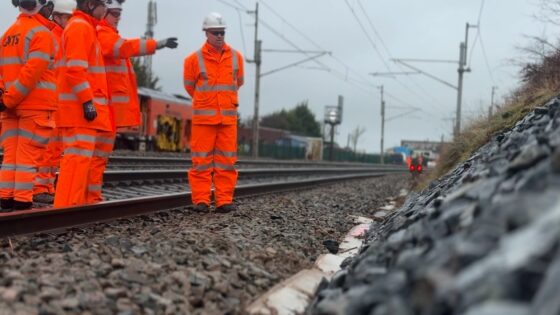
    Disaster recovery has started on the Bruxner Highway at Mallanganee, where Transport for NSW is repairing and stabilising two failed downslopes damaged by a landslip between Willock Street and Bulmers Road, about 40 kilometres west of Casino. Works include installing soil nails to reinforce the slope mass and control further movement, alongside reconstruction of the affected pavement and drainage. Geotechnical teams will need to manage access and traffic staging on this constrained highway section while drilling and grouting operations are underway.

    Technical Brief

    • Failure mechanism likely involves saturated colluvial soils on steep cut batters losing shear strength during intense rainfall.
    • Geotechnical investigation would focus on boreholes, shear vane or triaxial testing, and inclinometer installations to define slip surfaces.
    • Monitoring during works would typically include survey prisms, extensometers and piezometers to track ongoing downslope movement and pore pressures.
    • Soil nailing design must consider nail length beyond the inferred failure surface and corrosion protection for long-term stability.
    • Drainage remediation is critical, with subsoil drains and surface catch drains usually installed to intercept upslope runoff and reduce pore pressure.
    • Safety controls on site are expected to include exclusion zones below unstable faces, scaling of loose rock/soil, and strict wet-weather shutdown criteria.

    Our Take

    Within the 20 recent Geotechnical stories in our coverage, New South Wales features frequently for landslip and pavement distress on steep, high-rainfall corridors, so Transport for NSW is likely drawing on a growing body of local case history for slope stabilisation and drainage upgrades along the Bruxner Highway.

    For a 40‑kilometre stretch west of Casino, staged traffic management and interim stabilisation will be critical; in similar NSW corridor failures, agencies have tended to prioritise rapid re‑establishment of one safe lane while designing longer‑term geotechnical solutions in parallel.

    With this tagged under both ‘Failure’ and ‘Safety’ in a corpus of 1345 pieces, the Bruxner Highway works signal how road authorities are increasingly treating geotechnical remediation as a safety project rather than just a maintenance task, which can support stronger business cases for more robust slope and drainage designs.

    Geotechnical Software for Modern Teams

    Centralise site data, logs, and lab results with GEODB-io, CMRR-io, and HYDROGEO-io.

    No credit card required.

    • Save and export unlimited calculations
    • Advanced data visualisation
    • Generate professional PDF reports
    • Cloud storage for all your projects

    Prepared by collating external sources, AI-assisted tools, and Geomechanics.io’s proprietary mining database, then reviewed for technical accuracy & edited by our geotechnical team.

    Related Articles
    2026 State of Practice seminars: deep foundation QC insights for engineers
    Geotechnical
    8 days ago

    2026 State of Practice seminars: deep foundation QC insights for engineers

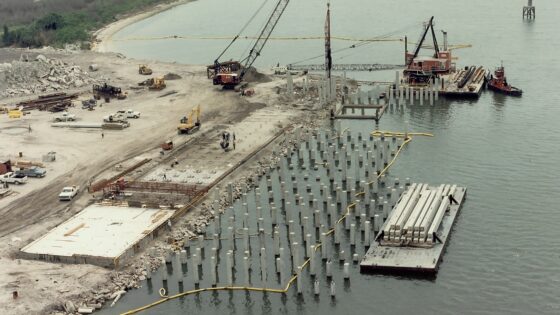
    Pile Dynamics, Inc. and GRL Engineers, Inc. will run a one-day 2026 “State of Practice” seminar focused on quality control for deep foundations, covering benefits, methods, interpretations, risks and implementation. The programme centres on modern testing and monitoring approaches for driven piles and drilled shafts, including practical guidance on data interpretation and risk management. Geotechnical practitioners can expect applied content directly relevant to foundation load testing, integrity assessment and construction QC procedures.

    Helical piles vs concrete foundations: design and constructability notes for tower engineers
    Geotechnical
    13 days ago

    Helical piles vs concrete foundations: design and constructability notes for tower engineers

    Helical piles are being positioned as an alternative to traditional drilled or spread concrete foundations for lattice and monopole communication towers, particularly where uplift, lateral loads and variable soils control design. Screw-in steel piles with helix plates can be installed with smaller rigs, generate minimal spoil, allow immediate loading and are removable at decommissioning, contrasting with large-diameter drilled shafts or pad-and-pier systems that require curing time and substantial excavation. The comparison focuses on sites with constrained access, weak or layered soils, and projects needing rapid deployment or future relocation.

    Thames Water £177M site investigation framework: scope and lessons for ground engineers
    Geotechnical
    15 days ago

    Thames Water £177M site investigation framework: scope and lessons for ground engineers

    Thames Water has launched procurement for a multi‑lot framework worth up to £177M (excluding VAT) to deliver site investigation surveys across its asset base. The framework will cover intrusive and non‑intrusive ground investigations, including boreholes, trial pits, in‑situ testing and laboratory analysis to support major water and wastewater infrastructure works. Geotechnical and environmental consultants and drilling contractors can expect long‑term programmes tied to pipeline renewals, treatment works upgrades and resilience schemes across the Thames Water region.

    Related Industries & Products

    Construction

    Quality control software for construction companies with material testing, batch tracking, and compliance management.

    Mining

    Geotechnical software solutions for mining operations including CMRR analysis, hydrogeological testing, and data management.

    QCDB-io

    Comprehensive quality control database for manufacturing, tunnelling, and civil construction with UCS testing, PSD analysis, and grout mix design management.