Geomechanics, Streamlined.
© 2026 Geomechanics.io. All rights reserved.
Farrans has secured a £30m contract to deliver a two‑storey terminal infill at Bristol Airport, increasing terminal floor area by about 45% to handle up to 12 million passengers a year and expand to 38 retail and F&B outlets, including 17 new units. The scheme adds a new domestic baggage reclaim carousel with 20% more capacity, extra seating, and upgraded immigration access with new lifts and stairs, all built in a live operational environment. Construction logistics will use insulated hoardings, air‑locked work zones and a temporary Bailey Bridge to move plant from landside to airside, with peak labour of around 150 people.
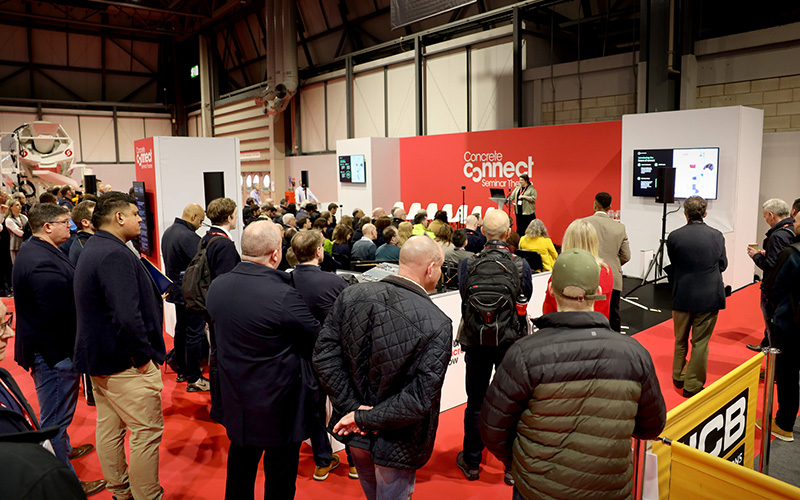
The UK Concrete Show 2026 at Birmingham’s NEC on 25–26 March will run a seminar programme centred on decarbonisation, materials innovation, digital monitoring, performance verification, and skills development for concrete producers and specifiers. Sessions will address low‑carbon binders and mix designs, sensor‑based monitoring of pours and in‑service structures, and verification of performance against evolving standards. The focus on skills suggests practical content for contractors, precast manufacturers, and designers needing to integrate new materials and digital QA/QC into existing workflows.
Major UK contractors and consultants have reshuffled senior leadership in February 2026, with new appointments focused on complex infrastructure delivery, digital design and major programme management. Key moves include fresh directors for transport and water portfolios, signalling continued investment in rail upgrades, strategic highways and large-scale flood defence schemes. Geotechnical and civil teams can expect shifting procurement strategies, revised framework leadership and potentially new approaches to risk allocation and ground investigation on upcoming multi-billion-pound programmes.
Importing transient pore-water pressure results from SEEP3D into a two-dimensional SLOPE/W analysis is demonstrated using a rapid drawdown embankment case, linking full 3D seepage behaviour with 2D limit equilibrium slope stability. The workflow covers generation of time-dependent pore-pressure distributions in SEEP3D, export of node-based pressures, and mapping onto a 2D section in SLOPE/W for factor-of-safety calculations under falling reservoir levels. This approach allows engineers to capture 3D flow effects, anisotropy and complex boundary conditions while retaining efficient 2D stability modelling.
Completion of the M1 to Raymond Terrace extension and Hexham Straight Widening in New South Wales’ Hunter region removes the long‑standing Hexham bottleneck on the key Sydney–Brisbane freight and commuter corridor. The project delivers a widened carriageway and upgraded intersections, funded by more than $1.79 billion from the Federal Government and $448 million from the State Government. For designers and contractors, the scheme signals ongoing demand for large‑scale pavement reconstruction, drainage upgrades and traffic staging on brownfield motorway corridors in constrained urban–industrial environments.
Geotab is extending telematics beyond on‑road trucks to give infrastructure and transport operators live visibility of mixed fleets, including trailers, plant and non‑powered assets, via its GO9 device and asset trackers on a single cloud platform. The system combines GPS, engine CAN‑bus data and sensor inputs to monitor utilisation, idling, fuel burn and harsh events, while also locating unpowered equipment that traditionally goes “dark” between jobs. For civil contractors and road agencies, this supports tighter asset allocation, reduced rental and standby time, and better maintenance scheduling across dispersed worksites.
VDI has unveiled a mine-spec Yutong demo bus for Australian operations, pairing heavy-duty chassis and suspension with mine-ready safety systems including ROPS/FOPS-style structural protection, high-visibility livery and mine-compliant lighting. The bus is configured for harsh, dust-laden haul roads and extreme temperature ranges typical of Pilbara and Bowen Basin sites, with upgraded filtration, corrosion-resistant components and reinforced underbody protection. For site engineers and fleet managers, it signals a push towards purpose-built people-movers that better match mine access road conditions and site safety protocols than standard highway coaches.
South Australia has jumped to fourth place globally in the Fraser Institute’s 2025 mining attractiveness rankings, up from 35th, driven by policy stability and strong geological potential for copper, uranium and critical minerals. The jurisdiction’s performance on regulatory certainty, permitting timelines and fiscal terms now places it ahead of Western Australia and Queensland, reversing previous investor concerns about approval delays. For project developers, the shift signals a friendlier environment for large-scale exploration programmes and long-life open pit and underground operations in the Gawler Craton and Olympic Dam corridor.
Covalent Lithium’s Mt Holland mine and Kwinana refinery ramp-up is gaining traction, with joint venture partner SQM reporting a confidence-boosting progress update on the integrated spodumene-to-hydroxide project in Western Australia. The operation couples an open-pit hard-rock lithium mine at Mt Holland with a downstream lithium hydroxide plant at Kwinana, targeting battery-grade product for EV supply chains. For geotechnical and process engineers, the key focus is on synchronising mine development, concentrator performance and refinery commissioning to stabilise throughput and product quality.
Brightstar Resources is accelerating plans to become a mid-tier Western Australian gold producer, driven by high-grade drilling results at its Sandstone project and ongoing work at the Menzies goldfields. Recent reverse circulation and diamond holes at Sandstone have intersected multiple narrow, high-grade lodes near existing open pits, supporting potential brownfield expansions around historic workings and existing haul roads. The company is now advancing resource updates, mine planning and metallurgical testwork to underpin a restart strategy leveraging existing processing infrastructure in the northern Goldfields.
Osisko Metals is advancing a multi‑billion‑dollar restart of Quebec’s Gaspé Copper mine, which currently hosts 824 million indicated tonnes at 0.27% Cu and 670 million inferred tonnes at 0.30% Cu, with initial capex last pegged at about C$1.8 billion and a targeted 30–40‑year mine life. Recent focus on the deep Porphyry Mountain zone includes historical intercepts such as 852 metres at 0.65% Cu and 2.89 g/t Ag from 998 metres and 499 metres at 0.78% Cu from 1,212 metres, remaining open at depths beyond 1,700 metres. Management is aiming for permits and construction in the early 2030s, expects higher updated capital costs, and is seeking streamlined federal–provincial environmental approvals and a future development partner.
Eric Sprott is investing C$23 million for a 9.9% stake in American Eagle Gold, buying 19.2 million premium flow-through shares at C$1.20, sending the TSXV-listed stock up 22% to C$0.94 and valuing the company at about C$163 million. A parallel C$11.5 million financing at C$0.77 per share will allow Teck Resources and South32 to maintain their positions, taking total new funding to C$34.54 million and cash on hand to over C$50 million. The money will fund expanded drilling at the NAK copper-gold porphyry in BC’s Babine district, where a 31,500-metre programme has returned 618 metres at 0.77% CuEq from surface, indicating a large, coherent mineralised body at depth.
QazMoly is in talks to secure up to $240 million in US Export-Import Bank financing for its Drozhilov tungsten project in Kazakhstan, with funding conditional on 100% of tungsten off-take being sold to US buyers via UK-based Fosbury Capital as exclusive off-taker. The Drozhilov deposit also contains beryllium and molybdenum, and QazMoly must complete feasibility studies while EXIM conducts full legal and commercial due diligence before any funds are released. With tungsten prices up fivefold in a year and global demand projected to grow 8% annually to a $10-billion market by the mid-2030s, the project targets a tightening supply environment for tungsten carbide tooling and defence applications.
Numerical modelling of deep underground excavations using RS2 and the Confinement-Dependent Visco-Plastic Model (CVBM) is used to capture spalling in jointed rock masses where confinement drops and tangential stresses concentrate around excavation boundaries. The approach contrasts brittle spalling in massive, low-porosity rock with more ductile behaviour in highly jointed rock, explicitly representing joint orientation, spacing, and strength. For design, this enables more realistic prediction of depth of failure, damage zones, and support demand around tunnels and caverns at high stress ratios.
DELKOR India has completed a major revamp of Tata Steel’s 145 m² horizontal belt filter at the West Bokaro coal field, originally supplied in 2006, extending the life of one of the steelmaker’s largest filtration assets. The TAKRAF Group business upgraded key components and control elements to current DELKOR standards, improving cake washing and dewatering performance on fine coal. For plant engineers, the project shows the viability of large-scale refurbishment over full replacement for ageing vacuum belt filters in high-throughput coal circuits.
Enaex Argentina has commissioned a 100% electric mechanised emulsion charging unit at the Minera Santa Cruz San José underground gold-silver mine, a joint venture originally formed by Hochschild Mining and Minera Andes (now McEwen Mining). The battery-powered system replaces diesel charging units in production stopes, cutting local emissions and heat load in confined headings. For mine engineers, the move supports ventilation-constrained deepening and offers a reference case for fully electric blasting logistics in narrow-vein underground operations.
Chile’s Ministry of Health has formally authorised the use of copper slag as an artificial aggregate in infrastructure works, including road surfacing, turning a major smelting waste stream into a regulated construction input. The decree defines copper slag as a by-product of copper pyrometallurgy and allows its controlled use in pavements and other civil works, subject to health and environmental criteria. For Chilean miners and contractors, this opens a large-scale outlet for slag stockpiles and may alter aggregate sourcing, pavement design and leachate management practices.
A memorandum of understanding has been signed to develop what is billed as Europe’s first commercial stellarator nuclear fusion power plant in Bavaria, Germany, aiming to move beyond experimental devices such as Wendelstein 7-X towards grid-scale output. The project will require large, highly shielded reinforced concrete structures to house superconducting magnet systems and vacuum vessels, with stringent vibration control and thermal management. Early-stage design decisions will influence heavy-lift logistics, deep foundation requirements and long-term maintenance access for high-activation components.
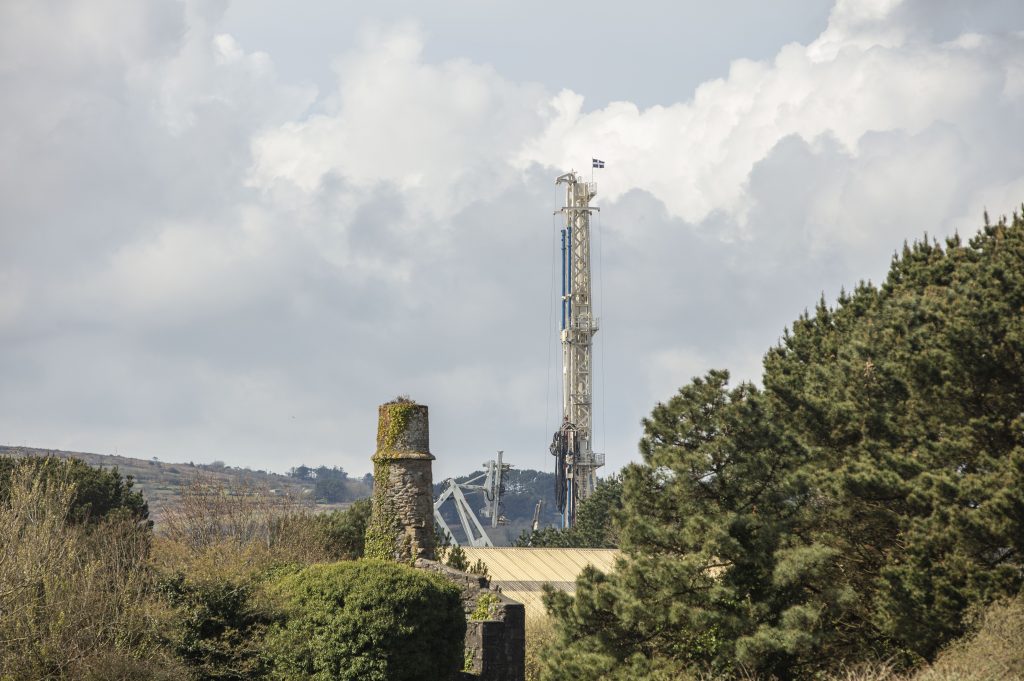
Britain’s first continuous geothermal power plant has begun commercial operation in Cornwall, supplying baseload electricity to the grid for 24/7 generation rather than heat-only or pilot‑scale output. The project uses deep geothermal wells drilled several kilometres into hot granite, circulating water through a closed-loop system to drive a surface power plant via binary-cycle technology. For civil and geotechnical engineers, the scheme tests high‑temperature casing design, long‑term borehole stability in fractured rock, and integration of geothermal infrastructure with existing grid and planning frameworks in the UK.
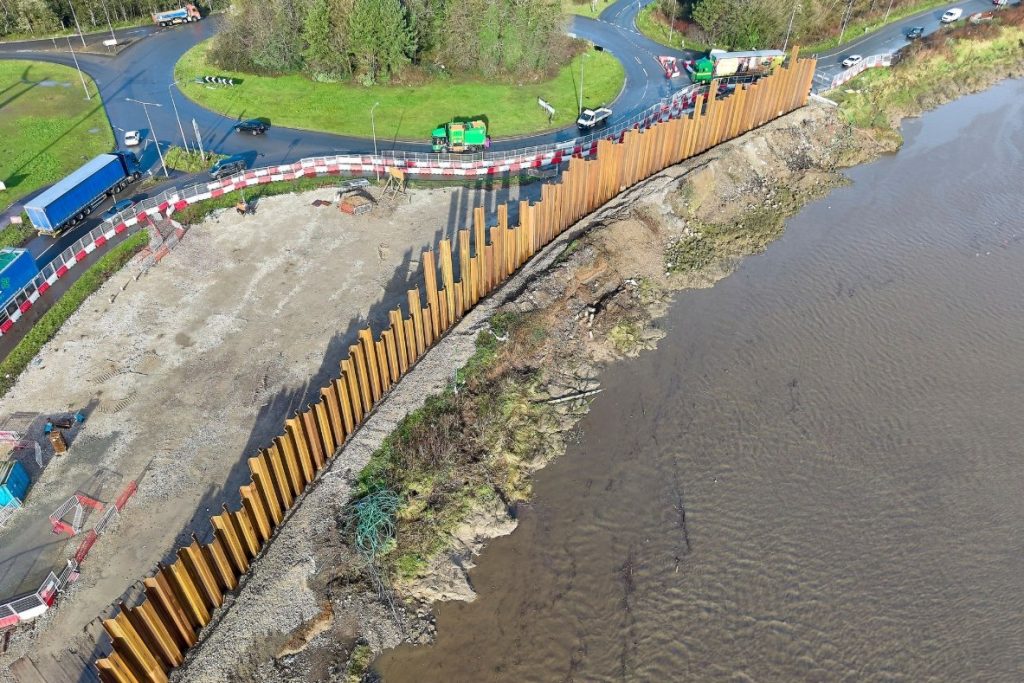
Welsh Government has set a record £85M budget for flood and coastal erosion risk management in 2026/27, its largest single-year allocation for defences. Funding will support schemes under the National Strategy for Flood and Coastal Erosion Risk Management, targeting high-risk communities along major estuaries and exposed coastlines. Designers can expect increased demand for reinforced concrete and rock armour sea walls, upgraded earth embankments, and higher-capacity culverts and outfalls to cope with more intense rainfall and storm surges.
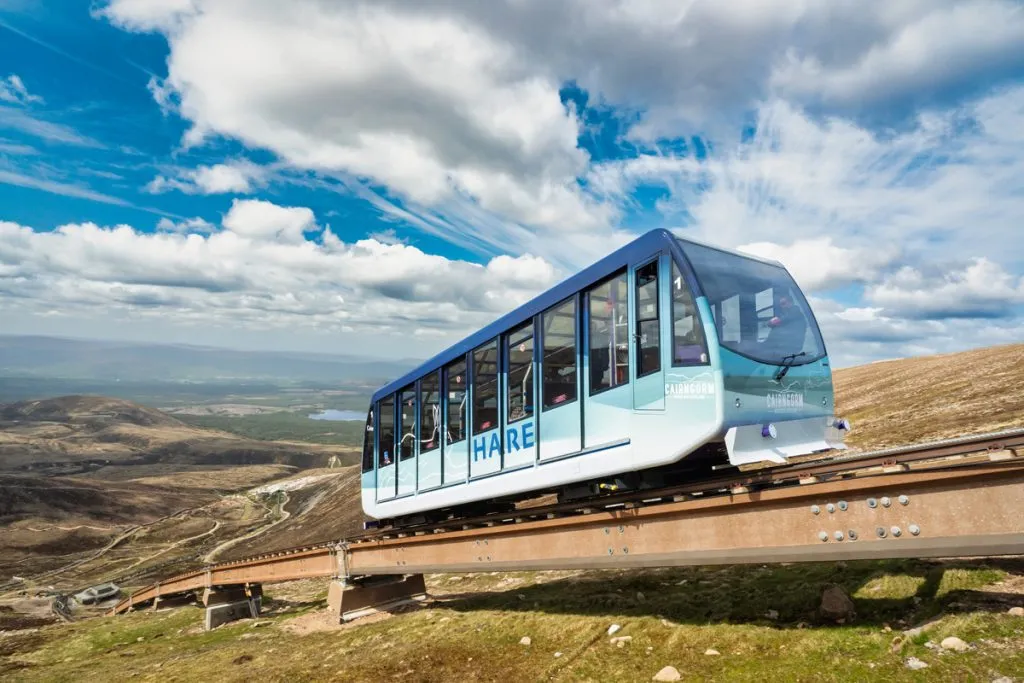
Concerns over the long-term financial and operational sustainability of the Cairngorm funicular railway have been raised by the Scottish Parliament’s Public Audit Committee after an extended inquiry into Highlands and Islands Enterprise’s (HIE) management of the asset. The committee warns that ongoing capital works, maintenance and operating subsidies could leave the cost to the public purse outweighing transport, tourism and local economic benefits. Members also questioned the performance and resilience of the current operating company under winter-weather, reliability and demand uncertainties.
Bristol Airport has awarded Farrans a £30M contract to extend its terminal, forming part of a £400M phased enhancement programme to expand capacity and upgrade passenger facilities. The works will focus on enlarging the existing terminal footprint and reconfiguring internal layouts to improve passenger flow through security, check-in and departure lounges. Contractors and designers will need to manage construction adjacent to live airside and landside operations, with tight staging and night-time working likely to control disruption and maintain regulatory compliance.
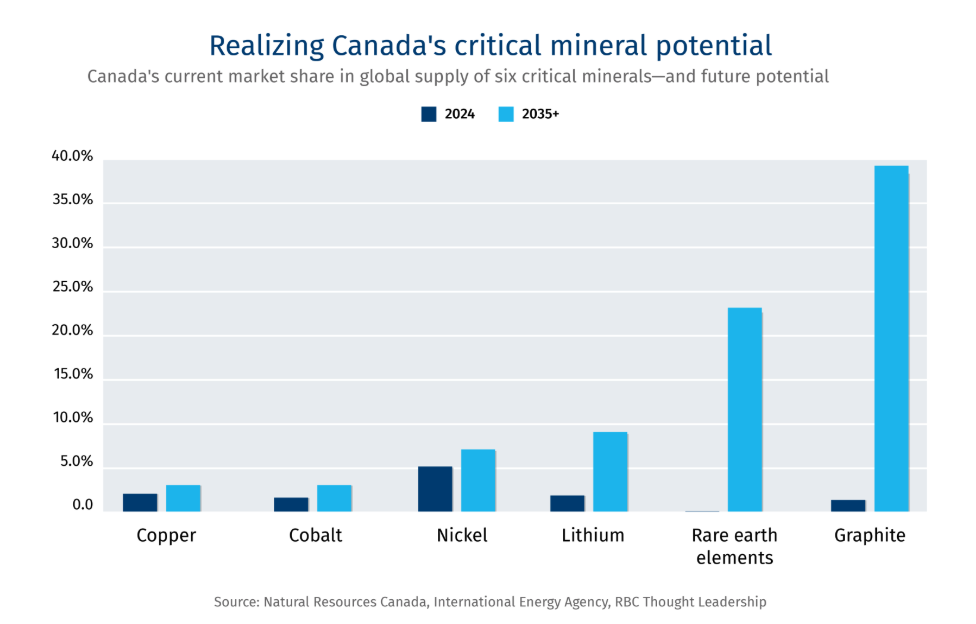
Canada has directed only 11% of more than C$700 billion in mining capital since 2000 into critical minerals, leaving it with just 2% of global output despite 67 projects worth C$72.4 billion planned or under way and the potential to reach 14% share if all proceed. Structural barriers include a C$20–C$30 million funding gap between feasibility and FID, permitting timelines exceeding five years, and reliance on a single copper smelter at Glencore’s Horne complex, forcing most concentrates to China, which controls about 70% of global refining capacity. RBC points to sovereign co-investment, mineral corridors in regions such as Quebec’s lithium belt and Sudbury, and infrastructure co-funding that can cut break-even prices by 22–24%—including up to C$2.4 billion needed for Ontario’s Ring of Fire—as key levers to unlock projects.
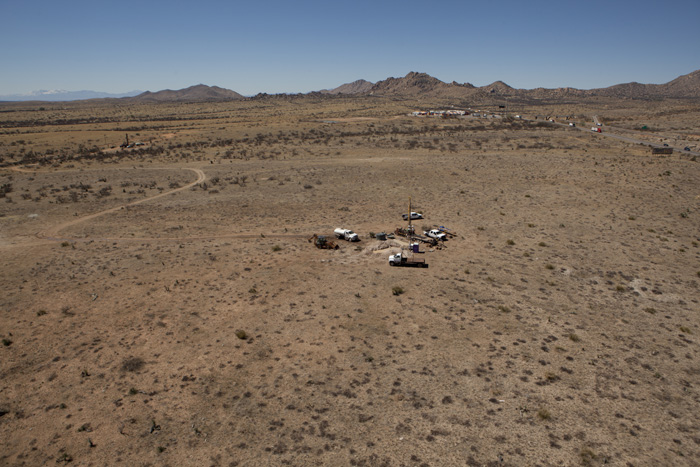
Gunnison Copper has updated the PEA for its Gunnison project in Arizona, lifting post-tax NPV (8% discount) to US$1.95 billion at US$4.60/lb copper, with mine life extended to 21 years and post-tax IRR rising to 23% despite an 18% increase in initial capex to US$1.54 billion. The plan envisages 3.2 billion lb of copper cathode over life-of-mine, averaging 174 million lb/year for the first 15 years from an open-pit, heap leach operation using solvent extraction–electrowinning. About 83% of the US$692 million NPV uplift comes from operational changes, notably adding the Strong & Harris satellite deposit with 25 million tonnes and incorporating material sorting and optimisation.