Persimmon–Ecofill soil reuse: geotechnical and highways design notes for engineers
Reviewed by Tom Sullivan
First reported on New Civil Engineer
30 Second Briefing
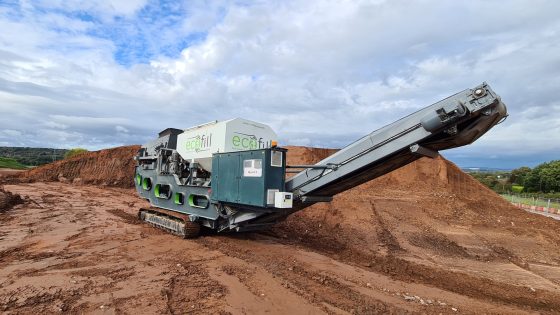
Persimmon Homes has partnered with ground engineering technology firm Ecofill to re-use site-won excavated soils as engineered fill in adoptable roads, retaining walls, piling mats, embankments and trench backfills, displacing imported primary aggregates. Ecofill’s process allows classification and treatment of cohesive and granular arisings to meet highways and structural fill specifications, reducing soil sent to landfill and cutting lorry movements for aggregate haulage. The move signals wider potential for specification-compliant reuse of marginal soils on large housing schemes under UK earthworks and highway adoption standards.
Technical Brief
- Ecofill’s process hinges on laboratory classification of site-won soils to confirm suitability as structural fill.
- Treatment typically combines moisture conditioning with mechanical stabilisation to achieve required compaction and bearing.
- Cohesive and granular arisings are processed separately, allowing tailored treatment regimes for each material type.
- Engineered fill is designed to comply with UK earthworks and highway adoption specifications, not ad‑hoc criteria.
- Ecofill’s approach reduces reliance on primary quarried aggregates without changing geometric highway or foundation layouts.
- For geotechnical designers, the partnership expands viable material options within existing UK standards and approvals pathways.
Our Take
Within the 23 Geotechnical stories in our coverage, UK-based pieces like this one involving Persimmon Homes are increasingly framed around practical implementation of sustainability standards rather than new design methods, signalling that housebuilders are now in the compliance-and-optimisation phase rather than early adoption.
For United Kingdom projects tagged with both ‘Sustainability’ and ‘Standard/Guideline’, our database shows a strong emphasis on reducing off-site disposal of excavated materials, which typically tightens specifications for geotechnical investigation and material characterisation to prove suitability for reuse.
Partnerships between volume housebuilders and specialist soil-management firms such as Ecofill usually give contractors on Persimmon Homes sites more predictable earthworks strategies and programme certainty, as reuse protocols can be standardised across multiple developments rather than negotiated project by project.
Prepared by collating external sources, AI-assisted tools, and Geomechanics.io’s proprietary mining database, then reviewed for technical accuracy & edited by our geotechnical team.
Related Articles



Related Industries & Products
Mining
Geotechnical software solutions for mining operations including CMRR analysis, hydrogeological testing, and data management.
Construction
Quality control software for construction companies with material testing, batch tracking, and compliance management.
CMRR-io
Streamline coal mine roof stability assessments with our cloud-based CMRR software featuring automated calculations, multi-scenario analysis, and collaborative workflows.
HYDROGEO-io
Comprehensive hydrogeological testing platform for managing, analysing, and reporting on packer tests, lugeon values, and hydraulic conductivity assessments.
GEODB-io
Centralised geotechnical data management solution for storing, accessing, and analysing all your site investigation and material testing data.