South32 Hermosa project: permitting, water and tailings design notes for engineers
Reviewed by Tom Sullivan
First reported on MINING.com
30 Second Briefing
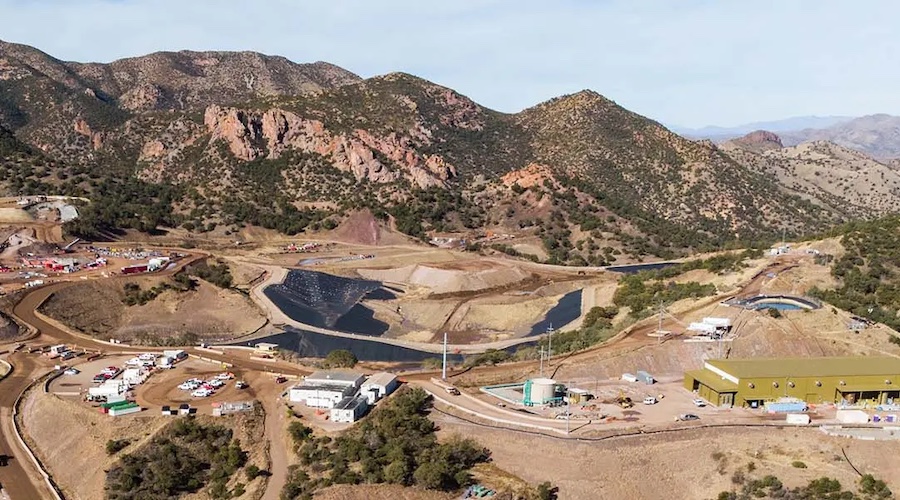
South32’s Hermosa zinc-silver project in Arizona has advanced towards US federal approval after the US Forest Service issued a Final Environmental Impact Statement and Draft Record of Decision supporting development on Coronado National Forest land, including a primary access road, secondary dry-stack tailings facility and part of a 138 kV transmission line to be built by UniSource Energy Services. The preferred alternative is designed to avoid traffic near Patagonia, minimise land disturbance on a roughly 750-acre surface footprint, and use about 90% less water than many regional mines, while incorporating nearly 140 additional conservation, mitigation and monitoring measures. A 45-day objection period plus a possible 45-day resolution phase precede a Final Record of Decision expected in July, with Hermosa projected to support up to 900 jobs at peak production.
Technical Brief
- US Forest Service independently assessed South32’s 2024 Mine Plan of Operations against multi-year baseline environmental datasets.
- Selected alternative incorporates a direct discharge system high in the Patagonia Mountains to enhance aquifer recharge.
- Dry-stack tailings facility design was updated during review, indicating iterative geotechnical and environmental optimisation.
- Forest Service comparison concluded the chosen layout gives the smallest disturbed surface area among options assessed.
- Impact reduction explicitly targets air quality, water resources, cultural sites, recreation areas, wildlife habitat and nearby communities.
- Formal objection process is restricted to stakeholders who previously lodged comments under the NEPA consultation phase.
Our Take
Hermosa’s zinc–silver–lead–germanium mix lines up with the ‘critical minerals’ basket seen in Trilogy Metals’ Ambler district JV with South32, suggesting the company is deliberately building a North American portfolio geared to US strategic supply chains rather than bulk commodities.
The 138 kV transmission line on Coronado National Forest land and the nearly 140 mitigation measures indicate Hermosa is being engineered to clear a high federal permitting bar; in our database, few US silver–zinc projects carry this level of pre-emptive environmental design detail at the project stage.
South32’s recent production rebound in zinc, noted in our January coverage, means Hermosa could slot into an already improving zinc business, potentially giving the group more flexibility on timing development in Arizona against market cycles for zinc and silver.
Prepared by collating external sources, AI-assisted tools, and Geomechanics.io’s proprietary mining database, then reviewed for technical accuracy & edited by our geotechnical team.
Related Articles


Related Industries & Products
Mining
Geotechnical software solutions for mining operations including CMRR analysis, hydrogeological testing, and data management.
Construction
Quality control software for construction companies with material testing, batch tracking, and compliance management.
CMRR-io
Streamline coal mine roof stability assessments with our cloud-based CMRR software featuring automated calculations, multi-scenario analysis, and collaborative workflows.
HYDROGEO-io
Comprehensive hydrogeological testing platform for managing, analysing, and reporting on packer tests, lugeon values, and hydraulic conductivity assessments.
GEODB-io
Centralised geotechnical data management solution for storing, accessing, and analysing all your site investigation and material testing data.